A portable power station overheats due to factors like poor ventilation, overloading, simultaneous charging and discharging, extreme ambient temperatures, or dust accumulation. Addressing these issues promptly, such as ensuring adequate airflow or reducing the connected load, can prevent damage and restore optimal performance. Overheating can significantly diminish battery lifespan, reduce efficiency, and pose a safety risk, making immediate attention crucial for longevity and peace of mind.
Understanding Power Station Overheating
Portable power stations are essentially large, rechargeable batteries encased in a protective shell, equipped with an inverter, multiple output ports, and a sophisticated Battery Management System (BMS). They store energy to power various AC and DC devices, offering a clean, quiet alternative to traditional generators. While it’s normal for a power station to generate some heat during operation, especially when under load or charging, excessive heat is a clear indicator of a problem.
Normal operating temperatures for most LiFePO4 batteries, commonly found in modern power stations, allow for discharge between -20°C (-4°F) and 60°C (140°F), with a narrower charging range of 0°C to 50°C (32°F to 122°F). When temperatures rise above these safe thresholds, or if the unit feels excessively hot to the touch, it triggers internal protections, often leading to performance reduction or even automatic shutdown. Ignoring these signs can lead to permanent battery damage or component failure.
Common Reasons Your Power Station Overheats
Several factors can contribute to a power station becoming excessively hot. Identifying the underlying cause is the first step toward a solution.
One primary reason is poor ventilation or blocked vents. Power stations rely on air circulation to dissipate heat generated by their internal components, particularly the battery cells and the inverter. If the vents are obstructed by debris, placed against a surface, or operated in an enclosed space, heat can build up rapidly.
Another common culprit is overloading the power station. Each unit has a maximum continuous output capacity. Attempting to power devices that collectively exceed this wattage rating forces the power station to work harder than intended, leading to increased internal resistance and, consequently, higher temperatures. This is often seen when running high-draw appliances like electric kettles or power tools simultaneously.
Charging and discharging simultaneously, also known as pass-through charging, can also contribute to heat generation. While many modern power stations support this feature, constantly cycling power in and out can stress the system, especially under heavy load, causing it to run warmer.
Furthermore, extreme ambient temperatures, such as operating in direct sunlight or a hot car, significantly reduce the power station’s ability to cool itself down, causing internal temperatures to soar. Even without an internal fault, external heat sources can push the unit beyond its safe operating range.
Finally, dust and debris accumulation inside the unit’s cooling system can hinder fan operation and block heatsinks, leading to inefficient heat removal over time. While less dramatic than a sudden overload, this gradual build-up can progressively worsen the unit’s thermal performance.
5 Quick Fixes for an Overheating Power Station
When your power station starts to overheat, swift action can prevent damage and restore normal operation. Here are five quick fixes you can implement immediately.
1. Ensure Adequate Ventilation
The most straightforward fix is to check and ensure your power station has ample airflow. Clear any obstructions around its ventilation ports, which are typically located on the sides or back of the unit. Move the power station to an open, well-ventilated area, away from walls, blankets, or other items that could block airflow. If operating indoors, ensure it’s not in a cramped space. If using it outdoors, avoid placing it directly on soft ground that might impede the bottom vents. Allow the unit to cool down naturally in a shaded spot before resuming use if it was already hot.
2. Reduce the Connected Load
Overloading is a frequent cause of overheating. If your power station is running hot, disconnect some of the attached devices, especially those with high wattage demands. Check your power station’s display for the current output wattage and compare it to its rated capacity. If you’re consistently operating near or above 80% of its maximum output, it’s likely generating excessive heat. Prioritize essential devices and unplug non-critical ones to lighten the load and allow the internal components to cool. For sustained high-power needs, consider using a higher-capacity power station.
3. Operate in Suitable Ambient Temperatures
Environmental factors play a significant role in thermal management. Avoid using or charging your power station in direct sunlight, hot vehicles, or other high-temperature environments. If you notice it getting hot, move it to a cooler, shaded location. While power stations are designed for portability, prolonged exposure to heat, whether from direct sun or a hot climate, can dramatically increase internal temperatures beyond safe limits. Aim to operate your unit within the manufacturer’s recommended ambient temperature range.
4. Clean Dust and Debris from Vents
Over time, dust, lint, and other debris can accumulate in and around your power station’s cooling vents and internal fans. This build-up acts as an insulator and obstructs airflow, severely impacting the unit’s ability to dissipate heat. Gently clean the external vents using a soft brush, a dry cloth, or compressed air (holding the can upright and at a distance to avoid moisture). Regular cleaning can prevent this common cause of overheating and ensure optimal thermal performance.
5. Be Mindful of Pass-Through Charging
While many power stations support charging and discharging simultaneously, it’s a process that can generate more heat, especially if both the input and output loads are high. If your power station is overheating during pass-through charging, try to avoid this mode temporarily. Instead, fully charge the power station first, then disconnect the charging input and use it to power your devices. This reduces the thermal stress on the internal components by separating the charging and discharging cycles.
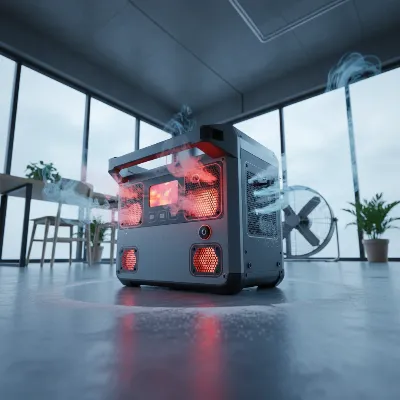 A portable power station with red heat lines, surrounded by cool air flow, illustrating overheating and cooling.
When to Seek Professional Help
While the quick fixes above address many common overheating scenarios, there are times when professional intervention is necessary. If your power station continues to overheat despite applying these solutions, or if you observe any of the following symptoms, it’s time to contact the manufacturer’s support or a qualified technician:
- Persistent Overheating: The unit consistently runs hot even under light load or after a cool-down period.
- Unusual Smells or Sounds: Any burning smell, crackling, or abnormal fan noises could indicate internal component damage.
- Smoke or Physical Damage: Visible smoke, bulging components, or physical deformation of the casing are critical safety hazards. Discontinue use immediately.
- Error Codes: The display shows specific error codes related to high temperature or internal faults that don’t clear with a simple reset.
Ignoring these serious signs can lead to irreversible damage or dangerous situations.
Preventative Measures to Avoid Overheating
Prevention is always better than cure. By adopting a few best practices, you can significantly reduce the likelihood of your power station overheating:
- Regular Cleaning: Make it a habit to periodically clean the power station’s vents and exterior to prevent dust accumulation.
- Monitor Load: Always be aware of the total wattage of the devices you’re connecting and ensure it remains well within the power station’s rated capacity. Consider using a power meter if your unit doesn’t have a detailed display.
- Use Original or Compatible Chargers: Always use the charger supplied by the manufacturer or a certified compatible alternative. Subpar chargers can be inefficient and generate excess heat.
- Proper Storage: When not in use, store your power station in a cool, dry place, ideally between 10-25°C (50-77°F) and at a 40-60% state of charge. Avoid storing it in extremely hot or cold environments, such as a car trunk in summer or an unheated shed in winter.
- Avoid Deep Discharges: Consistently draining the battery to near-zero can accelerate wear and generate more heat during subsequent charging cycles.
Conclusion
Overheating in a portable power station is a significant issue that can impact performance, lifespan, and safety. By understanding the common causes—such as poor ventilation, overloading, high ambient temperatures, and dust accumulation—you can take proactive steps to prevent it. Implementing the five quick fixes—ensuring adequate ventilation, reducing the connected load, operating in suitable temperatures, cleaning the vents, and being mindful of pass-through charging—can often resolve the problem swiftly. Regular maintenance and adherence to manufacturer guidelines are paramount for keeping your power station running efficiently and safely for years to come. Don’t let a hot power station leave you without power; empower yourself with knowledge and quick action.
What steps will you take today to ensure your power station remains cool and reliable?
Frequently Asked Questions
How hot is too hot for a portable power station?
A power station is too hot if it feels excessively warm to the touch, displays a high-temperature warning, or emits unusual smells. While some warmth is normal during operation, persistent heat that causes discomfort or triggers internal protections indicates a problem requiring attention.
Can charging cause a power station to overheat?
Yes, charging can cause a power station to overheat, especially if done in extreme ambient temperatures or if the unit is simultaneously charging and discharging a heavy load. It can also occur if the charger or cable is faulty or incompatible with the unit.
What is the ideal operating temperature for a portable power station?
The ideal operating temperature for most portable power stations, particularly those with LiFePO4 batteries, is typically between 10°C to 25°C (50°F to 77°F). While they can often discharge in a wider range (-20°C to 60°C), staying within the ideal zone ensures optimal performance and battery longevity.
Frequently Asked Questions
How hot is too hot for a portable power station?
A power station is too hot if it feels excessively warm to the touch, displays a high-temperature warning, or emits unusual smells. While some warmth is normal during operation, persistent heat that causes discomfort or triggers internal protections indicates a problem requiring attention. Normal LiFePO4 battery discharge is between -20u00b0C and 60u00b0C.
Can charging cause a power station to overheat?
Yes, charging can cause a power station to overheat, especially if done in extreme ambient temperatures or if the unit is simultaneously charging and discharging a heavy load. It can also occur if the charger or cable is faulty or incompatible with the unit, leading to inefficient power transfer and increased heat.
What is the ideal operating temperature for a portable power station?
The ideal operating temperature for most portable power stations, particularly those with LiFePO4 batteries, is typically between 10u00b0C to 25u00b0C (50u00b0F to 77u00b0F). While they can often discharge in a wider range (-20u00b0C to 60u00b0C), staying within the ideal zone ensures optimal performance and battery longevity, and a narrower charging range of 0u00b0C to 50u00b0C.
What are the main reasons a power station gets too hot?
The main reasons a power station gets too hot include poor ventilation, overloading the unit beyond its continuous output capacity, simultaneous charging and discharging (pass-through charging), extreme ambient temperatures, and the accumulation of dust and debris within its cooling system. Identifying the specific cause is crucial for effective troubleshooting.
When should I seek professional help for an overheating power station?
You should seek professional help if your power station continues to overheat despite applying quick fixes, or if you observe persistent overheating, unusual smells or sounds, visible smoke or physical damage, or specific error codes related to high temperature. These symptoms indicate potential internal component damage that requires expert attention.
Fix an Overheating Portable Power Station
Follow these steps to quickly address and resolve overheating issues with your portable power station, ensuring its longevity and safe operation.
Check and clear any obstructions around the power station's ventilation ports, typically on the sides or back. Move the unit to an open, well-ventilated area, away from walls or soft surfaces that could block airflow. Allow it to cool down naturally in a shaded spot if already hot.
Disconnect high-wattage devices if your power station is running hot. Monitor the display for current output wattage and ensure it stays below 80% of the unit's maximum capacity. Prioritize essential devices to lighten the load and allow internal components to cool.
Avoid using or charging your power station in direct sunlight, hot vehicles, or other high-temperature environments. Move the unit to a cooler, shaded location if it starts to overheat. Operating within the manufacturer's recommended ambient temperature range is crucial for thermal management.
Gently clean external vents using a soft brush, dry cloth, or compressed air to remove accumulated dust, lint, and debris. This build-up can obstruct airflow and hinder the unit's ability to dissipate heat. Regular cleaning prevents insulation and ensures optimal thermal performance.
If your power station overheats during simultaneous charging and discharging, temporarily avoid this mode. Instead, fully charge the power station first, then disconnect the charging input before using it to power devices. This reduces thermal stress by separating the charging and discharging cycles.

My power station was constantly shutting down, and I couldn’t figure out why. Turns out, I was overloading it with too many high-draw appliances. The advice to reduce the connected load was spot on. Now I’m more mindful of what I plug in, and it’s been working perfectly without any shutdowns. Wish I’d known this sooner!
I’ve had my power station for a couple of years now, and it started getting really hot during extended use. I thought it was just old, but after reading about the ventilation issue, I realized I had it tucked away in a corner. Moving it to a more open spot made a huge difference. It’s running much cooler now, and I’m relieved I don’t have to buy a new one yet.
Living in Arizona, extreme ambient temperatures are a real concern for all my gear. I always thought my power station was just struggling with the heat, but the reminder about dust accumulation was a game-changer. I gave it a good clean, and it’s definitely performing better now, even on hotter days. Thanks for the practical tips!
Good info on why these things overheat. I’ve definitely noticed mine getting warm when I’m charging it and running a few things at the same time. The tip about avoiding simultaneous charging and discharging makes sense, but it’s a bit inconvenient when you’re trying to maximize uptime off-grid. Still, better to know than to fry the battery.