Imagine the unexpected silence as the grid goes down, plunging your home into darkness. In an increasingly interconnected world, reliable power is not just a convenience but a necessity for comfort, safety, and communication. Heavy-duty power stations offer a robust solution, providing silent, emission-free electricity to keep essential appliances running during outages, outdoor adventures, or off-grid living. This comprehensive guide delves into the world of high-capacity portable power stations, exploring what makes them indispensable and helping you navigate the options to choose the perfect model for your home backup needs.
Power Station: Comprehensive Portable Energy Solution
A power station is essentially a large, portable battery designed to store electrical energy and deliver it to various devices and appliances. Unlike traditional gas generators, which rely on fossil fuels and emit fumes, power stations operate silently and produce zero emissions, making them safe for indoor use. At their core, these units consist of a high-capacity battery pack, an inverter to convert DC battery power into AC household electricity, a charge controller for efficient recharging, and multiple output ports for diverse connections. They are categorized by their power output (watts) and energy storage capacity (watt-hours), ranging from small units for personal devices to heavy-duty systems capable of powering an entire home.
What is a Power Station?
A power station is a self-contained, rechargeable power source that provides alternating current (AC) and direct current (DC) electricity to power electronic devices and appliances. The primary components include a battery pack, typically lithium-ion or lithium iron phosphate (LiFePO4), an inverter for AC output, a charge controller, and a variety of output ports like AC outlets, USB-A, USB-C, and 12V DC ports. These devices are designed for portability, offering a clean, quiet, and efficient alternative to traditional fuel-based generators, making them ideal for emergency home backup, outdoor activities, and mobile work setups.
Benefits of Using a Power Station
The advantages of integrating a heavy-duty power station into your home or lifestyle are numerous. First and foremost, they provide a critical source of backup power during grid outages, ensuring essential appliances like refrigerators, medical devices, and lighting remain operational. Their reliance on clean battery power means no noisy engines, harmful emissions, or the need to store flammable fuel, making them environmentally friendly and safe for indoor use. Furthermore, their portability makes them invaluable for outdoor adventures such as camping, RVing, or tailgating, bringing the comforts of home to remote locations. For those working remotely or seeking energy independence, a power station ensures continuous operation of important equipment, offering peace of mind and flexibility.
Factors to Consider When Choosing a Power Station
Selecting the right heavy-duty power station requires careful consideration of several key factors to match your specific power needs.
- Power Output (Watts): This indicates the maximum wattage the power station can deliver at any given moment. You need to calculate the combined wattage of all devices you plan to run simultaneously, ensuring the power station’s continuous output meets this demand. Look for models with a high surge capacity to handle the brief power spikes some appliances (like refrigerators or power tools) require when starting up.
- Battery Capacity (Watt-hours – Wh): This measures how much energy the power station can store, directly impacting how long it can power your devices. Estimate the total watt-hours consumed by your essential appliances over your desired backup period. For heavy-duty home backup, capacities often range from 2,000 Wh to 5,000 Wh, with many models offering expandability via additional battery packs.
- Battery Type: The most common types are Lithium-ion (Li-NMC) and Lithium Iron Phosphate (LiFePO4). LiFePO4 batteries are increasingly preferred for heavy-duty applications due to their superior longevity, safety, and thermal stability. They can endure significantly more charge cycles (3,000-5,000+) compared to standard lithium-ion batteries (500-800 cycles), ensuring a longer lifespan for frequent use. While LiFePO4 might have a slightly lower energy density, leading to a heavier unit for the same capacity, their enhanced safety and extended cycle life make them a wiser investment for reliable home backup.
- Number and Type of Ports: Ensure the power station has a sufficient number and variety of outlets to accommodate all your devices. This typically includes multiple AC outlets for household appliances, DC ports for car accessories, and various USB ports (USB-A and USB-C, often with Power Delivery) for charging smaller electronics.
- Recharging Options: Versatile recharging capabilities enhance a power station’s utility. Most can be recharged from a standard AC wall outlet, often rapidly. Solar panel input is a crucial feature for sustainable and off-grid recharging, extending runtime indefinitely during prolonged outages. Car charging options are also useful for on-the-go power replenishment.
- Additional Features: Look for features that add convenience and functionality, such as clear LCD screens displaying real-time power input/output and battery status, built-in LED lights for emergencies, and advanced Battery Management Systems (BMS) for protection against overcharge, over-discharge, and temperature fluctuations. Some heavy-duty units also offer a dedicated 30-amp or even 50-amp RV/transfer switch port for more robust home integration.
So sánh các loại Power Station phổ biến trên thị trường
The market for heavy-duty power stations is dynamic, with several brands offering robust solutions for home backup. Here’s a comparison highlighting key features across popular models, focusing on those suitable for demanding applications:
| Feature/Model | Anker SOLIX F3800 | EcoFlow DELTA Pro Ultra | Jackery Explorer 2000 Plus | Bluetti AC200Max | Pecron E3600 |
|---|---|---|---|---|---|
| Battery Capacity | 3,840Wh (Expandable up to 26.9kWh) | 6,000Wh (Modular, highly expandable) | 2,048Wh (Expandable up to 24kWh) | 2,048Wh (Expandable up to 8,192Wh) | 3,072Wh (Expandable) |
| Continuous Output | 6,000W | 7,200W | 3,000W | 2,200W | 3,600W |
| Surge Output | 12,000W | N/A (High surge implied by output) | 6,000W | 4,800W | N/A |
| Battery Type | LiFePO4 | LiFePO4 | LiFePO4 | LiFePO4 | LiFePO4 |
| Cycle Life (to 80%) | 3,000+ | 3,500+ | 3,000+ | 3,500+ | 3,500+ |
| Recharge Time (AC) | ~1.7 hours | ~2 hours | ~2 hours | ~2-3 hours | ~2.5 hours |
| Solar Input | 2,400W | 4,200W | 1,400W | 900W | 2,000W |
| Unique Features | Dedicated 50A output (120/240V), UPS function, wheels | Designed for whole-home backup, modular design, quiet | Wheels & handle, robust build, app control | Versatile inputs, expandable, smart touchscreen | Affordable performance, 240V hub for dual units |
| Portability | Wheeled design, heavy (approx. 130 lbs) | Modular units, heavy (main unit + battery) | Wheeled design, heavy (approx. 61.5 lbs base) | Portable by one person (approx. 62 lbs) | No handle (some models), heavy |
Hướng dẫn mua Power Station (Buying Guide)
Navigating the power station market can be overwhelming, but a systematic approach ensures you find the best fit for your home backup needs.
- Assess Your Specific Power Requirements: Begin by listing all the essential appliances you want to power during an outage (e.g., refrigerator, lights, Wi-Fi router, medical devices, well pump). Note their running wattage and, for motor-driven appliances, their surge wattage. Calculate the total continuous wattage required and the estimated daily watt-hour consumption. This will guide your choice of power output and battery capacity.
- Compare Products Based on Key Factors: Use the criteria outlined above—power output, battery capacity, battery type (prioritizing LiFePO4 for longevity and safety), port variety, and recharging options—to narrow down your choices. Pay close attention to expandability if you anticipate needing more power in the future.
- Read Reviews and User Feedback: Consult independent reviews, forums, and customer testimonials. Real-world experiences can provide invaluable insights into a product’s performance, durability, and any potential issues. Look for feedback specifically from users employing power stations for home backup.
- Purchase from Reputable Suppliers: Buy from authorized dealers or directly from the manufacturer to ensure you receive genuine products and proper customer support. Avoid questionable sellers to mitigate risks associated with warranty, returns, and product authenticity.
- Check Warranty and Return Policies: Understand the warranty period and what it covers, especially for the battery, which is the heart of the unit. A good warranty (typically 5+ years for LiFePO4 batteries) signifies manufacturer confidence in their product’s durability. Familiarize yourself with the return policy in case the product doesn’t meet your expectations.
Top Heavy Duty Power Stations for Home Backup
For serious home backup, “heavy duty” implies not just high capacity but also robust output, expandable systems, and advanced features. Here are five top contenders that stand out:
-
Anker SOLIX F3800: This powerhouse is quickly becoming an industry standard for heavy-duty home backup. With a massive 3,840Wh LiFePO4 battery expandable up to 26.9kWh and a colossal 6,000W AC output (12,000W surge), it can handle virtually any household appliance, including large air conditioners and demanding power tools. Its standout feature is the dedicated 50-amp port supporting both 120V and 240V simultaneously, enabling seamless integration with home electrical systems. The wheeled design and robust construction make it a top choice for comprehensive home resilience.
-
EcoFlow DELTA Pro Ultra: Positioned as the ultimate heavyweight for whole-home backup, the DELTA Pro Ultra features a modular design, allowing users to stack multiple 6,000Wh LiFePO4 battery modules. A single main unit boasts a formidable 7,200W inverter, capable of scaling to truly enormous power levels to run an entire household. Its quieter operation and focus on seamless home integration make it an excellent choice for those seeking maximum power and flexibility during extended outages.
-
Jackery Explorer 2000 Plus: The Jackery Explorer 2000 Plus offers an impressive 2,048Wh capacity, expandable up to a staggering 24kWh with additional battery packs. It delivers a substantial 3,000W continuous output (6,000W peak), making it suitable for high-demand appliances. Its LiFePO4 battery ensures longevity with over 3,000 charge cycles. Designed with built-in wheels and a telescoping handle, it offers a degree of portability despite its heavy-duty capabilities, making it a reliable companion for both home emergencies and extensive outdoor setups.
-
Bluetti AC200Max: A highly versatile and popular heavy-duty option, the Bluetti AC200Max provides a 2,048Wh LiFePO4 battery, expandable up to 8,192Wh with Bluetti’s B230 or B300 expansion batteries. It offers a solid 2,200W continuous AC output, capable of powering most household appliances. The AC200Max is praised for its multiple charging options, including significant solar input, and its intuitive touchscreen display. While slightly less powerful than some newer behemoths, its expandability and proven reliability make it an excellent choice for substantial home backup.
-
Pecron E3600: For those seeking a high-capacity solution with an eye on value, the Pecron E3600 stands out. It comes with a 3,072Wh LiFePO4 battery that is expandable, and a 3,600W inverter. Pecron offers a bundle with two E3600LFP units and a 240V hub, allowing them to be connected for higher voltage applications, offering exceptional value for building a high-capacity setup on a budget. While it might lack some of the premium polish of its competitors, its performance and affordability make it a compelling option for heavy-duty backup.
> “Choosing a heavy-duty power station is about balancing your immediate needs with future scalability. Always prioritize LiFePO4 batteries for their long-term value and safety, especially for home backup scenarios.” – Alex Chen, Lead Energy Systems Engineer
Mẹo sử dụng và bảo quản Power Station
To ensure your heavy-duty power station performs optimally and lasts for many years, proper usage and maintenance are crucial.
- Charge Properly: Follow the manufacturer’s recommendations for charging. While LiFePO4 batteries are robust and can handle deep discharges, avoiding consistently draining them to 0% and then immediately charging to 100% can slightly extend their already long lifespan. Use the appropriate charging cables and adapters, and utilize solar charging whenever possible for sustainable power.
- Store in a Dry, Cool Place: Power stations should be stored in a climate-controlled environment, away from direct sunlight, extreme temperatures, and excessive humidity. Ideal storage temperatures typically range between 32°F and 104°F (0°C to 40°C). Avoid exposing the unit to freezing temperatures, especially during charging.
- Avoid Extreme Temperatures: Operating your power station outside its recommended temperature range can degrade battery performance and potentially pose safety risks. While LiFePO4 batteries offer good thermal stability, prolonged exposure to excessive heat or cold can impact efficiency and longevity.
- Regular Cleaning: Keep the exterior of your power station clean and free of dust or debris, especially around ventilation ports. Use a dry, soft cloth for cleaning; avoid liquid cleaners that could seep into the unit. Ensure all ports are free of obstructions to maintain proper connectivity.
- Periodic Cycling: Even if not used frequently, it’s beneficial to discharge and recharge your power station at least once every 3-6 months. This helps maintain battery health and ensures the unit is ready when an emergency strikes. Always aim to store the power station with a partial charge, typically between 50-80%.
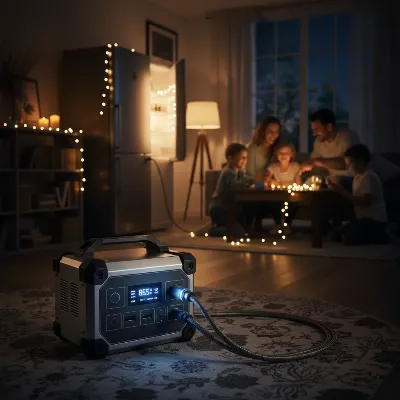 A heavy-duty power station providing backup power to essential home appliances during a blackout, showcasing its connections.
Conclusion
Heavy-duty power stations have transformed how we approach energy independence and emergency preparedness. They offer a clean, quiet, and powerful solution to keep your home running smoothly, whether facing a blackout or venturing off-grid. By understanding the critical factors like power output, battery capacity, and the superior benefits of LiFePO4 technology, you can confidently select a unit that meets your specific needs. The leading models from Anker, EcoFlow, Jackery, Bluetti, and Pecron demonstrate the advanced capabilities available today, promising reliability and peace of mind. Investing in a heavy-duty power station is investing in resilience—are you ready to secure your power future?
Frequently Asked Questions
What is the primary advantage of LiFePO4 batteries in heavy-duty power stations?
LiFePO4 batteries offer a significantly longer lifespan, often reaching 3,000 to 5,000 charge cycles compared to 500-800 for other lithium-ion types. They also boast enhanced safety due to superior thermal stability, drastically reducing the risk of overheating or fire, making them ideal for reliable home backup.
Can a heavy-duty power station truly power an entire home?
While some advanced heavy-duty power stations, especially those with modular and expandable designs like the EcoFlow DELTA Pro Ultra, are engineered for whole-home backup, most are designed to power essential circuits or high-demand appliances. For complete home power, you might need a substantial system with multiple expansion batteries or a direct integration with your home’s electrical panel via a transfer switch.
How long can a heavy-duty power station typically last on a single charge?
The runtime depends heavily on the power station’s battery capacity (Wh) and the total wattage of the devices being powered. A 2,000Wh power station running devices consuming 200W will last approximately 10 hours. Heavy-duty models with expandable capacities can extend this runtime significantly, often for several days, especially when supplemented with solar charging.
Are heavy-duty power stations portable despite their size?
Many heavy-duty power stations, particularly those designed for home backup, incorporate features like sturdy wheels and telescoping handles to aid in portability. While they can be quite heavy (often 60-150+ lbs for the main unit), these design elements make them manageable for single individuals or easy to move between locations around the house or campsite.
How fast can a heavy-duty power station be recharged?
Recharging speeds vary by model and input method. Most heavy-duty power stations support rapid AC charging, often reaching 80% capacity in 1-2 hours and full charge in 2-3 hours. When combined with solar panels, especially multiple high-wattage panels, charging times can be significantly reduced, allowing for continuous power generation during daylight hours.
