Imagine the serene silence of a starlit night at your tent campsite, broken only by the gentle hum of your portable fan or the quiet charging of your phone. For years, tent camping meant disconnecting entirely, but with advancements in mobile energy solutions, that’s no longer the case. Compact power stations have revolutionized how we experience the great outdoors, offering a reliable, clean, and silent power source for all your essential devices and small appliances. This guide will help you navigate the world of portable power, specifically focusing on the top compact models ideal for your 2026 tent camping adventures, ensuring you can bring a slice of modern convenience to your wilderness escape.
What is a Portable Power Station?
A portable power station is essentially a large, rechargeable battery pack equipped with various output ports to power different devices. Unlike traditional noisy and fume-emitting gas generators, these units operate silently and produce clean energy, making them perfect for sensitive electronics and peaceful camping environments. Key components typically include a high-capacity lithium-ion or LiFePO4 battery, an inverter to convert DC battery power into AC household current, and multiple ports like AC outlets, USB-A, USB-C (often with Power Delivery), and 12V DC car ports. They are designed to be self-contained powerhouses, offering electricity on demand wherever you need it.
Why Use a Compact Power Station for Tent Camping?
The allure of tent camping often lies in its simplicity and connection with nature, but a compact power station seamlessly integrates into this experience without compromising it. The primary benefit is convenience; you can keep smartphones, headlamps, cameras, and even small portable fans or air pumps charged and ready. They eliminate the need for disposable batteries, reducing waste and ensuring you always have light and communication. Furthermore, for those who enjoy longer trips or need to power medical devices like CPAP machines, a compact power station offers essential reliability and peace of mind. Their quiet operation means no disturbing the natural tranquility or your fellow campers, and being emissions-free, they are a much greener alternative. For browse all portable power articles on this site.
Key Factors When Choosing a Compact Power Station for Tent Camping
Selecting the right compact power station for tent camping requires balancing power with portability. Here are the crucial elements to consider:
- Capacity (Watt-hours – Wh): This measures how much energy the battery can store. For tent camping, a capacity between 200Wh and 1000Wh is generally ideal. Smaller capacities suit weekend trips and basic device charging, while larger ones support longer stays or power more demanding items like a portable fridge.
- Output (Watts): This indicates the maximum power the station can deliver at any given time. Ensure the continuous wattage output meets the requirements of your most power-hungry device. Most compact units offer a blend of AC (for standard wall plugs), DC (for car chargers), and USB ports (for phones, tablets, laptops). Pure sine wave AC output is vital for sensitive electronics.
- Weight & Size: Crucial for tent camping, especially if you’ll be carrying it any distance from your vehicle. Look for models under 25 pounds, with some ultra-compact options weighing under 10 pounds. Dimensions should allow for easy packing in your car or tent.
- Battery Type: Lithium Iron Phosphate (LiFePO4 or LFP) batteries are increasingly common. They offer a much longer lifespan (more charge cycles) and enhanced safety compared to traditional Lithium-ion (NMC) batteries, though NMC can sometimes offer slightly better energy density (lighter for the same capacity).
- Charging Options & Speed: Versatile charging inputs are a big plus. Look for units that can recharge from a wall outlet (AC), your car’s 12V port, and, ideally, solar panels. Fast charging capabilities, especially from AC, can be a game-changer for quick turnarounds between trips.
- Port Variety: Assess the number and types of ports. Ensure you have enough AC outlets for any small appliances, multiple USB-A and USB-C Power Delivery (PD) ports for fast-charging modern devices, and a 12V DC car port if you use specific camping accessories.
- Durability & Features: Consider build quality. While an IP rating for water resistance isn’t always standard for power stations, some rugged designs offer better protection against dust and minor splashes. Built-in LED lights, clear LCD displays, and companion smartphone apps for remote monitoring and control can significantly enhance the user experience.
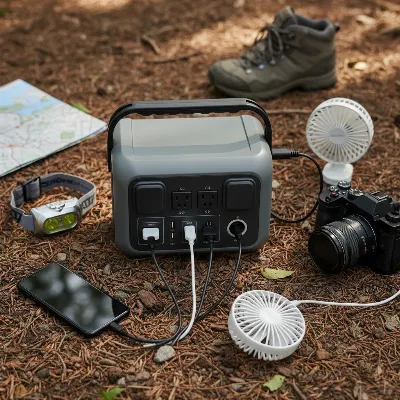 A compact portable power station surrounded by typical camping gear like a headlamp, phone, small fan, and camera.
Top 5 Best Compact Power Stations for Tent Camping in 2026
When packing for your tent camping adventure, space and weight are paramount. Here are five of the best compact power stations that offer a blend of portability, power, and features suitable for the modern camper in 2026.
1. Anker SOLIX C300 DC Portable Power Station
The Anker SOLIX C300 DC is an exceptional choice for backpackers and minimalist tent campers due to its ultra-compact, lightweight design. It forgoes AC output to significantly reduce weight and size, focusing purely on high-speed DC charging.
- Key Highlights for Camping: Weighing under 10 pounds, it’s roughly the size of a lunchbox. It offers an impressive 288Wh capacity with a max output of 300 watts exclusively through DC ports. Features multiple high-wattage USB-C PD ports, ideal for rapidly charging laptops, phones, and drones.
- Pros: Extremely lightweight and portable; fast USB-C PD charging; durable build.
- Cons: No AC outlets, limiting its ability to power standard household appliances.
- Ideal User: Backpackers, hikers, or tent campers who primarily need to charge USB-powered devices and prioritize the lightest possible carry.
2. EcoFlow River 3 Plus Portable Power Station
The EcoFlow River 3 Plus strikes an excellent balance between portability and versatility, making it a fantastic all-rounder for tent camping. It’s lauded for its rapid charging and comprehensive port selection in a compact form factor.
- Key Highlights for Camping: Offers a 286Wh capacity with a 600W AC output (expandable). It can charge from 0% to 100% in about 60 minutes via an AC wall outlet, meaning you can power up quickly before heading out. It provides multiple AC, USB-C, and USB-A ports.
- Pros: Very fast AC recharging; good balance of capacity and output for its size; versatile port options.
- Cons: Not as lightweight as DC-only models if every ounce counts.
- Ideal User: Campers who need both AC and DC power for a mix of devices and small appliances, valuing quick recharge times for weekend trips.
3. Jackery Explorer 300 Plus Portable Power Station
The Jackery Explorer 300 Plus builds on Jackery’s reputation for user-friendly, reliable power solutions in a highly portable package. It’s celebrated for its straightforward operation and balanced performance.
- Key Highlights for Camping: Weighs just over 8 pounds with a capacity of approximately 300Wh. It provides a 300W continuous output, offering essential AC and multiple USB ports. It’s designed to be simple to use, a plug-and-play option for beginners.
- Pros: Extremely lightweight; intuitive interface; reliable for basic camping needs; can charge via solar.
- Cons: Lower capacity and output compared to some larger “compact” units.
- Ideal User: Beginners, casual tent campers, or those primarily needing to charge personal electronics, lights, and small fans for a night or two.
4. Bluetti EB3A Portable Power Station
The Bluetti EB3A is often highlighted as a “small but mighty” option, offering impressive features and output for its diminutive size and budget-friendly price point. It’s a great entry point into portable power.
- Key Highlights for Camping: With a 268Wh capacity and 600W AC output, it punches above its weight. It utilizes LiFePO4 battery technology for a longer lifespan and offers fast charging (80% in 30 minutes). Includes multiple AC, USB, and a wireless charging pad.
- Pros: Excellent value; LiFePO4 battery for longevity; very fast charging; compact design.
- Cons: Slightly heavier than some comparable capacity units due to LiFePO4 cells.
- Ideal User: Budget-conscious campers who still want robust features, durability, and enough power for essential devices and a few small appliances for a short trip.
5. Anker SOLIX C1000 Gen 2 Portable Power Station
While on the higher end of “compact” for tent camping, the Anker SOLIX C1000 Gen 2 consistently earns top marks for its overall performance, fast charging, and robust build, making it a powerful option for those needing more juice.
- Key Highlights for Camping: Features 1024Wh capacity and a formidable 2000W continuous output (3000W peak), capable of running more demanding camping appliances. It boasts ultra-fast charging, reaching full capacity in under an hour, and utilizes advanced safety technology. It’s still relatively portable for its power at around 25 pounds.
- Pros: High output and capacity for its size; extremely fast charging; durable construction with advanced safety features; suitable for sensitive electronics.
- Cons: Heavier than other “compact” options, making it more suited for car camping at a base tent rather than hiking in.
- Ideal User: Campers who need significant power for longer trips, groups, or those bringing power-hungry devices like portable fridges, electric griddles, or CPAP machines, and can manage the slightly increased weight.
Buying Guide: Choosing Your Perfect Camping Power Station
Choosing the ideal compact power station for tent camping comes down to understanding your specific needs and matching them with the right features.
- Assess Your Power Needs: List every electronic device and small appliance you plan to bring (phones, tablets, laptops, lights, fans, portable coolers, air pumps, CPAP machines). Check their wattage requirements and estimate how long you’ll need to run them. A good rule of thumb for average tent camping might be 200-500Wh for light use over a weekend, or 500-1000Wh for more extensive needs or longer trips.
- Consider Trip Duration: For overnight or single-day trips, smaller capacities (200-300Wh) are often sufficient. Multi-day excursions without vehicle access or solar recharging will require higher capacities (500Wh+).
- Balance Weight and Capacity: The “compact” definition varies. If you’re hiking to your campsite, every pound matters, and a lighter, lower-capacity unit like the Anker SOLIX C300 DC or Jackery Explorer 300 Plus is better. For car camping where the power station stays mostly put, a heavier, higher-capacity unit like the Anker SOLIX C1000 Gen 2 or EcoFlow Delta 2 might be suitable.
- Evaluate Charging Options: Ensure the power station can be recharged conveniently. AC wall charging is standard, but solar input is invaluable for extended off-grid trips. Consider the type and efficiency of compatible solar panels.
- Read Reviews and Check Warranty: Independent reviews from other campers can offer real-world insights into performance and durability. Always verify the manufacturer’s warranty and customer support.
> “The ideal camping power station isn’t just about raw power; it’s about the right balance of portability, capacity, and versatility for your specific adventure.” – Alex ‘Admin’ Johnson, Mobile Energy Solutions Expert
Tips for Using and Maintaining Your Power Station While Camping
To ensure your compact power station serves you reliably for many camping seasons, proper usage and maintenance are key.
- Charge Correctly: Always fully charge your power station before a trip. For LiFePO4 batteries, partial charges are fine, but occasional full cycles can help calibrate the battery management system. Avoid completely draining the battery frequently, as this can shorten its lifespan.
- Store Properly: When not in use, store your power station in a cool, dry place, away from direct sunlight and extreme temperatures. Most manufacturers recommend storing at a 50-80% charge level for optimal battery health. Check the manual for specific storage temperature ranges.
- Avoid Extreme Temperatures: Portable power stations perform best within a specified operating temperature range. Extreme cold can reduce battery efficiency and output, while extreme heat can damage the battery and internal components. Keep it out of direct scorching sun or freezing conditions inside your tent if possible.
- Clean Regularly: Wipe down the exterior with a dry or slightly damp cloth to keep ports clear of dust and debris. Ensure vents are unobstructed to prevent overheating.
- Optimize Solar Charging: If using solar panels, position them for maximum sun exposure and adjust their angle throughout the day. Keep panels clean. Remember that tree shade, clouds, and low sun angles significantly reduce solar input.
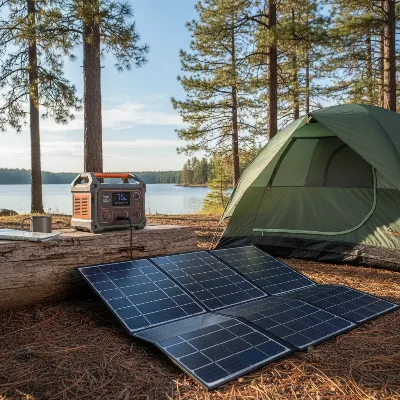 A compact portable power station being charged by a foldable solar panel at a tent campsite during the day.
Conclusion
Choosing the best compact power station for your tent camping adventures in 2026 means finding the perfect blend of power, portability, and features to suit your individual needs. Whether you’re a minimalist hiker prioritizing lightweight DC charging or a car camper needing versatile AC output for more creature comforts, the market offers excellent options from brands like Anker, EcoFlow, Jackery, and Bluetti. By carefully considering capacity, output, battery type, and charging flexibility, you can ensure your outdoor experiences are powered, convenient, and truly enjoyable. Which of these portable powerhouses will be your trusted companion on your next wilderness escape?
Frequently Asked Questions
How many watt-hours do I need for tent camping?
For light tent camping (charging phones, headlamps, small fan) for a weekend, 200-300Wh is often sufficient. For longer trips or powering more items like a portable fridge or CPAP machine, aim for 500-1000Wh. It’s always best to list your devices and calculate their combined power consumption.
Can I charge my power station with solar panels while camping?
Yes, most compact power stations are designed to be compatible with portable solar panels. This is an excellent way to recharge off-grid, especially on multi-day trips. Always check the power station’s maximum solar input and ensure your solar panel’s voltage matches.
Are LiFePO4 batteries better for camping power stations?
LiFePO4 (Lithium Iron Phosphate) batteries offer a significantly longer lifespan (more charge cycles) and improved safety compared to older Lithium-ion (NMC) batteries. While they can be slightly heavier for the same capacity, their durability and longevity make them an excellent choice for frequent camping use.
What can a compact power station typically power?
A compact power station can power a wide range of devices. This includes charging smartphones, tablets, laptops, drones, and cameras. It can also run small appliances like LED lights, portable fans, air mattress pumps, electric kettles, and even small portable coolers, depending on the unit’s capacity and output.
Is water resistance important for camping power stations?
While not all power stations are fully waterproof, some offer basic splash resistance. For tent camping, having a unit that can withstand light rain or accidental spills is a definite advantage, though it’s always recommended to keep electronics protected from moisture in a tent.
