Imagine a world where a sudden power outage doesn’t disrupt your work, where remote adventures are powered without noisy generators, and essential devices stay charged no matter where you are. Portable power stations are transforming this vision into reality, offering a clean, quiet, and efficient alternative to traditional power sources. As technology advances, these devices are becoming more powerful, compact, and accessible, making them indispensable for everything from home emergencies to off-grid living. This comprehensive guide will navigate the world of portable power stations, exploring what they are, their benefits, crucial factors to consider when buying one, and revealing the top models poised to dominate the market in 2026.
Power Station: The Comprehensive Mobile Energy Solution
A portable power station is essentially a large, rechargeable battery packed with various output ports, designed to provide electricity on the go or as a backup at home. These devices house high-capacity lithium-ion batteries, often LiFePO4 (Lithium Iron Phosphate) for enhanced durability and safety, coupled with an inverter that converts the battery’s DC power into usable AC power for household appliances. Modern power stations also integrate advanced charge controllers, ensuring efficient charging from wall outlets, solar panels, or even a car. They come in a broad range of sizes and capacities, from compact units for charging small electronics to robust systems capable of powering critical home appliances during a blackout.
What is a Power Station?
At its core, a portable power station serves as a compact, self-contained energy hub. It comprises several key components: a high-density battery cell array that stores electrical energy, a sophisticated inverter to convert the stored DC power into standard AC household electricity, and a charge controller that manages the incoming power from various sources like solar panels or wall chargers. These units are equipped with a diverse array of output ports, including AC outlets, DC ports, and multiple USB types (A and C), allowing them to power a wide spectrum of devices simultaneously. They are classified primarily by their capacity (measured in Watt-hours, Wh) and continuous output power (measured in Watts, W), catering to diverse applications from light-duty camping to heavy-duty home backup.
Benefits of Using a Power Station
The advantages of integrating a portable power station into your life are multifaceted and significant. Foremost, they offer an immediate and reliable source of backup power during grid failures, safeguarding critical appliances like medical devices or refrigerators without the noise or fumes of gas generators. Environmentally conscious users appreciate their clean energy profile, producing zero emissions during operation and often rechargeable via renewable solar energy. For outdoor enthusiasts, digital nomads, and remote workers, these stations provide unparalleled convenience, ensuring laptops, cameras, and portable refrigerators remain powered far from traditional outlets. Furthermore, many models feature Uninterruptible Power Supply (UPS) functionality, offering seamless power transition to keep sensitive electronics running without a flicker during outages.
Factors to Consider When Choosing a Power Station
Selecting the ideal portable power station requires careful consideration of several key specifications to ensure it perfectly aligns with your energy demands. Understanding these factors will help you make an informed decision, balancing performance, portability, and value.
- Capacity (Watt-hours – Wh): This metric dictates how much energy the power station can store, directly correlating to how long it can power your devices. A higher Wh rating means longer runtimes for your electronics. For example, a 1000Wh unit can power a 100W device for approximately 10 hours.
- Output Power (Watts – W): This refers to the maximum amount of power the station can deliver at any given moment. It’s crucial to distinguish between continuous wattage (the power it can sustain) and peak wattage (a brief surge of power for starting certain appliances). Ensure the continuous wattage meets the requirements of your most power-hungry devices.
- Battery Type: While most use lithium-ion, Lithium Iron Phosphate (LiFePO4) batteries are increasingly prevalent. LiFePO4 offers superior longevity, boasting significantly more charge cycles (e.g., 3,000 cycles to 80% capacity for some models) and enhanced safety compared to traditional lithium-ion formulations, though they may have a slightly higher upfront cost.
- Number and Type of Ports: Assess the variety and quantity of output ports. Standard configurations include multiple AC outlets (for household plugs), DC ports (for car chargers or specific appliances), and various USB ports (USB-A and high-power USB-C PD for fast-charging modern devices). The more diverse the ports, the more versatile the power station.
- Rechargeability: How quickly and by what methods can the power station be recharged? Fast-charging capabilities from a wall outlet are a major convenience, with many 2026 models able to reach 80% charge in under an hour. Solar input compatibility is essential for off-grid use, and car charging offers flexibility on the go.
- Portability & Durability: Consider the weight, dimensions, and ergonomic design (e.g., sturdy handles). For frequent travel or camping, a lighter, more compact unit is desirable. Durability aspects, such as rugged construction and impact resistance, are vital for units used in demanding outdoor environments, ensuring they withstand bumps and vibrations.
- Additional Features: Modern power stations offer a host of supplementary features. UPS functionality with a rapid switchover time (ideally 20ms or faster) is critical for sensitive electronics like computers or medical devices. Other useful additions include clear LCD displays, integrated LED lights, robust overload protection systems, and smartphone app control for remote monitoring and management.
Comparing Popular Power Stations on the Market
The portable power station market is a dynamic arena, with manufacturers constantly innovating to offer more efficient, powerful, and user-friendly solutions. Brands like Anker, Bluetti, EcoFlow, and Jackery have emerged as leaders, each carving out niches with distinct strengths. Anker, for instance, is often praised for its rugged build quality and innovative fast-charging technologies, epitomized by its “HyperFlash” tech. Bluetti is known for its high-capacity units suitable for serious off-grid living and home backup, often focusing on robust designs and comprehensive feature sets. EcoFlow consistently delivers fast-charging units with excellent efficiency and a strong emphasis on smart features and modularity, making them versatile for various scenarios. Jackery frequently targets the value segment, offering reliable and user-friendly stations that appeal to campers and minimalists. This fierce competition ultimately benefits consumers, driving advancements in battery chemistry, charging speeds, output versatility, and overall product reliability, ensuring a wide array of options to meet specific needs and budgets.
Your Ultimate Buying Guide for Portable Power Stations
Navigating the multitude of portable power stations available can seem daunting, but by systematically evaluating your needs against product features, you can confidently choose the perfect device. This buying guide breaks down the essential steps to ensure your investment powers your life effectively.
- Identify Specific Usage Needs: Begin by listing every device you intend to power and their individual wattage requirements. Will you be powering a smartphone and laptop on a weekend camping trip, or a refrigerator and power tools for extended off-grid work or home backup? Understanding your specific use case will dictate the necessary capacity and output.
- Match Capacity and Output to Your Devices: Once you know your devices’ power draw, calculate the total watt-hours needed. If you plan to run multiple devices simultaneously, ensure the power station’s continuous output wattage exceeds their combined requirements. Always factor in a buffer to avoid overloading the unit.
- Evaluate Battery Chemistry for Longevity: Prioritize power stations with LiFePO4 batteries if long-term durability and safety are critical. While potentially more expensive initially, their extended lifecycle (often thousands of cycles) translates to a better return on investment over time.
- Assess Connectivity Options: Verify that the power station provides sufficient and appropriate ports for all your devices. Consider not just the number of AC outlets but also the availability of high-wattage USB-C Power Delivery ports for modern laptops and fast-charging phones.
- Consider Charging Flexibility: If you’re frequently off-grid, robust solar charging capabilities are a must. Check the maximum solar input wattage the unit can handle. For home backup, quick wall charging is paramount. Some units also offer car charging, adding another layer of versatility.
- Read User Reviews and Verify Warranty: Before purchasing, delve into user reviews to gain insights into real-world performance, common issues, and customer service experiences. A strong warranty (e.g., 5 years) from a reputable manufacturer provides peace of mind and indicates confidence in product quality. Purchase from authorized dealers to ensure warranty validity.
Top 10 Best Portable Power Stations to Buy in 2026
The market for portable power stations in 2026 is robust, offering an impressive array of options tailored for every need. Here are the top 10 models that stand out for their performance, features, and value, making them excellent choices for various applications.
-
Bluetti Elite 200 V2
- Highlight: Best Overall for Heavy-Duty Use
- Description: An unmatched capacity and efficiency unit ideal for van life, extensive off-grid work, and reliable home backup. It offers robust power delivery for demanding applications.
- Pros: High capacity, excellent efficiency, robust build, suitable for critical home backup.
- Cons: Higher price point, potentially heavy for frequent portability.
-
EcoFlow Delta 2
- Highlight: Best Overall for Versatility and Value
- Description: A strong performer across all testing categories, known for its low weight, ease of use, and fast-charging capabilities. It utilizes LiFePO4 battery chemistry for longevity.
- Pros: Exceptional value, fast recharge (under 1.5 hours), LiFePO4 battery, versatile power output, lightweight.
- Cons: Not water-resistant (IP20 rating).
-
Anker SOLIX C1000 Gen 2
- Highlight: Fan Favorite for Durability and Fast Recharging
- Description: Features a rugged build and an impressive value-to-power ratio with 1056Wh capacity and 1800W output. Its “HyperFlash” tech allows recharging in under an hour, and “InfiniPower” design ensures durability.
- Pros: Extremely fast charging, highly durable, excellent power output, good for solar.
- Cons: Specific compatible solar panels might not be universally favored.
-
EcoFlow Delta Pro 3
- Highlight: Best for Whole-Home Backup
- Description: A high-capacity behemoth designed to keep an entire home running during extended outages. It boasts a substantial power output and extensive modularity options.
- Pros: Massive capacity, exceptional power output, expandable ecosystem, suitable for critical home functions.
- Cons: Very expensive, less portable due to size and weight.
-
Jackery Explorer 1000 v2
- Highlight: Most Versatile Mid-Size Option
- Description: A highly versatile and easy-to-use power station, offering a balance of capacity and portability for various applications, from camping to light home use.
- Pros: User-friendly interface, solid capacity for its size, good range of output ports.
- Cons: Recharge time might be slower compared to some competitors.
-
Goal Zero Yeti 1500X
- Highlight: High-Powered and Solar-Ready
- Description: A robust mid-size unit offering significant power capacity suitable for larger equipment and appliances. It pairs seamlessly with solar panels for sustainable recharging.
- Pros: Excellent for larger devices, strong solar charging integration, reliable performance.
- Cons: Can be heavier than comparable capacity units, higher price point.
-
Jackery Explorer 300 Plus
- Highlight: Best Value for Budget-Conscious Users
- Description: An ideal choice for campers or minimalists seeking a reliable power solution without breaking the bank. It delivers solid performance for essential devices.
- Pros: Affordable, lightweight, compact, good for basic charging needs.
- Cons: Limited capacity and output for larger appliances.
-
Oupes Mega 1
- Highlight: Strong Contender for Best Value
- Description: Offers a compelling balance of features and price, making it an excellent value proposition for those needing a versatile mid-range power station.
- Pros: Competitive pricing, decent capacity, good range of ports.
- Cons: Brand recognition might be lower than established leaders.
-
UDPOWER S1200
- Highlight: Affordable Yet Serious Home Backup with UPS
- Description: Positioned as an affordable but powerful option for home backup, featuring fast UPS functionality (≤10ms switchover) to protect sensitive electronics during outages.
- Pros: Excellent UPS feature, good capacity for its price, reliable home backup.
- Cons: Specific model variants may differ in features and price; less known brand.
-
Bluetti EB70S
- Highlight: Best High-Wattage Under $500
- Description: Provides impressive wattage output for its compact size and affordable price, making it a strong option for powering several medium-demand devices.
- Pros: Great power-to-price ratio, compact, portable.
- Cons: Lower capacity compared to larger units, limits usage for very power-hungry devices.
> “The rapid advancements in battery technology, especially LiFePO4, are making portable power stations more efficient and safer than ever before. Consumers in 2026 can expect faster charging, longer lifespans, and smarter integration with renewable energy sources.” – Alex Chen, Lead Energy Solutions Engineer
Tips for Using and Maintaining Your Power Station
To maximize the lifespan and performance of your portable power station, proper usage and maintenance are crucial. These simple tips will help ensure your device remains a reliable power source for years to come.
- Optimal Charging Practices: Always use the charger provided by the manufacturer. Avoid consistently draining the battery to 0% or charging it to 100% unless necessary. For LiFePO4 batteries, maintaining a charge between 20% and 80% can significantly extend their lifespan over thousands of cycles.
- Store in a Dry, Cool Environment: Extreme temperatures, both hot and cold, can degrade battery performance and longevity. Store your power station in a well-ventilated, dry place, ideally between 0°C and 40°C (32°F and 104°F), away from direct sunlight or excessive humidity.
- Avoid Extreme Temperatures During Operation: While many units are designed for outdoor use, prolonged exposure to scorching sun or freezing conditions can impact efficiency and potentially damage internal components. If operating in extreme cold, keep the unit insulated.
- Regular Cleaning: Periodically wipe down the exterior of your power station to remove dust and debris. Ensure all ports are clear of obstructions. Never use abrasive cleaners or submerge the unit in water.
- Check for Software Updates: Some advanced power stations come with companion apps that allow for firmware updates. These updates can improve performance, add new features, or enhance safety protocols, so check for them regularly.
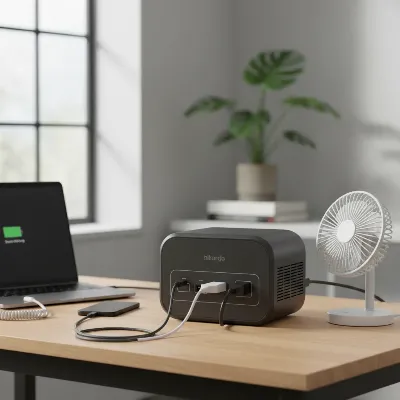 Portable power station charging multiple devices with various cables
Conclusion
Portable power stations have evolved into indispensable tools for modern living, providing reliable, clean, and flexible energy solutions for an increasingly mobile and unpredictable world. Whether you’re safeguarding your home against outages, embarking on off-grid adventures, or simply seeking convenient power for remote work, there’s a perfect model designed to meet your unique demands. By carefully considering factors like capacity, output, battery type, and charging options, you can select a device that not only fits your lifestyle but also offers lasting value and peace of mind. The innovations seen in 2026, from lightning-fast charging to ultra-durable LiFePO4 batteries, underscore the commitment of manufacturers to deliver superior portable power. Which of these top contenders will be the ultimate power companion for your needs this year?
Frequently Asked Questions
What is the difference between a portable power station and a generator?
A portable power station uses rechargeable batteries to provide quiet, emission-free electricity, typically converting stored DC power into AC. A traditional generator, conversely, burns fossil fuels like gasoline or propane to produce electricity, resulting in noise, fumes, and the need for fuel replenishment. Power stations are cleaner, quieter, and require no combustion.
How long do portable power stations last?
The lifespan of a portable power station depends heavily on its battery chemistry and usage patterns. Stations with LiFePO4 batteries can last for 3,000 cycles or more before their capacity degrades to 80%, potentially offering a decade or more of use. Standard lithium-ion batteries typically offer 500-1000 cycles. Proper maintenance also significantly extends longevity.
Can I use a portable power station to power my entire house?
While high-capacity portable power stations, particularly advanced models like the EcoFlow Delta Pro 3, can power critical appliances and circuits in a home, they are generally not designed to power an entire house simultaneously for extended periods. They serve best as backup for essential loads or specific areas, offering robust temporary solutions rather than whole-home grid replacement.
Are portable power stations safe?
Yes, modern portable power stations are designed with multiple safety features, including overcharge, over-discharge, over-current, and short-circuit protection. Reputable brands also employ advanced Battery Management Systems (BMS) to regulate voltage and temperature, especially with stable LiFePO4 battery technology. Always purchase from trusted manufacturers to ensure compliance with safety standards.
How do portable power stations perform in cold weather?
Cold temperatures can reduce battery efficiency and overall capacity in portable power stations. Lithium-ion batteries generally perform less effectively in freezing conditions, leading to shorter runtimes and slower charging. Some advanced models include heating elements or optimized battery management systems to mitigate these effects, but it’s advisable to keep units insulated in extreme cold.
