Solar power stations are self-contained, battery-powered systems that convert sunlight into electricity, making them ideal for off-grid living by providing clean, silent, and reliable energy. These systems, often called solar generators, integrate solar panels, a charge controller, a battery bank, and an inverter to generate, store, and utilize electricity independently of the traditional power grid. Modern units, especially those featuring Lithium Iron Phosphate (LiFePO4) batteries, offer enhanced longevity and safety for diverse off-grid applications, from remote cabins to RVs.
Solar Power Stations: Your Complete Portable Energy Solution
A solar power station, often referred to as a solar generator, is essentially a self-sustaining energy system that converts sunlight into electricity and stores it for later use. Unlike traditional generators, these systems operate silently and without emissions, making them ideal for both indoor and outdoor environments.
What is a Power Station?
At its core, a power station is a robust, portable battery pack paired with the necessary electronics to manage power. It acts as the central hub for your off-grid energy needs. For best portable power roundups on this site.
- Detailed Definition: A solar power station integrates solar panels (typically sold separately or as a bundle), a charge controller, a battery bank, and an inverter into a unified system. This combination allows you to generate, store, and utilize your own electricity, freeing you from reliance on the traditional power grid. They are designed for self-sufficiency, giving you complete control over your energy production and consumption.
- Key Components:
- Solar Panels: These convert sunlight into direct current (DC) electricity via photovoltaic cells. The number and efficiency of panels dictate your charging speed and capacity.
- Charge Controller: This device regulates the power flow from the solar panels to the battery bank, preventing overcharging and optimizing charging efficiency. Modern systems often use Maximum Power Point Tracking (MPPT) controllers for superior performance.
- Battery Bank: The heart of the system, storing excess energy generated during sunny periods for use at night or on cloudy days. Battery capacity is measured in Watt-hours (Wh) or Kilowatt-hours (kWh).
- Inverter: Converts the stored DC electricity from the batteries into alternating current (AC) electricity, which is what most household appliances use. Pure sine wave inverters are crucial for sensitive electronics.
- Power Station Classification: Power stations can be categorized by their capacity, intended application, and the underlying battery technology. Smaller units are perfect for camping or emergency backup, while larger, expandable systems are built for full-time off-grid homes. The choice of battery, particularly Lithium Iron Phosphate (LiFePO4), increasingly defines the station’s performance and longevity.
Benefits of Using a Solar Power Station
|
Our Picks for the Best Power Station in 2026
As an Amazon Associate I earn from qualifying purchases.
|
||
| Num | Product | Action |
|---|---|---|
| 1 | Anker SOLIX C1000 Portable Power Station, 1800W (Peak 2400W) Solar Generator, Full Charge in 58 Min, 1056wh LiFePO4 Battery for Home Backup, Power Outages, and Outdoor Camping (Optional Solar Panel) |

|
| 2 | Anker SOLIX F3800 Portable Power Station, 3840Wh, LiFePO4 Batteries, Ultra-High 6000W AC Output with 120V/240V, Solar Generator for Home Backup, RVs, Emergencies, Power Outages, and Outdoor Camping |
|
| 3 | Jackery Explorer 2000 v2 Portable Power Station with 2x200W Solar Panels, 2042Wh LiFePo4 Battery, 2200W Solar Generator, 20ms UPS, USB-C PD 100W Fast Charging for Power Outages, Emergencies, Camping |
|
| 4 | Anker SOLIX C300 Portable Power Station with Car Charging Cable, Outdoor 288Wh LiFePO4 Battery, 300W (600W Surge) Solar Generator, 140W Two-Way Fast Charging, for Camping, Traveling, and Emergencies. |
|
| 5 | UGREEN Power Strip Surge Protector with 4 Power Outlets, 15w Wireless Charger, 20W PD3.0 USB C Fast Charging, 2 USB-C Ports, 2 USB A Ports, Desk Charging Station for Office, Conference, Home Use |
|
| 6 | 550W Portable Power Inverter Compatible with Dewalt 20V Battery, Power Station DC 20V to AC 110V Pure Sine Wave, Battery Power Adapter 2USB&Type-C, Generator Phone Charger LED Light Camping Emergency |
|
| 7 | BLUETTI Portable Power Station AC180, 1152Wh LiFePO4 Battery Backup w/ 2 1800W (2700W peak) AC Outlets, 0-80% in 45Min, Solar Generator for Camping, Off-grid, Power Outage |
|
| 8 | 550W Power Station Compatible with Dewalt: LIVOWALNY Portable Generator DC 20V to AC 110-120V, Pure Sine Wave Power Inverter Battery Adapter Phone Charger 2 USB-A & 1 Type-C & 2 AC Outlet (Tool Only) |
|
| 9 | Anker SOLIX C1000 Gen 2 Portable Power Station, 2,000W (Peak 3,000W) Solar Generator, Full Charge in 49 Min, 1,024Wh LiFePO4 Battery for Home Backup, Power Outages, and Camping (Optional Solar Panel) |
|
| 10 | Westinghouse 155Wh 150 Peak Watt Portable Power Station & Solar Generator, Modified Sine Wave AC Outlet, Backup Lithium Battery for Camping, Home, Travel, Indoor/Outdoor Use (Solar Panel Not Included) |
|
Adopting a solar power station for off-grid living offers a multitude of advantages, enhancing both convenience and resilience.
- Reliable Backup Power: When the grid goes down, your lights stay on. Solar power stations provide an indispensable source of emergency power, keeping essential appliances running during outages and ensuring peace of mind.
- Clean and Eco-Friendly Energy: These systems utilize renewable solar energy, producing zero emissions and operating silently. This makes them a superior choice over noisy, fossil-fuel-dependent generators, contributing to a healthier environment and a quieter living space.
- Portability for Diverse Lifestyles: Whether you’re embracing van life, setting up a remote cabin, or enjoying extended camping trips, portable power stations offer unparalleled flexibility. They can power everything from laptops and mini-fridges to power tools, making remote work and recreation accessible.
- Energy Independence: Living off-grid means true energy autonomy. You own the entire power production cycle, insulating your household from fluctuating utility rates and ensuring a consistent power supply regardless of external factors. This self-sufficiency is a cornerstone of modern sustainable living.
- Cost Savings Over Time: While the initial investment might be significant, going solar eliminates monthly electricity bills. Once the system is paid for, your electricity is essentially free for the lifespan of the components, leading to substantial long-term financial benefits.
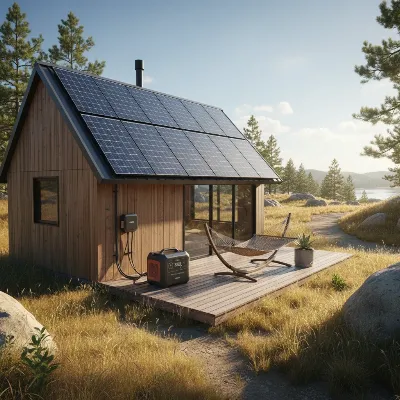 A modern off-grid home with solar panels on the roof and a portable power station outside, connected to the panels.
Key Factors When Choosing an Off-Grid Solar Power Station
Selecting the right solar power station for off-grid living requires careful consideration of several critical factors to ensure it meets your specific energy demands.
- Capacity (Watt-hours/Kilowatt-hours): This is perhaps the most crucial factor, determining how much energy the battery can store. You need to calculate your total daily energy consumption by listing all appliances and devices you plan to power, their wattage, and how many hours they’ll run each day. For full-time off-grid living, most homes typically require 10-20 kWh of battery storage to maintain consistent power.
- Power Output (Watts/Kilowatts): The inverter’s continuous and surge wattage capacity dictates what appliances the power station can run. Continuous output is for devices running constantly (like refrigerators), while surge output handles the brief power spikes needed to start motors (like a well pump). Ensure the output can handle your most power-hungry devices simultaneously.
- Battery Type: LiFePO4 Dominance: Lithium Iron Phosphate (LiFePO4) batteries have become the gold standard for off-grid power stations.
- Lifespan: LiFePO4 batteries offer significantly longer lifespans, typically enduring 3,000 to 6,000+ charge cycles and lasting 8-15 years, far surpassing older lead-acid alternatives.
- Depth of Discharge (DoD): They can be safely discharged to 80-90% of their capacity without damage, providing more usable energy from a given rating.
- Safety and Stability: Known for their thermal stability, LiFePO4 batteries are less prone to overheating or thermal runaway, making them a safer choice for residential installations.
- Efficiency: With 92-96% round-trip efficiency, less energy is lost during charging and discharging.
- Number and Type of Output Ports: Evaluate the array of ports available. Look for multiple AC outlets, DC ports (12V car outlet), and various USB ports (including high-wattage USB-C for fast charging laptops and modern devices). Some larger units even include RV-specific outlets or 240V outputs for heavy-duty appliances.
- Recharging Capabilities:
- Solar Input: Check the maximum solar input wattage (e.g., 1200W, 2400W) and the voltage range it can handle. Higher solar input means faster recharging from your panels.
- AC Wall Charging: Most stations offer rapid charging from a standard wall outlet.
- Car Charging: Useful for topping up batteries while traveling.
- Additional Features: Consider features like a built-in Uninterruptible Power Supply (UPS) function for seamless power transfer during outages, smart app monitoring for real-time status and remote control, integrated LED lighting, and ruggedized, water-resistant designs (IPX rating) for outdoor durability. Modularity and expandability with extra battery modules are also key for growing energy needs.
Comparing Top Solar Power Stations for Off-Grid Living in 2026
The market for solar power stations is bustling with innovation, offering powerful solutions for every off-grid scenario. Here’s a comparison of some leading models optimized for off-grid living:
| Feature/Model | EcoFlow Delta Pro 3 (Whole-Home Champion) | Bluetti Elite 200 V2 (Smart Balance) | Anker Solix F3800 (RV Powerhouse) | VTOMAN FlashSpeed Pro 3600 (Heavy User) |
|---|---|---|---|---|
| Best For | Full-time fixed off-grid homes | Van life, small cabins, homesteaders | RV living, home backup with EV charging | Heavy power users, mobile setups |
| Capacity (kWh) | 4 kWh (expandable to 45 kWh) | 2.048 kWh (expandable with B300) | 3.84 kWh (expandable to 26.9 kWh) | 3.096 kWh (expandable to 6 kWh) |
| Continuous Output | 4000W (8000W surge) | 2400W (3600W surge) | 3800W (7600W surge) | 3600W (6000W surge) |
| Solar Input (Max) | 2600W | 1200W | 2400W | 1500W |
| Battery Type | LiFePO4 | LiFePO4 | LiFePO4 | LiFePO4 |
| Notable Features | Quiet operation, dual solar input, 240V | Proven reliability, excellent value, app | RV/EV charging, wheeled design, multiple ports | Fast charging (2 hrs), UPS, wheeled design |
| Portability | Heavy (100+ lbs), fixed installation | Moderate weight, portable for smaller setups | Wheeled design for easier movement | Wheeled design, relatively heavy |
“The shift towards LiFePO4 batteries is a major upgrade for off-grid power. Their superior lifespan and safety profile make them an indispensable foundation for any reliable standalone system.” – Wao Wu, Co-founder and Sales Director at ADNLITE
Your Comprehensive Buying Guide for Solar Power Stations
Navigating the options can be overwhelming, but a systematic approach ensures you choose the ideal power station for your off-grid aspirations.
- Assess Your Specific Energy Needs: This is your starting point. Make a detailed list of every electrical device you intend to power, noting its wattage and estimated daily usage hours. This calculation will give you your total daily Watt-hour (Wh) requirement, which directly informs the necessary battery capacity and power output. to account for any surge needs of motor-driven appliances.
- Evaluate Your Site Location and Solar Exposure: The amount of sunlight your location receives directly impacts how quickly and efficiently your solar panels can recharge your power station. Consider factors like clear southern exposure (in the Northern Hemisphere), potential shading from trees or buildings, and local climate conditions (e.g., heavy snowfall, extreme heat, or high winds) that might necessitate specific panel mounts or battery insulation.
- Compare Products Based on Key Factors: With your energy needs and site specifics in mind, critically compare various models based on:
- Capacity and Power Output: Does it meet your calculated demands with a comfortable buffer?
- Battery Type: Prioritize LiFePO4 for longevity and safety.
- Recharging Options: Does it support efficient solar charging for your location?
- Port Availability: Are there enough and the right types of outlets for all your devices?
- Expandability: Can you add more battery capacity or solar input later if your needs grow?
- Read User Reviews and Expert Opinions: Real-world experiences offer invaluable insights. Look for reviews from users with similar off-grid setups or applications to yours. Expert reviews from reputable sources often highlight strengths, weaknesses, and unique features.
- Purchase from Reputable Suppliers: Always buy from established brands and authorized dealers that offer clear warranties, reliable customer support, and access to replacement parts. A good warranty, especially on the battery, is crucial for long-term peace of mind.
- Plan for Future Expansion: Your energy needs might evolve. Opt for modular systems that allow you to easily add more battery capacity or solar panels in the future without having to replace your entire setup.
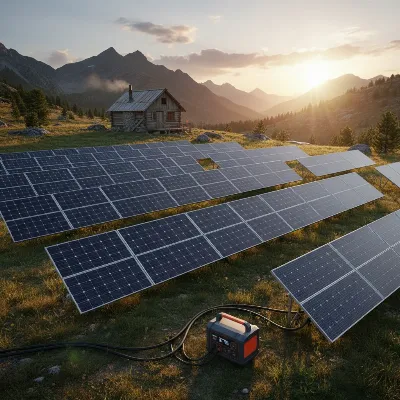 An array of solar panels connected to a power station, powering a small off-grid cabin in a remote, mountainous landscape at sunrise.
Top Solar Power Stations Favored for Off-Grid Living Today
Based on performance, reliability, and suitability for off-grid demands, several solar power stations stand out.
- EcoFlow Delta Pro 3: Often dubbed the “Whole-Home Champion,” this unit is for those committed to full-time off-grid living in a fixed location. With a substantial 4 kWh capacity (expandable to an astounding 45 kWh with additional batteries) and a 4000W continuous output, it can power most major home appliances, including 240V devices. Its 2600W maximum solar input ensures rapid recharging, even in challenging conditions. The Delta Pro 3 also addresses previous noise complaints, running significantly quieter.
- Bluetti Elite 200 V2 (or Apex 300): This model strikes a “Smart Balance” for those in vans, smaller cabins, or budget-conscious homesteads. With 2048Wh capacity, expandability, and a 1200W solar input, it offers excellent value and proven reliability. Bluetti’s expertise in LiFePO4 battery chemistry ensures a long cycle life and dependable performance, even in varying temperatures. The Apex 300 is also a strong contender from Bluetti specifically for robust off-grid applications.
- Anker Solix F3800: The “RV Powerhouse,” this station is ideal for RV living or as a substantial home backup with EV charging capabilities. Its 3840Wh capacity, expandable to 26.9kWh, and 3800W continuous output can handle high-power demands effortlessly. Its wheeled design enhances portability despite its size, making it a versatile choice for larger mobile setups.
- VTOMAN FlashSpeed Pro 3600: A “major upgrade for heavy power users,” the FlashSpeed Pro 3600 delivers 3600W continuously with a 3096Wh LiFePO4 battery. Its portable wheeled design, 14 output ports, and fast 2-hour charging time make it an excellent choice for demanding off-grid scenarios, offering robust performance and quick turnaround.
Essential Tips for Using and Maintaining Your Solar Power Station
Proper care and maintenance are vital to maximizing the lifespan and efficiency of your off-grid solar power station.
- Optimal Charging Practices: While LiFePO4 batteries are robust, charging them correctly prolongs their life. Avoid consistently draining them to 0% and always try to fully charge them when sunlight is abundant. These batteries have a slow self-discharge rate (around 2% per month), so they can hold a charge well when stored.
- Ideal Storage Conditions: Store your power station and batteries in a cool, dry, and well-ventilated area, away from direct sunlight, extreme temperatures, and moisture. Extreme heat or cold can degrade battery performance over time. If your battery bank is large, ensuring proper ventilation is especially important.
- Regular Cleaning of Solar Panels: Dust, dirt, leaves, and snow can significantly reduce the efficiency of your solar panels. Periodically clean them with a soft brush or cloth and mild soap and water. Aim to clean them in the early morning or evening when the panels are cool to avoid thermal shock.
- Monitor System Performance: Utilize any smart app monitoring features your power station offers to keep an eye on charging rates, battery health, and power consumption. This helps you identify potential issues early and optimize your energy usage.
- Protect from Overload: While most modern power stations have built-in overload protection, it’s good practice to understand your system’s limits. Avoid connecting too many high-wattage devices simultaneously, especially those with high surge requirements, to prevent tripping circuits or damaging the inverter.
Conclusion
Embracing off-grid living with a solar power station is a significant step towards a more sustainable and independent future. The advancements in battery technology, particularly LiFePO4, combined with robust inverter capabilities and intelligent management systems, make this an opportune time to invest in these powerful solutions. By carefully assessing your energy needs, choosing a system with adequate capacity and output, and committing to proper maintenance, you can ensure a reliable, clean, and continuous power supply. Are you ready to cut the cord and experience true energy freedom?
Frequently Asked Questions
Can an Off-Grid System Power an Entire Home?
Yes, with a properly sized system, an off-grid solar power station can absolutely power an entire home. The key is to accurately calculate your total daily energy consumption; most average homes require approximately 10-20 kWh of battery storage to support typical usage.
How Long Can an Off-Grid Solar System Run Without Sunlight?
The runtime of an off-grid solar system without sunlight depends directly on its battery capacity and your energy consumption. A 3000Wh battery, for instance, might last 1-3 days with modest usage. Utilizing LiFePO4 batteries and reducing consumption during cloudy periods can significantly extend this duration.
Is an Off-Grid Solar System Safe to Use Indoors?
Properly maintained, high-quality off-grid solar systems with modern safety features are completely safe for indoor use. Many current power stations include advanced Battery Management Systems (BMS) with protections against overheating, overcharging, and short circuits, ensuring secure operation.
What is the Lifespan of a LiFePO4 Battery in a Power Station?
LiFePO4 batteries are renowned for their exceptional longevity. In a solar power station, you can expect them to last 8-15 years, offering an impressive 3,000 to 6,000 or more charge and discharge cycles before their capacity significantly degrades.
What is the Biggest Challenge of Going Off-Grid with Solar?
One of the primary challenges when transitioning to off-grid solar is the initial investment required for a robust battery storage system and ensuring compatibility between all components. However, this upfront cost is offset by long-term savings and energy independence.
Frequently Asked Questions
Can an off-grid solar power station supply an entire home?
Yes, a properly sized off-grid solar power station can power an entire home. Most average homes require approximately 10-20 kWh of battery storage to support typical daily energy consumption.
How long can an off-grid solar system operate without sunlight?
The runtime of an off-grid solar system without sunlight depends on its battery capacity and your energy consumption. For example, a 3000Wh battery might last 1-3 days with modest usage, especially when utilizing LiFePO4 batteries and reducing consumption during cloudy periods.
Are off-grid solar power systems safe for indoor use?
Yes, high-quality off-grid solar systems with modern safety features are safe for indoor use when properly maintained. Many current power stations include advanced Battery Management Systems (BMS) that protect against overheating, overcharging, and short circuits.
What is the expected lifespan of a LiFePO4 battery in a power station?
LiFePO4 batteries are known for their exceptional longevity, typically lasting 8-15 years in a solar power station. They offer an impressive 3,000 to 6,000 or more charge and discharge cycles before their capacity significantly degrades.
What is the main challenge of transitioning to off-grid solar power?
One of the primary challenges of going off-grid with solar is the initial investment required for a robust battery storage system and ensuring compatibility between all components. However, this upfront cost is often offset by long-term savings and energy independence.
Choosing an Off-Grid Solar Power Station
Follow these steps to select the ideal solar power station for your off-grid energy needs, ensuring reliability and efficiency.
Make a detailed list of all electrical devices you plan to power, noting their wattage and estimated daily usage hours. This calculation will determine your total daily Watt-hour (Wh) requirement, informing the necessary battery capacity and power output.
Consider the amount of sunlight your location receives, including factors like clear southern exposure, potential shading, and local climate conditions. This impacts how quickly and efficiently your solar panels can recharge the power station.
Critically compare various models based on capacity, power output, battery type (prioritize LiFePO4), recharging options, port availability, and expandability. Ensure the chosen system meets your calculated demands with a comfortable buffer.
Seek out real-world experiences from users with similar off-grid setups and consult expert reviews from reputable sources. This provides invaluable insights into the strengths, weaknesses, and unique features of different power stations.
Always buy from established brands and authorized dealers that offer clear warranties, reliable customer support, and access to replacement parts. A good warranty, especially on the battery, is crucial for long-term peace of mind and system reliability.

This post really helped me understand the benefits of solar generators for off-grid living. I ended up investing in a Goal Zero Yeti, and it’s exactly what I needed. The silent operation is a huge plus, especially when I’m trying to enjoy the peace and quiet of nature. It’s completely replaced my old noisy gas generator.
I’ve been using the EcoFlow Delta Pro mentioned in the post for my tiny home, and it’s been a game-changer. The LiFePO4 battery really does make a difference in terms of how long it holds a charge, and I feel much safer with it compared to older battery types. It powers my fridge and lights without a hitch, even on cloudy days when I’m relying more on stored energy.
I picked up one of the Jackery Explorer models after reading about them. It’s fantastic for weekend camping trips and keeping my essential electronics charged. My only minor complaint is that the solar panel charging can be a bit slow if it’s not direct sunlight, but that’s probably true for most systems. Still, it’s super portable and reliable for my RV.
I got a Bluetti AC200MAX for my remote cabin, and while it’s powerful, I found the initial setup instructions a little confusing. It took me a bit longer than expected to get everything connected and optimized for charging. Once it was running, it’s been great for running my power tools and lights, but that first hurdle was a bit annoying.