LiFePO4 portable power stations are the superior choice for reliable, long-lasting energy solutions due to their extended lifespan, enhanced safety, and consistent performance. They typically offer 3,500 to 5,000 charge cycles, translating to 8-10 years of daily use, and are less prone to thermal runaway compared to other lithium-ion batteries. These stations are ideal for outdoor adventures, emergency preparedness, and powering devices on the go, providing a clean, quiet alternative to traditional fuel generators.
Portable Power Station: A Comprehensive Energy Solution
A portable power station is a self-contained unit that stores and delivers electrical energy. These versatile units include a battery, an inverter (DC to AC), multiple output ports (AC, DC, USB), and charging inputs. They are a quiet, clean alternative to fuel generators, suitable for camping and home backup.
What is a LiFePO4 Power Station?
A LiFePO4 power station uses Lithium Iron Phosphate (LiFePO4 or LFP) battery cells, known for their robust chemical structure, superior thermal stability, longer cycle life, and inherent safety. Key components include the LiFePO4 battery pack, a sophisticated Battery Management System (BMS), a pure sine wave inverter, and various input/output ports. These stations are categorized by power output (watts) and energy capacity (watt-hours) to meet diverse needs. For shop curated portable power on this site.
Benefits of Using a LiFePO4 Power Station
LiFePO4 portable power stations offer extensive advantages:
- Extended Lifespan: LiFePO4 batteries provide 3,500 to 5,000 charge cycles before degrading to 80% capacity, lasting 8-10 years with typical daily use. This significantly outperforms standard lithium-ion batteries, which offer around 500-800 cycles.
- Enhanced Safety: LiFePO4 technology is less prone to thermal runaway, overheating, or combustion, even under stress. Their non-flammable chemistry and stable iron-phosphate structure drastically reduce fire risks, making them safe for indoor use, RVs, and family environments.
- Consistent Power Output: These batteries maintain stable voltage throughout discharge, ensuring sensitive electronics receive consistent, clean power without harmful fluctuations.
- Faster and Flexible Charging: Many modern LiFePO4 power stations support rapid AC charging, often reaching full capacity in 1-2 hours. They are also highly compatible with solar panels, featuring MPPT controllers for maximum solar charging efficiency.
- Eco-Friendly: LiFePO4 batteries use natural iron and phosphate, avoiding rare or toxic metals like cobalt and nickel. They are also fully recyclable, reducing their ecological footprint.
- Durability in Harsh Conditions: LiFePO4 batteries tolerate heat well and operate reliably across a wider temperature range (e.g., -10 °C to 50 °C), making them suitable for diverse outdoor and emergency scenarios.
Factors to Consider When Choosing a LiFePO4 Power Station
Selecting the ideal LiFePO4 portable power station requires assessing your specific needs and the unit’s features.
Power Capacity and Output
|
Our Picks for the Best Power Station in 2026
As an Amazon Associate I earn from qualifying purchases.
|
||
| Num | Product | Action |
|---|---|---|
| 1 | Jackery Explorer 2000 v2 Portable Power Station with 2x200W Solar Panels, 2042Wh LiFePo4 Battery, 2200W Solar Generator, 20ms UPS, USB-C PD 100W Fast Charging for Power Outages, Emergencies, Camping |

|
| 2 | Westinghouse 155Wh 150 Peak Watt Portable Power Station & Solar Generator, Modified Sine Wave AC Outlet, Backup Lithium Battery for Camping, Home, Travel, Indoor/Outdoor Use (Solar Panel Not Included) |
|
| 3 | Anker SOLIX C1000 Gen 2 Portable Power Station, 2,000W (Peak 3,000W) Solar Generator, Full Charge in 49 Min, 1,024Wh LiFePO4 Battery for Home Backup, Power Outages, and Camping (Optional Solar Panel) |
|
| 4 | 550W Power Station Compatible with Dewalt: LIVOWALNY Portable Generator DC 20V to AC 110-120V, Pure Sine Wave Power Inverter Battery Adapter Phone Charger 2 USB-A & 1 Type-C & 2 AC Outlet (Tool Only) |
|
| 5 | 550W Portable Power Inverter Compatible with Dewalt 20V Battery, Power Station DC 20V to AC 110V Pure Sine Wave, Battery Power Adapter 2USB&Type-C, Generator Phone Charger LED Light Camping Emergency |
|
| 6 | Anker SOLIX C1000 Portable Power Station, 1800W (Peak 2400W) Solar Generator, Full Charge in 58 Min, 1056wh LiFePO4 Battery for Home Backup, Power Outages, and Outdoor Camping (Optional Solar Panel) |
|
| 7 | UGREEN Power Strip Surge Protector with 4 Power Outlets, 15w Wireless Charger, 20W PD3.0 USB C Fast Charging, 2 USB-C Ports, 2 USB A Ports, Desk Charging Station for Office, Conference, Home Use |
|
| 8 | BLUETTI Portable Power Station AC180, 1152Wh LiFePO4 Battery Backup w/ 2 1800W (2700W peak) AC Outlets, 0-80% in 45Min, Solar Generator for Camping, Off-grid, Power Outage |
|
| 9 | Anker SOLIX F3800 Portable Power Station, 3840Wh, LiFePO4 Batteries, Ultra-High 6000W AC Output with 120V/240V, Solar Generator for Home Backup, RVs, Emergencies, Power Outages, and Outdoor Camping |
|
| 10 | Anker SOLIX C300 Portable Power Station with Car Charging Cable, Outdoor 288Wh LiFePO4 Battery, 300W (600W Surge) Solar Generator, 140W Two-Way Fast Charging, for Camping, Traveling, and Emergencies. |
|
This is the most crucial factor:
- Watt-hours (Wh): Represents the battery’s energy storage capacity. Calculate your needs by multiplying device wattage by desired hours of use (Device Wattage × Hours = Wh).
- Watts (W): Indicates the maximum continuous power output. Ensure it meets the peak wattage of your most power-hungry devices. Consider surge capacity for appliances with high startup demands.
Battery Type and Cycle Life
Always prioritize LiFePO4 batteries with a cycle life of 3,000 cycles or more for a long-term investment.
Number and Type of Ports
A versatile power station offers various output options:
- AC Outlets: Typically 120V (or 240V) for household appliances. A pure sine wave inverter is crucial for sensitive electronics.
- DC Ports: 12V outputs, including cigarette lighter sockets, for car appliances or specific DC devices.
- USB Ports: Multiple USB-A and USB-C (preferably with Power Delivery, PD) for charging smartphones, tablets, and laptops.
Recharging Options
Flexible charging methods enhance usability:
- AC Wall Outlet: Standard home charging; look for fast-charge support.
- Solar Panels: Essential for off-grid use. Verify compatibility, maximum solar input wattage, and the presence of an MPPT controller.
- Car Charger: 12V DC input for recharging from your vehicle.
Additional Features
- Battery Management System (BMS): Protects the battery from overcharging, over-discharging, over-current, short-circuiting, and extreme temperatures, extending lifespan and ensuring safety.
- Display Screen: An intuitive LCD or LED screen shows real-time information like state of charge, input/output wattage, and remaining runtime.
- Portability: Consider weight and dimensions for frequent travel. Sturdy handles or wheels are beneficial.
- Noise Level: LiFePO4 power stations are generally quiet; check the decibel (dB) rating if silent operation is critical.
- Warranty: A comprehensive warranty (typically 2+ years) indicates manufacturer confidence.
Comparing Popular LiFePO4 Power Stations
While specific models and prices fluctuate, brands like Bluetti, Anker, EcoFlow, and Jackery consistently offer highly-rated LiFePO4 portable power stations.
Comparison Table (Illustrative Examples)
| Feature | Bluetti Elite 200 V2 (Example) | Anker SOLIX C1000 (Example) | EcoFlow RIVER 2 Max (Example) |
|---|---|---|---|
| Battery Type | LiFePO4 | LiFePO4 | LiFePO4 |
| Capacity (Wh) | 2073.6 | 1056 | 512 |
| Continuous Output (W) | ~2000 (with some surge) | 1000 (1400W surge) | 500 (1000W surge) |
| Cycle Life | 6,000 cycles | 3,000 cycles | 3,000 cycles |
| Recharge Time (AC) | ~1.5 hours | ~1 hour | ~1 hour |
| Solar Input (W) | 1000 | Up to 600W | 220 |
| Portability | Heavier, larger | Balanced | Compact, lightweight |
| Key Use | Home backup, serious off-grid | Versatile, camping | Light camping, everyday use |
Note: The specifications above are illustrative and based on commonly cited figures for these types of products. Actual specifications may vary by model year and regional variations. Always check the manufacturer’s official product page for the most accurate and up-to-date information.
The Bluetti Elite 200 V2 stands out with an exceptional 6,000-cycle lifespan, making it highly durable for base camp and emergency use. For a balanced option, the Anker SOLIX C1000 offers 3,000 cycles and robust build quality, suitable for serious camping or remote work. The EcoFlow RIVER 2 Max is ideal for lighter, more portable needs, providing good capacity and fast charging with a 3,000-cycle LiFePO4 battery.
Buying Guide for LiFePO4 Power Stations
Follow these steps to make an informed decision when purchasing a portable power station:
- Assess Your Power Needs: Calculate the total wattage and watt-hours required for your devices. This is the foundational step to narrow down capacity options.
- Prioritize LiFePO4: For longevity and safety, always opt for a power station with LiFePO4 batteries, ensuring a much longer product lifespan and enhanced safety.
- Evaluate Output Ports and Inverter Type: Confirm the unit has the necessary AC, DC, and USB ports. A pure sine wave inverter is crucial for sensitive electronics.
- Consider Charging Flexibility: If using solar, ensure the unit has an MPPT controller and sufficient solar input wattage. Fast AC charging is convenient for quick top-ups.
- Check Portability: Balance capacity with portability. A smaller unit is great for hiking, while a larger one with wheels suits RVs or home backup.
- Read Reviews and Compare Models: Look for independent reviews and user feedback to gauge real-world performance. Compare features, cycle life, and warranty across reputable brands.
- Verify Warranty and Support: A strong warranty (e.g., 2+ years) and accessible customer support indicate a trustworthy manufacturer.
Top LiFePO4 Power Stations Most Popular Today
Based on performance, durability, and user feedback, these LiFePO4 power stations consistently rank highly:
- Bluetti AC180: Features a 1152Wh LiFePO4 battery and 1800W output, handling demanding loads with a 3,500+ cycle life and fast charging in about an hour.
- Anker SOLIX C1000: Offers a 1056Wh LiFePO4 battery rated for 3,000 cycles, praised for its robust build, 1000W continuous output, and quick charging.
- Jackery Explorer 300 Plus: An upgraded version with a LiFePO4 battery for a significantly longer lifespan (3,000 cycles), providing a compact and lightweight option for moderate use.
- EcoFlow DELTA Series (LiFePO4 models): EcoFlow’s Delta line offers various capacities with LiFePO4 batteries, known for fast charging, expandable capacity, and robust power delivery for home backup and larger needs.
These models represent a range of capacities and features, all leveraging the long-life and safety benefits of LiFePO4 technology.
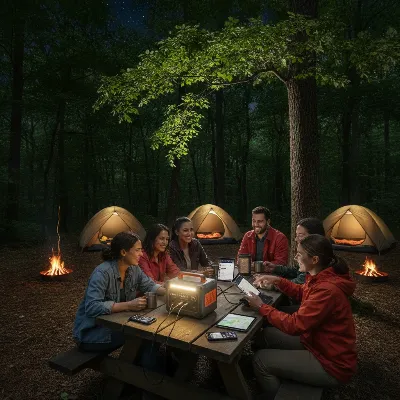 A diverse group camping in a serene forest, illuminated by a LiFePO4 portable power station, charging various devices like phones and cameras. The power station is compact and integrated into the campsite.
Tips for Using and Maintaining LiFePO4 Power Stations
Proper care and maintenance are crucial for maximizing the lifespan of your LiFePO4 portable power station.
- Avoid Extreme Temperatures: Store and operate your power station in a cool, dry place, ideally between 10–30 °C (50–86 °F). Extreme temperatures can degrade battery performance.
- Optimal Charging for Storage: For long-term storage, keep your LiFePO4 battery charged between 20-80% capacity. Recharge to about 50% every 3-4 months if storing for extended periods.
- Use the Correct Charger: Always use the original or manufacturer-recommended compatible charger to prevent battery damage.
- Regular Use and Cycling: Regular charging and discharging (even partial cycles) helps maintain battery health. Periodic checks and recharges are beneficial if unused.
- Keep Vents Clean: Regularly clean vents to prevent dust accumulation, which can hinder cooling and affect performance.
- Avoid Overcharging/Over-discharging: While the BMS prevents these issues, shallow cycles (less deep discharge) can extend life. Avoid habitually running the battery to 0%.
“Investing in a LiFePO4 portable power station is a smart move for anyone seeking reliable, long-term power. Its inherent safety and incredible cycle life mean you can depend on it for years, making it far more than just a temporary gadget.” – Admin of ReviewScatch.com, Power Station Expert
Conclusion
LiFePO4 technology is the gold standard for portable power stations, offering superior durability, safety, and performance. For individuals and families needing long-term, reliable energy for outages or off-grid adventures, a LiFePO4 portable power station is an unparalleled choice. Its extended cycle life, robust safety features, and environmental benefits make it a wise investment for dependable portable power.
Frequently Asked Questions
What does LiFePO4 mean in a power station?
LiFePO4 stands for Lithium Iron Phosphate, a type of lithium-ion battery chemistry known for its stable performance, low heat generation, exceptional safety, and significantly longer lifespan compared to other lithium battery types.
How long does a LiFePO4 battery last in a portable power station?
A typical LiFePO4 battery can last between 8 to 10 years, or endure 3,500 to 5,000 full charge cycles, retaining approximately 80% of its original capacity. This is significantly longer than standard lithium-ion batteries.
Is LiFePO4 safer than other lithium batteries?
Yes, LiFePO4 batteries are considered safer due to their superior thermal stability and non-flammable chemistry. They are much less prone to overheating, thermal runaway, or combustion, making them ideal for various environments, including indoor use.
Can I use solar panels with a LiFePO4 power station?
Absolutely. Most LiFePO4 portable power stations are designed with solar charging capabilities, often featuring MPPT (Maximum Power Point Tracking) controllers to maximize efficiency when recharging from solar panels, enabling sustainable off-grid power.
What capacity LiFePO4 portable power station is best for travel?
For lightweight trips, a 500-800 Wh unit is often sufficient for charging phones and small devices. For RV travel, work sites, or longer adventures requiring more power for appliances like mini-fridges, a 2000 Wh or higher capacity LiFePO4 power station is recommended.
Frequently Asked Questions
What does LiFePO4 mean in a power station?
LiFePO4 stands for Lithium Iron Phosphate, a type of lithium-ion battery chemistry. It is renowned for its stable performance, low heat generation, exceptional safety, and significantly longer lifespan compared to other lithium battery types.
How long does a LiFePO4 battery last in a portable power station?
A typical LiFePO4 battery can last between 8 to 10 years, or endure 3,500 to 5,000 full charge cycles, retaining approximately 80% of its original capacity. This lifespan is significantly longer than standard lithium-ion batteries, which typically offer 500-800 cycles.
Is LiFePO4 safer than other lithium batteries?
Yes, LiFePO4 batteries are considered safer due to their superior thermal stability and non-flammable chemistry. They are much less prone to overheating, thermal runaway, or combustion, making them ideal for various environments, including indoor use and RVs.
Can I use solar panels with a LiFePO4 power station?
Absolutely. Most LiFePO4 portable power stations are designed with solar charging capabilities. They often feature MPPT (Maximum Power Point Tracking) controllers to maximize efficiency when recharging from solar panels, enabling sustainable off-grid power solutions.
What capacity LiFePO4 portable power station is best for travel?
For lightweight trips, a 500-800 Wh unit is often sufficient for charging phones and small devices. For RV travel, work sites, or longer adventures requiring more power for appliances like mini-fridges, a 2000 Wh or higher capacity LiFePO4 power station is recommended.
How to Choose a LiFePO4 Portable Power Station
Follow these steps to select the ideal LiFePO4 portable power station for your needs, ensuring longevity, safety, and optimal performance.
Calculate the total wattage and watt-hours required for all devices you intend to power. This foundational step helps narrow down capacity options and ensures you choose a unit that can meet your demands.
Always opt for a power station with LiFePO4 batteries for superior longevity and safety. This choice guarantees a much longer product lifespan, typically 3,000+ cycles, and enhanced safety features compared to other battery chemistries.
Confirm the unit has the necessary AC, DC, and USB ports for your devices. A pure sine wave inverter is crucial for sensitive electronics to prevent damage and ensure clean power delivery.
If you plan to use solar, ensure the unit has an MPPT controller and sufficient solar input wattage for efficient charging. Fast AC charging is also a convenient feature for quick top-ups when grid power is available.
Balance capacity with portability; a smaller unit suits hiking, while a larger one with wheels is better for RVs or home backup. Always verify the warranty and customer support, as a strong warranty (2+ years) indicates manufacturer confidence.
