High-capacity portable power stations are rechargeable, battery-powered generators that provide electricity without fossil fuels, making them essential for off-grid living and emergency backup. These devices integrate a high-capacity battery, an inverter for AC power, a charge controller for efficient recharging (especially from solar panels), and diverse output ports. They are classified by capacity (watt-hours or kilowatt-hours) and continuous power output (watts), with LiFePO4 battery chemistry being the preferred choice for superior safety and lifespan, typically lasting 2,000 to 6,000 charge cycles.
Power Station: A Comprehensive Mobile Energy Solution
A power station is essentially a rechargeable, battery-powered generator that provides electricity without relying on fossil fuels or producing noxious fumes. Unlike noisy, exhaust-spewing gas generators, these devices operate silently and can be safely used indoors, making them ideal for a multitude of applications from emergency home backup to powering outdoor events.
At its core, a portable power station integrates several key components: a high-capacity battery for energy storage, an inverter to convert the battery’s DC power into usable AC power for household appliances, a charge controller for efficient and safe recharging (especially from solar panels), and a diverse array of output ports. These stations are primarily classified by their capacity, measured in watt-hours (Wh) or kilowatt-hours (kWh), indicating how much energy they can store, and their continuous power output in watts (W), which defines how many and what types of devices they can run simultaneously. They also vary by battery chemistry and intended application, ranging from compact units for personal devices to expansive, expandable systems designed to power an entire home.
The Unmatched Benefits of High Capacity Power Stations
High capacity power stations offer a multitude of advantages that make them indispensable tools for modern living, providing peace of mind and unparalleled flexibility.
Backup Power During Grid Outages
One of the most critical benefits is their ability to serve as a reliable source of backup power during electricity blackouts. When the grid fails, a high-capacity power station can keep essential home appliances running, such as refrigerators, CPAP machines, medical devices, lighting, and communication systems. This ensures vital services remain active, minimizing disruption and maintaining comfort and safety for you and your family.
Sustainable and Eco-Friendly Energy
These devices represent a significant step towards sustainable energy consumption. Operating silently without generating fumes, they are a clean alternative to gas generators. Many high-capacity models are designed to integrate seamlessly with renewable energy sources, particularly solar panels, allowing you to recharge your unit using sunlight. This capability reduces your reliance on grid electricity and fossil fuels, significantly lowering your carbon footprint and supporting a greener lifestyle.
Unrivaled Convenience for Off-Grid Lifestyles
For adventurers, digital nomads, and remote workers, high-capacity power stations are a game-changer. They provide robust, portable electricity for extended camping trips, RV adventures, van life, and outdoor events. From powering laptops and portable cooking appliances to charging e-bikes and running power tools at remote worksites, these stations offer true energy independence, enabling you to stay powered wherever your journey takes you.
Ensuring Continuous Operation for Critical Devices
Beyond general use, power stations are crucial for maintaining the continuous operation of critical devices. This includes life-sustaining medical equipment that cannot afford interruptions, as well as home office setups, ensuring productivity even in challenging circumstances. The ability to provide consistent, stable power protects sensitive electronics and keeps essential functions operational when you need them most.
Key Considerations When Choosing a High Capacity Power Station
Selecting the ideal high capacity power station involves evaluating several technical specifications and features to match your specific needs. Understanding these factors will guide you toward the best investment.
Power Output (Watts) & Surge Capability
The power output, measured in watts (W), dictates which appliances your power station can run. High-capacity units typically offer continuous outputs ranging from 1500W to 3000W or more. It’s crucial to differentiate between continuous power (what the unit can sustain) and surge power (a brief peak output for devices that require extra power upon startup, like blenders, kettles, or refrigerators with compressors). Always ensure the power station’s continuous output exceeds the total wattage of all devices you plan to run simultaneously, and its surge capability can handle the initial demands of motor-driven appliances. Many high-capacity models boast surge outputs of 6000W or higher.
Battery Capacity (Watt-Hours/Kilowatt-Hours)
Battery capacity, expressed in watt-hours (Wh) or kilowatt-hours (kWh), determines how long your power station can sustain a given load. A simple calculation helps: divide the battery’s capacity (Wh) by the device’s wattage (W) to estimate runtime (hours). For heavy use scenarios like powering a refrigerator, CPAP machine, or multiple devices during an outage, look for capacities of 1000Wh or higher. For comprehensive home backup, expandable systems reaching 3-5kWh or even beyond are becoming increasingly common and necessary.
Battery Chemistry: LiFePO4 vs. Lithium-ion
The type of battery chemistry significantly impacts a power station’s safety, lifespan, and overall performance. The two primary types you’ll encounter are Lithium-ion (often NMC or NCA) and Lithium Iron Phosphate (LiFePO4).
- LiFePO4 (Lithium Iron Phosphate): These batteries are increasingly favored for power stations, particularly high-capacity models. They offer superior safety, being less prone to thermal runaway, overheating, or explosions. LiFePO4 batteries boast an impressively long lifespan, typically enduring 2,000 to 6,000 charge cycles before degrading to 80% capacity. They are also stable under heavy use, perform better in colder conditions, and maintain their capacity more effectively over many years. The main drawbacks are a slightly higher upfront cost and a marginally lower energy density, which can make them a bit heavier or bulkier for the same capacity compared to some Lithium-ion counterparts.
- Lithium-ion (NMC/NCA): Traditional Lithium-ion batteries offer higher energy density, making them lighter and more compact for their capacity, and often have a lower initial price. However, they generally have a shorter lifespan of 500-1,500 cycles and are more susceptible to thermal issues, making them a higher fire risk if not properly managed. They can also be more sensitive to extreme temperatures, which can affect performance and longevity.
> “For reliable, long-term power in outdoor and emergency settings, LFP’s durability and lower environmental impact make it ideal.” – Outbax, Energy Storage Expert
In 2026, LiFePO4 batteries are generally the preferred choice for high-capacity power stations due to their exceptional lifespan, enhanced safety, and stability, offering a solid, future-proof investment.
Number and Type of Output Ports
A versatile array of output ports is essential for maximizing your power station’s utility. Look for multiple AC outlets to power household appliances, various USB-A and USB-C Power Delivery (PD) ports (ideally 100W+ for fast-charging laptops), and 12V DC car ports for automotive accessories or smaller DC-powered devices. Some models also include wireless charging pads for added convenience. The more diverse your port selection, the more devices you can power or charge simultaneously without adapters.
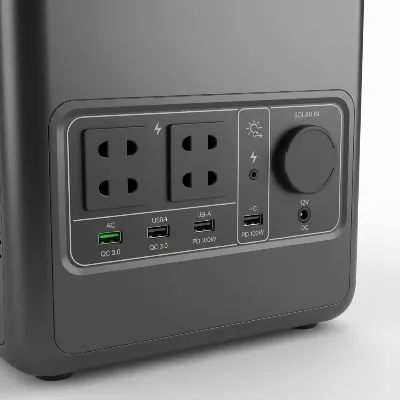 Close-up of a high-capacity power station’s diverse charging ports
Recharging Options and Speed
How you recharge your power station is just as important as its output. Most modern units offer multiple recharging methods:
- AC Wall Charging: This is typically the fastest method, with some advanced models featuring “X-Stream” or similar fast-charging technologies that can go from 0% to 80% in under an hour.
- Solar Charging: For off-grid use, solar compatibility is non-negotiable. Look for high solar input capacity (e.g., 1000W+) and efficient MPPT (Maximum Power Point Tracking) controllers, which optimize charging from solar panels even in varying light conditions. Many brands offer foldable solar panels that are easy to transport.
- Car Charging: Recharging via your vehicle’s 12V cigarette lighter port is a convenient option while on the go.
- Dual Charging: Some power stations support simultaneous charging from multiple sources (e.g., AC + Solar) to achieve even faster recharge times.
Portability, Size, and Weight
While “high capacity” often implies larger, many manufacturers are employing advanced composite materials and innovative designs to make these units more manageable. Even substantial units can feature integrated wheels and sturdy handles to aid in portability. Consider your primary use case: if it’s mostly for home backup, weight might be less critical than if you plan to frequently move it for RV trips or worksites.
Smart Features and Connectivity
The future of power stations is smart. Many 2026 models integrate advanced features like Wi-Fi and Bluetooth connectivity, allowing you to monitor and control your unit via a smartphone app. These apps often provide real-time monitoring of battery levels, input/output wattage, and remote control over AC/DC outputs. Some advanced systems are even incorporating AI algorithms to optimize battery performance based on usage patterns and weather conditions, along with intuitive touchscreen displays and voice control capabilities for enhanced user experience.
Warranty and Brand Reputation
A robust warranty is a testament to a manufacturer’s confidence in their product. Look for power stations with at least a 2-year warranty, though many top brands offer 5 years or more, particularly for LiFePO4 models. Research brand reputation through user reviews, focusing on customer support quality and product reliability. Reputable brands like Anker, Jackery, EcoFlow, and Bluetti are known for standing behind their products.
Top High Capacity Power Stations of 2026
The market for high capacity portable power stations is competitive, with several brands leading the charge in innovation, performance, and reliability. Here are some of the top contenders for 2026, building on their strong performance in previous years and expected updates:
Anker Solix F3800 Plus
Often cited for its immense capabilities, the Anker Solix F3800 Plus is a powerhouse designed for whole-home backup. It features a formidable 3840Wh base capacity, expandable to an astounding 26.9kWh with a single unit, or even 53.8kWh with two units and multiple expansion batteries. It delivers an extremely high 6,000-watt continuous AC output with dual-voltage (120/240 volts), capable of running almost any household appliance. Its impressive 3,200W solar input capacity allows for incredibly fast off-grid recharging, filling up in as little as 1.5 hours. Anker backs this beast with an impressive five-year warranty.
Jackery Explorer 2000 Plus
The Jackery Explorer 2000 Plus is an excellent choice for homeowners, RV enthusiasts, and off-grid adventurers. It offers a 2042.8Wh capacity, highly expandable up to 24kWh with additional batteries. With a powerful 3,000W output (and 6,000W surge capability), it can handle heavy-load devices and appliances. This unit charges rapidly via solar (up to 1,400W input) or AC in under 2 hours, demonstrating an 88% usable capacity in tests—better than the industry average. Its balance of capacity, charging speed, and portability makes it a versatile option for multiple scenarios.
EcoFlow Delta Pro 3 (and EcoFlow Delta Pro)
The EcoFlow Delta Pro series continues to be a leader in high-capacity, expandable power. The newer EcoFlow Delta Pro 3, when tested with one expansion battery, reached a whopping 8,096 watt-hours of capacity, proving truly capable of basic whole-home backup. It also stands out for its efficiency, outputting 97% of its listed power capacity. The original EcoFlow Delta Pro, with its 2048Wh base capacity, is expandable up to 25kWh and is a strong performer across all testing categories for both large and low-wattage appliances.
Bluetti Elite 200 V2 Portable Power Station
The Bluetti Elite 200 V2 (or similar high-capacity Bluetti models like the AC200MAX) consistently impresses with its LiFePO4 battery chemistry, offering an exceptional lifespan of 6,000 cycles before dropping below 80% capacity. It boasts a tested 2,073.6Wh capacity, with an impressive 92% usable capacity. The Elite 200 V2 features quick recharge times, going from 0 to 80 percent in 81 minutes and to full in just 107 minutes. Its robust build and numerous output options make it a reliable choice for long-term use.
Goal Zero Yeti Pro 4000
A strong contender for RVs and demanding off-grid applications, the Goal Zero Yeti Pro 4000 provides 3,994Wh of LiFePO4 battery capacity, expandable up to 20 kWh. It delivers a robust 3,600W output (7,200W surge) and supports high solar/AC input of 3,000W/1,800W respectively. The Yeti Pro 4000 is built for heavy-duty use, making it ideal for powering large appliances in campers or during prolonged outages.
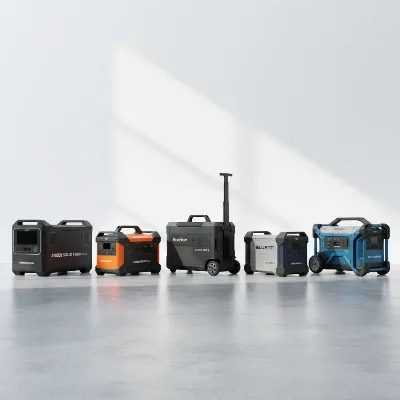 A lineup of top high-capacity portable power stations in a modern setting
Your Essential Power Station Buying Guide
Navigating the options can be straightforward if you follow a structured approach. This buying guide will help you pinpoint the best high capacity power station for your unique requirements.
Step 1: Assess Your Specific Needs
Start by making a comprehensive list of all the devices and appliances you intend to power. Note down their power ratings (in watts) and estimate how long you’ll need to run them. Crucially, identify any devices with high surge requirements (like microwaves or refrigerators). Your intended use — whether it’s solely for emergency home backup, frequent RV travel, remote work, or powering medical equipment — will heavily influence the necessary capacity, output, and features. For example, a 1000Wh+ unit might suffice for a few essential items, but 3-5kWh systems are far better for whole-home backup.
Step 2: Prioritize Key Features
Based on your needs, prioritize the most important features. If longevity and safety are paramount, opt for LiFePO4 battery chemistry. If fast recharging in the wilderness is key, look for high solar input capacity and efficient MPPT controllers. Ensure the continuous power output meets your peak demands and that the number and variety of ports accommodate all your devices. Consider smart features if remote monitoring and control are important to you.
Step 3: Research and Compare Brands/Models
Utilize reviews and comparisons of top models (like those mentioned above) to narrow down your choices. Pay attention to real-world performance tests, efficiency ratings, and user feedback regarding reliability and ease of use. This step is crucial for understanding how different brands and models truly perform beyond their advertised specifications.
Step 4: Consider the Total Cost of Ownership
While Lithium-ion batteries might have a lower initial price, the longer lifespan of LiFePO4 batteries often translates to a better long-term value, as they require less frequent replacement. Factor in the cost of any necessary accessories, such as solar panels, extra batteries for expansion, or specialized charging cables.
Step 5: Verify Warranty and Support
Always check the warranty period and what it covers, especially for the battery component. A strong warranty (e.g., 5 years) and a responsive customer support team from a reputable brand offer significant peace of mind and protection for your investment.
Expert Tips for Using and Maintaining Your Power Station
Proper use and maintenance are crucial for extending the lifespan and ensuring the optimal performance of your high capacity power station.
Optimal Charging Practices
Always adhere to the manufacturer’s charging guidelines. While LiFePO4 batteries are more forgiving, generally avoid consistently draining the battery to 0% and charging to 100% for every cycle if possible. A good practice for long-term health is to keep the battery between 20% and 80% for daily use. Regularly cycling the battery fully (occasionally letting it drain lower and charging to full) can also help calibrate the battery management system. Using the recommended charging cables and adapters will prevent damage and ensure efficient charging.
Proper Storage Conditions
When not in use, store your power station in a cool, dry, and well-ventilated area, away from direct sunlight and extreme temperatures (both high heat and freezing cold). Extreme temperatures can degrade battery performance and shorten its lifespan. For long-term storage, it’s often recommended to store LiFePO4 batteries with a partial charge, typically around 50-80%, rather than fully charged or completely depleted.
Regular Cleaning and Inspection
Periodically inspect your power station for any physical damage, loose connections, or unusual swelling. Keep all input and output ports clean and free of dust, dirt, or debris to ensure proper connectivity and prevent overheating. Use a soft, dry cloth for cleaning the exterior.
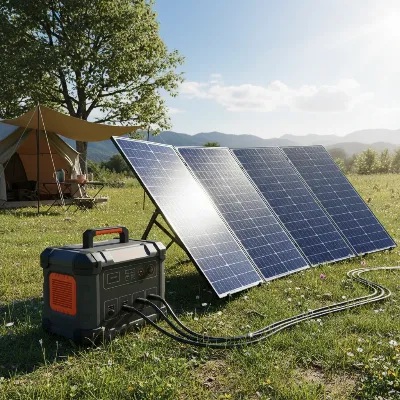 A high-capacity power station being recharged by portable solar panels outdoors
Software Updates
If your power station features smart capabilities and app control, make sure to regularly check for and install any available firmware or software updates. These updates often bring performance improvements, new features, and critical bug fixes that can enhance the efficiency, safety, and functionality of your unit.
Conclusion
High capacity portable power stations have become indispensable tools for modern life, offering unparalleled reliability, sustainability, and convenience for everything from emergency home backup to extensive off-grid adventures. By understanding the critical factors like power output, battery chemistry, recharge options, and smart features, you can confidently navigate the market in 2026. Prioritizing LiFePO4 battery technology for its superior safety and longevity, alongside robust output and versatile charging, will ensure your investment serves you well for years to come. Empower yourself with the right choice, and enjoy uninterrupted power wherever you are. What adventures will your reliable power station unlock for you?
Frequently Asked Questions
How long do high-capacity power stations typically last?
The lifespan of a high-capacity power station largely depends on its battery chemistry. LiFePO4 batteries, preferred in most modern units, typically last for 2,000 to 6,000 charge cycles before their capacity drops to 80%. This translates to many years of reliable use, especially with proper maintenance and storage practices.
Can a portable power station power an entire house?
While smaller units cannot, many high-capacity and expandable power stations, particularly those in the 3kWh to 50kWh range, are designed to power essential home appliances during outages. They can run refrigerators, lights, and communication devices for extended periods, but often require multiple expansion batteries for whole-home solutions like air conditioning or electric water heaters.
What is the difference between continuous and surge wattage?
Continuous wattage (or running wattage) is the amount of power a power station can supply consistently over time. Surge wattage (or peak wattage) is the maximum power it can provide for a very brief period, typically a few seconds, to handle the startup demands of appliances with electric motors or heating elements, like microwaves or pumps.
Are portable power stations safe to use indoors?
Yes, modern portable power stations, especially those with LiFePO4 batteries, are generally safe for indoor use. They produce no fumes, require no fuel, and operate quietly, making them a much safer and more pleasant alternative to gas generators for indoor applications like home backup during an outage.
How much solar input do I need for a high-capacity power station?
The ideal solar input depends on the power station’s maximum solar input capacity and how quickly you want to recharge. For high-capacity units, solar inputs of 1000W or more are common, allowing for rapid recharging, sometimes in just a few hours under optimal sunlight. Always ensure your solar panel setup matches your power station’s capabilities.
Frequently Asked Questions
How long do high-capacity power stations typically last?
The lifespan of a high-capacity power station largely depends on its battery chemistry. LiFePO4 batteries, preferred in most modern units, typically last for 2,000 to 6,000 charge cycles before their capacity drops to 80%. This translates to many years of reliable use, especially with proper maintenance and storage practices.
Can a portable power station power an entire house?
While smaller units cannot, many high-capacity and expandable power stations, particularly those in the 3kWh to 50kWh range, are designed to power essential home appliances during outages. They can run refrigerators, lights, and communication devices for extended periods, but often require multiple expansion batteries for whole-home solutions like air conditioning or electric water heaters.
What is the difference between continuous and surge wattage?
Continuous wattage (or running wattage) is the amount of power a power station can supply consistently over time. Surge wattage (or peak wattage) is the maximum power it can provide for a very brief period, typically a few seconds, to handle the startup demands of appliances with electric motors or heating elements, like microwaves or pumps.
Are portable power stations safe to use indoors?
Yes, modern portable power stations, especially those with LiFePO4 batteries, are generally safe for indoor use. They produce no fumes, require no fuel, and operate quietly, making them a much safer and more pleasant alternative to gas generators for indoor applications like home backup during an outage.
How much solar input do I need for a high-capacity power station?
The ideal solar input depends on the power station's maximum solar input capacity and how quickly you want to recharge. For high-capacity units, solar inputs of 1000W or more are common, allowing for rapid recharging, sometimes in just a few hours under optimal sunlight. Always ensure your solar panel setup matches your power station's capabilities.
Choose a High Capacity Power Station
Selecting the ideal high capacity power station involves evaluating several technical specifications and features to match your specific needs.
Make a comprehensive list of all devices and appliances you intend to power, noting their wattage and estimated runtime. Identify any devices with high surge requirements, like microwaves or refrigerators. Your intended use will heavily influence the necessary capacity, output, and features.
Based on your needs, prioritize features such as LiFePO4 battery chemistry for longevity and safety, or high solar input capacity for fast recharging. Ensure the continuous power output meets your peak demands and that the number and variety of ports accommodate all your devices.
Utilize reviews and comparisons of top models to narrow down your choices. Pay attention to real-world performance tests, efficiency ratings, and user feedback regarding reliability and ease of use. This step helps understand how different brands and models truly perform beyond advertised specifications.
While Lithium-ion batteries may have a lower initial price, the longer lifespan of LiFePO4 batteries often translates to better long-term value. Factor in the cost of necessary accessories like solar panels, extra batteries for expansion, or specialized charging cables.
Always check the warranty period and what it covers, especially for the battery component. A strong warranty (e.g., 5 years) and a responsive customer support team from a reputable brand offer significant peace of mind and protection for your investment.

Finally pulled the trigger on a high-capacity unit after reading about the different watt-hour options. The silent operation is a massive upgrade from my old gas generator, which always made me feel guilty running it in the quiet wilderness. It handles my power tools and lights easily. My only minor gripe is the weight, but I guess that’s expected for such a large battery.
I’ve been looking for a reliable power solution for my cabin, and this guide was super helpful. I ended up going with one of the LiFePO4 models mentioned, and the peace of mind knowing it’ll last 2,000+ cycles is huge. It’s been great for running my mini-fridge and charging all my devices without a hitch. Definitely a game-changer for off-grid living.
I appreciate the breakdown of continuous power output. I bought a model that seemed to fit my needs, but I’m finding the AC output struggles a bit when I try to run my coffee maker and toaster at the same time. It’s fine for one appliance, but I was hoping for a bit more versatility for morning routines. Still, it’s good for charging phones and laptops.
This was exactly what I needed to understand the different features. The explanation of charge controllers and solar recharging really helped me decide. I paired my new power station with some portable solar panels, and it’s been fantastic for keeping everything topped up during extended camping trips. No more worrying about running out of juice!