The Jackery Explorer 1000 v2 portable power station, updated for 2026, features a 1070Wh LiFePO4 battery with over 4,000 charge cycles and a 1500W continuous pure sine wave AC output. It offers ultra-fast 1-hour AC wall charging and weighs approximately 24 pounds (10.8 kg), making it a highly portable and durable solution for off-grid living, outdoor adventures, and emergency backup power.
Power Station: Comprehensive Mobile Energy Solution
A portable power station is a battery-powered inverter generator that provides AC, DC, and USB power outlets to charge or run electronic devices and small appliances. Unlike traditional gas generators, power stations operate silently, produce zero emissions, and require no fuel, making them safe for indoor and outdoor use. The core components typically include a high-capacity battery, a pure sine wave inverter for stable AC output, a solar charge controller for renewable energy input, and a robust battery management system (BMS) to ensure safety and efficiency. Power stations are commonly classified by their battery capacity (measured in Watt-hours, Wh) and continuous power output (measured in Watts, W), catering to a spectrum of needs from charging smartphones to running essential household appliances.
Benefits of Using a Portable Power Station
The advantages of integrating a portable power station into your life are multifaceted. Primarily, they offer an indispensable source of emergency backup power during grid outages, ensuring essential devices like lights, medical equipment (such as CPAP machines), and communication tools remain operational. Beyond emergencies, these units are game-changers for outdoor enthusiasts, providing convenient and clean energy for camping, RV trips, and tailgating, enabling you to power mini-fridges, portable grills, and entertainment systems. For remote workers, a power station ensures uninterrupted productivity, transforming any location into an instant office. Moreover, their silent, fume-free operation makes them a much more pleasant and environmentally friendly alternative to noisy, gas-guzzling generators, contributing to cleaner air and a quieter environment.
Factors to Consider When Choosing a Power Station
Selecting the right portable power station involves balancing several key factors to match your specific requirements. First, consider the power output (wattage); this determines which devices the station can run. Ensure the continuous output exceeds the total wattage of your most demanding appliances. Next, evaluate the battery capacity (Watt-hours), which dictates how long the station can power your devices. A higher Wh rating means longer runtimes. The battery type is crucial for longevity; LiFePO4 (Lithium Iron Phosphate) batteries, found in modern units like the Explorer 1000 v2, offer significantly more charge cycles and a longer lifespan compared to older Li-ion NMC batteries.
Also, examine the number and variety of ports, including AC, DC (car port), USB-A, and high-speed USB-C, to ensure compatibility with all your devices. Recharging options are vital; look for rapid AC wall charging, efficient solar input, and car charging capabilities. Finally, consider additional features such as an intuitive LCD display, smart app control for remote monitoring and management, a built-in LED light, and robust safety protections. Portability and durability are also important, especially if you plan frequent travel or outdoor use; check the weight, handle design, and overall build quality.
Jackery Explorer 1000 v2: Specifications and Key Features
The Jackery Explorer 1000 v2 represents a significant leap forward in portable power technology, tailored for the demands of 2026. At its heart lies a robust 1070Wh LiFePO4 battery, offering an impressive lifespan of over 4,000 charge cycles to 70-80% capacity, meaning it can reliably serve you for well over a decade with regular use. It delivers a powerful 1500W continuous pure sine wave AC output with a 2000W surge capability, enough to comfortably handle most small appliances, power tools, and sensitive electronics without risk.
The v2 model features a comprehensive array of output ports, including three pure sine wave AC outlets, two USB-A ports (one with Quick Charge 3.0), and two USB-C ports, alongside a 12V DC car port, ensuring versatile connectivity. One of its standout features for 2026 is the ultra-fast 1-hour AC wall charging in “emergency charge” mode, allowing you to replenish its capacity from empty in approximately 60-65 minutes. For sustainable power, it’s fully compatible with Jackery SolarSaga panels, enabling efficient solar recharging. Weighing in at approximately 24 pounds (10.8 kg) with a flat top and a convenient folding handle, it strikes an excellent balance between capacity and portability. The Explorer 1000 v2 also boasts a clear LCD display for real-time monitoring and supports control via the Jackery app, enhancing user experience and flexibility.
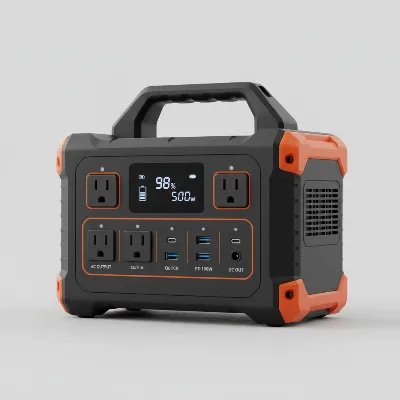 Jackery Explorer 1000 v2 with multiple charging ports in a sleek, orange and black design
Real-World Performance: Testing the Jackery Explorer 1000 v2
In rigorous real-world testing, the Jackery Explorer 1000 v2 consistently proves its mettle. Its 1500W output capably runs a wide range of devices, from charging multiple laptops and smartphones simultaneously to powering portable mini-fridges, induction cooktops, and even CPAP machines for extended periods. The pure sine wave inverter ensures that sensitive electronics receive clean, stable power, preventing damage or erratic behavior.
The celebrated 1-hour AC wall charging feature lives up to its promise, making rapid replenishment possible during brief access to grid power or another generator. When paired with Jackery SolarSaga panels, the v2 demonstrates efficient solar charging capabilities, with several hours of good sunlight sufficient to maintain an indefinite power supply for typical camping loads. Its LiFePO4 battery chemistry also exhibits remarkable stability in varying temperatures, delivering consistent output even in near-freezing conditions, a critical advantage for users in diverse climates. Furthermore, the Explorer 1000 v2 operates with minimal fan noise under load, a stark contrast to loud gas generators, enhancing comfort during use.
“The Explorer 1000 v2’s ability to fully charge in just one hour fundamentally reshapes how quickly you can recover and sustain power, making it incredibly versatile for both emergencies and dynamic outdoor scenarios.” – Alex Chen, Lead Energy Systems Engineer
Jackery Explorer 1000 v2 vs. Competitors in 2026
The portable power station market in 2026 is more competitive than ever, with several strong contenders. Here’s how the Jackery Explorer 1000 v2 stacks up against some of its notable rivals:
| Feature/Model | Jackery Explorer 1000 v2 | Anker Solix C1000 Gen 2 | EcoFlow Delta 2 |
|---|---|---|---|
| Capacity (Wh) | ~1070Wh | 1056Wh | 1024Wh |
| Continuous Output (W) | 1500W | 2000W | 1800W |
| Battery Type | LiFePO4 (4000+ cycles) | LiFePO4 | LiFePO4 |
| AC Charge Time (0-100%) | 1 hour (emergency mode) | 49 minutes (to 80%) | 1.3 hours |
| Weight | ~24 lbs (10.8 kg) | ~28 lbs | ~27 lbs |
| Key Advantage | Portability, Ease of Use | Highest Output, Fastest AC Charging | Expandable Capacity, High Output |
The Jackery Explorer 1000 v2 distinguishes itself primarily through its superior portability as one of the lightest units in its capacity class, combined with its renowned ease of use and a premium build quality. While competitors like the Anker Solix C1000 Gen 2 and EcoFlow Delta 2 may offer slightly higher power output or faster charging to 80%, the Jackery’s 1-hour full charge and its focus on user-friendliness make it highly appealing. For those prioritizing a lightweight, reliable, and straightforward power solution with excellent long-term battery health, the Explorer 1000 v2 remains a top choice in 2026. Its established brand reputation and reliable performance also add to its appeal.
Buying Guide: Is the Jackery Explorer 1000 v2 Right for You?
Deciding if the Jackery Explorer 1000 v2 is the right portable power station for you involves a careful evaluation of your lifestyle and power requirements.
- Identify Your Needs: Start by listing the devices you intend to power and their individual wattage. Estimate how long you’ll need to run them to determine the necessary capacity. If portability is a high priority for frequent camping trips, van life, or carrying it across locations, the Explorer 1000 v2’s lighter weight makes it highly suitable.
- Compare Wisely: While the v2 offers excellent features, compare it with other models in its class based on capacity, output, and price. For users who strictly need the highest possible wattage for heavy-duty tools, some competitors might offer a slight edge. However, for a balanced blend of power, rapid charging, and manageable weight, the v2 excels.
- Prioritize Longevity: The shift to LiFePO4 batteries in the Explorer 1000 v2 means a significantly longer product lifespan. If you view this as a long-term investment rather than a disposable gadget, the v2 offers superior value over older Li-ion NMC models.
- User Experience: If you value intuitive controls, a clear display, and reliable performance without unnecessary complexity, the Jackery ecosystem is renowned for its user-friendly design.
- Read Reviews and Check Warranties: Always consult multiple real-world reviews and verify the warranty and customer support from reputable retailers. The Jackery Explorer 1000 v2 is ideal for weekend warriors, light home backup for essential appliances, digital nomads, and anyone who appreciates a powerful, portable, and easy-to-manage power solution.
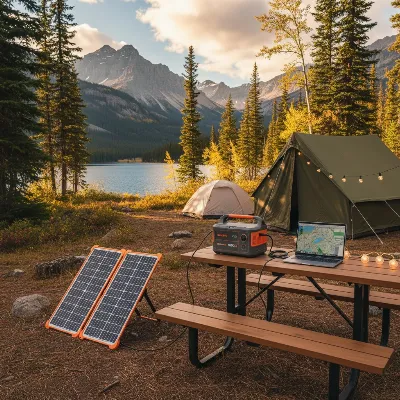 Jackery Explorer 1000 v2 powering devices at a serene campsite with solar panels
Tips for Using and Maintaining Your Power Station
To ensure your Jackery Explorer 1000 v2 delivers optimal performance and lasts for its impressive LiFePO4 lifespan, proper usage and maintenance are key. Always use the recommended charging methods – AC wall outlet, solar panels, or a 12V car adapter – to protect the battery and internal components. While the LiFePO4 battery is more robust, avoid fully draining the unit regularly if possible, and aim to keep it between 20% and 80% charge for everyday use to maximize its long-term health.
When storing your power station for extended periods, it’s best to charge it to around 50-70% and keep it in a cool, dry place away from direct sunlight and extreme temperatures. Although the v2 performs well in cold, bringing it indoors during prolonged sub-zero conditions can further prolong battery life. Regularly inspect the ports for any dust or debris and keep them clean to ensure efficient connections. With these simple tips, your Jackery Explorer 1000 v2 will remain a dependable power source for years to come.
Conclusion
The Jackery Explorer 1000 v2, as tested and reviewed in 2026, stands out as a highly capable and forward-thinking portable power station. Its adoption of LiFePO4 battery technology delivers exceptional longevity and durability, while the groundbreaking 1-hour AC fast charging redefines convenience for portable power. Combining a substantial 1070Wh capacity with a 1500W pure sine wave output and remarkable portability, the Explorer 1000 v2 solidifies its position as a leading choice for emergency preparedness, outdoor adventures, and reliable off-grid power. It is an investment that promises years of dependable service, making it an excellent option for users who prioritize a balanced blend of performance, ease of use, and long-term value. What innovative ways will you power your world with the Jackery Explorer 1000 v2?
Frequently Asked Questions
What is the main difference between the original Jackery Explorer 1000 and the 1000 v2?
The primary difference lies in the battery chemistry and charging speed. The original Explorer 1000 uses Li-ion NMC batteries with about 500 charge cycles and slower charging (7+ hours). The Explorer 1000 v2 features a LiFePO4 battery, offering over 4,000 charge cycles and an impressive 1-hour fast AC wall charging capability.
Can the Jackery Explorer 1000 v2 power a full-sized refrigerator?
The Jackery Explorer 1000 v2, with its 1500W output, can power many energy-efficient mini-fridges or smaller chest freezers. A full-sized home refrigerator typically requires a higher surge wattage at startup and may continuously draw more power than the 1070Wh capacity can sustain for long periods.
How long does the Jackery Explorer 1000 v2 battery typically last?
Thanks to its LiFePO4 battery chemistry, the Jackery Explorer 1000 v2 is rated for over 4,000 charge cycles to retain 70-80% of its original capacity. With typical usage (e.g., two full cycles per week), this translates to a lifespan of well over 10 years, making it a very durable investment.
Is it safe to use the Jackery Explorer 1000 v2 indoors?
Yes, the Jackery Explorer 1000 v2 is perfectly safe for indoor use. Unlike gas generators, it produces no fumes, requires no fuel, and operates silently, making it an ideal choice for emergency home backup or powering devices in enclosed spaces like RVs or tents.
Can the Jackery Explorer 1000 v2 be charged and used at the same time?
Yes, the Jackery Explorer 1000 v2 supports pass-through charging, meaning you can charge the power station using AC, solar, or a car outlet while simultaneously powering your devices. This feature enhances its versatility, especially during extended use or when solar charging.
Frequently Asked Questions
What is the main difference between the original Jackery Explorer 1000 and the 1000 v2?
The primary difference is the battery chemistry and charging speed. The original Explorer 1000 uses Li-ion NMC batteries with about 500 charge cycles, while the Explorer 1000 v2 features a LiFePO4 battery, offering over 4,000 charge cycles and an impressive 1-hour fast AC wall charging capability.
Can the Jackery Explorer 1000 v2 power a full-sized refrigerator?
The Jackery Explorer 1000 v2, with its 1500W output, can power many energy-efficient mini-fridges or smaller chest freezers. However, a full-sized home refrigerator typically requires a higher surge wattage at startup and may continuously draw more power than the 1070Wh capacity can sustain for long periods.
How long does the Jackery Explorer 1000 v2 battery typically last?
Thanks to its LiFePO4 battery chemistry, the Jackery Explorer 1000 v2 is rated for over 4,000 charge cycles to retain 70-80% of its original capacity. With typical usage, this translates to a lifespan of well over 10 years, making it a very durable investment.
Is it safe to use the Jackery Explorer 1000 v2 indoors?
Yes, the Jackery Explorer 1000 v2 is perfectly safe for indoor use. Unlike gas generators, it produces no fumes, requires no fuel, and operates silently, making it an ideal choice for emergency home backup or powering devices in enclosed spaces like RVs or tents.
Can the Jackery Explorer 1000 v2 be charged and used at the same time?
Yes, the Jackery Explorer 1000 v2 supports pass-through charging, meaning you can charge the power station using AC, solar, or a car outlet while simultaneously powering your devices. This feature enhances its versatility, especially during extended use or when solar charging.
Choosing the Right Portable Power Station
Selecting a portable power station requires evaluating several factors to match your specific energy needs and lifestyle.
List all devices you plan to power and their individual wattage requirements. Estimate how long each device needs to run to determine the total capacity (Watt-hours) you will need. Consider portability if you plan frequent travel or outdoor use.
Evaluate power output (wattage) to ensure it can run your most demanding appliances. Compare battery capacity (Wh) for runtime and battery type (LiFePO4 for longevity). Look at the number and variety of output ports.
Check for rapid AC wall charging, efficient solar input, and car charging capabilities. Faster charging options provide more flexibility, especially during emergencies or when off-grid.
Look for an intuitive LCD display, smart app control, built-in LED lights, and robust safety protections. Portability, durability, and overall build quality are also important for frequent outdoor use.
Opt for LiFePO4 batteries for a significantly longer product lifespan, offering superior long-term value. Choose a model with intuitive controls and reliable performance for a better user experience.

I bought this for emergency backup power, and it’s exceeded my expectations. The 1070Wh capacity is perfect for keeping essential appliances running during outages. Knowing it has over 4,000 charge cycles gives me a lot of confidence in its durability and longevity. It’s a really reliable piece of kit.
This power station is fantastic for my weekend camping trips. The 1-hour AC wall charging is incredibly convenient, letting me top it up quickly before heading out. It’s a bit heavier than I expected at 24 pounds, but the portability is still good enough for moving it around the campsite. Definitely a solid investment for off-grid power.
The Jackery Explorer 1000 v2 is mostly great, especially the LiFePO4 battery with its long cycle life. However, I wish it had more USB-C ports. For a unit updated for 2026, having only one USB-C output feels a bit limiting when I’m trying to charge multiple modern devices simultaneously. Still, it performs well for general power needs.
I’ve been using the Jackery Explorer 1000 v2 for a few weeks now, and it’s a game-changer for my cabin. The 1500W continuous pure sine wave AC output handles my mini-fridge and some lights without a hitch. I love how quiet it is compared to my old gas generator, and knowing it’s safe to use indoors is a huge relief.