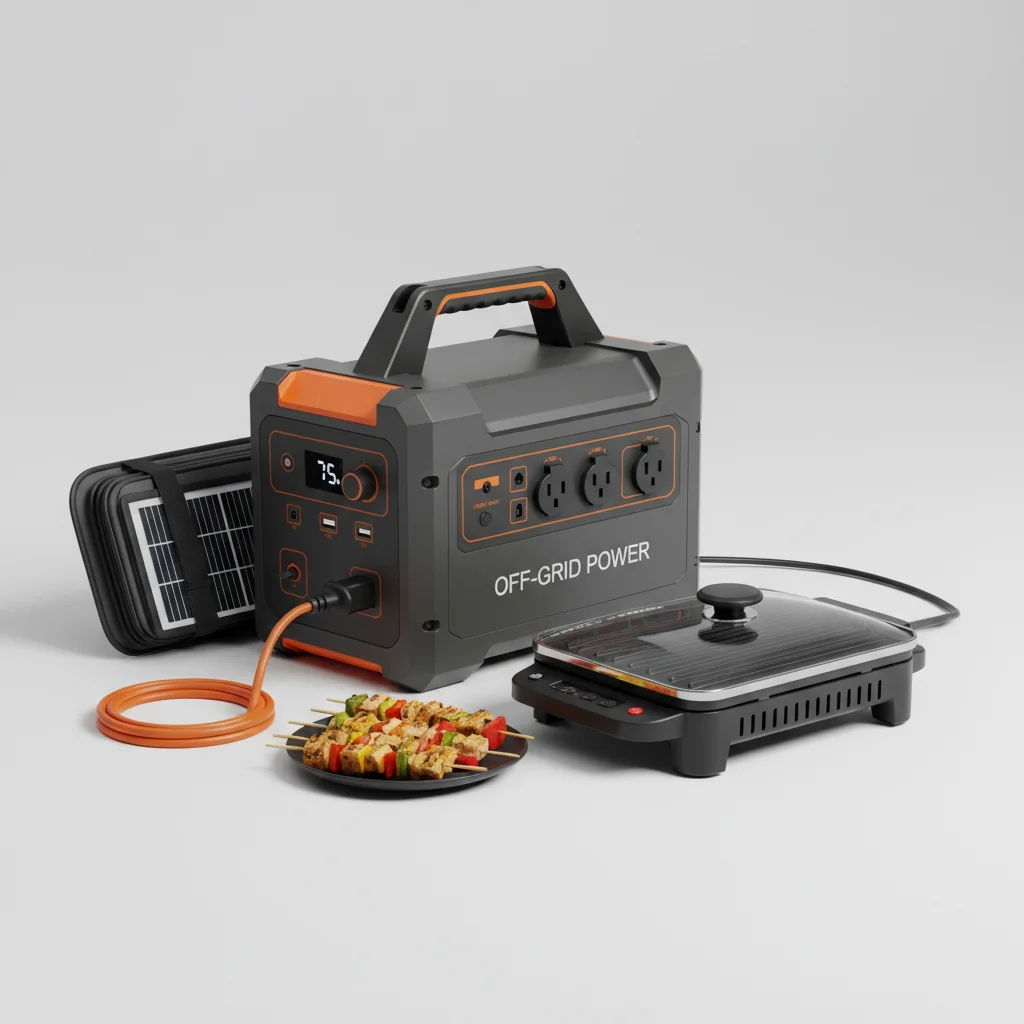
A portable power station can run an electric grill for approximately 1 to 3 hours, depending on the grill’s wattage and the power station’s capacity. For example, a 1500Wh power station can power a 1000W electric grill for about 1.5 hours. Understanding these factors is crucial for planning outdoor cooking adventures or emergency meal preparation.
Understanding Electric Grill Power Consumption
Electric grills typically consume a significant amount of power, ranging from 800W to 2000W. This high wattage is necessary to generate enough heat for cooking. The exact power draw will vary based on the grill’s size, heating elements, and temperature settings. Smaller, portable electric grills tend to be on the lower end of this spectrum, while larger, more robust models will draw more power. Always check your grill’s specifications for its precise wattage.
When selecting a power station, it’s essential to match its output capabilities with your grill’s power requirements. A power station with a continuous output rating lower than your grill’s wattage will not be able to power it effectively, if at all. Consider models with a surge capacity that can handle the initial power spike when the grill first turns on.
Calculating Run Time for Your Electric Grill
To calculate how long your power station will run an electric grill, you need two key pieces of information: the power station’s usable capacity (in Watt-hours, Wh) and the electric grill’s wattage (in Watts, W). The formula is simple: Run Time (hours) = Usable Capacity (Wh) / Grill Wattage (W). Remember to account for an inverter efficiency loss, which is typically around 10-15%. So, a more accurate calculation would be: Run Time = (Usable Capacity * 0.85) / Grill Wattage.
For instance, if you have a 1000Wh power station and a 1200W electric grill, the run time would be approximately (1000 * 0.85) / 1200 = 0.7 hours, or about 42 minutes. This calculation helps set realistic expectations for your cooking duration. Always factor in a buffer for unexpected usage or if the grill needs to run at maximum power for extended periods.
Factors Affecting Power Station Performance
|
Our Picks for the Best Power Station in 2026
As an Amazon Associate I earn from qualifying purchases.
|
||
| Num | Product | Action |
|---|---|---|
| 1 | Westinghouse 155Wh 150 Peak Watt Portable Power Station & Solar Generator, Modified Sine Wave AC Outlet, Backup Lithium Battery for Camping, Home, Travel, Indoor/Outdoor Use (Solar Panel Not Included) |

|
| 2 | 550W Portable Power Inverter Compatible with Dewalt 20V Battery, Power Station DC 20V to AC 110V Pure Sine Wave, Battery Power Adapter 2USB&Type-C, Generator Phone Charger LED Light Camping Emergency |
|
| 3 | 550W Power Station Compatible with Dewalt: LIVOWALNY Portable Generator DC 20V to AC 110-120V, Pure Sine Wave Power Inverter Battery Adapter Phone Charger 2 USB-A & 1 Type-C & 2 AC Outlet (Tool Only) |
|
| 4 | Anker SOLIX C1000 Portable Power Station, 1800W (Peak 2400W) Solar Generator, Full Charge in 58 Min, 1056wh LiFePO4 Battery for Home Backup, Power Outages, and Outdoor Camping (Optional Solar Panel) |
|
| 5 | BLUETTI Portable Power Station AC180, 1152Wh LiFePO4 Battery Backup w/ 2 1800W (2700W peak) AC Outlets, 0-80% in 45Min, Solar Generator for Camping, Off-grid, Power Outage |
|
| 6 | Anker SOLIX F3800 Portable Power Station, 3840Wh, LiFePO4 Batteries, Ultra-High 6000W AC Output with 120V/240V, Solar Generator for Home Backup, RVs, Emergencies, Power Outages, and Outdoor Camping |
|
| 7 | Anker SOLIX C300 Portable Power Station with Car Charging Cable, Outdoor 288Wh LiFePO4 Battery, 300W (600W Surge) Solar Generator, 140W Two-Way Fast Charging, for Camping, Traveling, and Emergencies. |
|
| 8 | Jackery Explorer 2000 v2 Portable Power Station with 2x200W Solar Panels, 2042Wh LiFePo4 Battery, 2200W Solar Generator, 20ms UPS, USB-C PD 100W Fast Charging for Power Outages, Emergencies, Camping |
|
| 9 | Anker SOLIX C1000 Gen 2 Portable Power Station, 2,000W (Peak 3,000W) Solar Generator, Full Charge in 49 Min, 1,024Wh LiFePO4 Battery for Home Backup, Power Outages, and Camping (Optional Solar Panel) |
|
| 10 | UGREEN Power Strip Surge Protector with 4 Power Outlets, 15w Wireless Charger, 20W PD3.0 USB C Fast Charging, 2 USB-C Ports, 2 USB A Ports, Desk Charging Station for Office, Conference, Home Use |
|
- Power Station Capacity: Higher Wh capacity means longer run times.
- Grill Wattage: Higher wattage grills drain power faster.
- Inverter Efficiency: All inverters have some energy loss; typically 85-90% efficiency.
- Temperature Settings: Running the grill at maximum heat will consume more power.
- Ambient Temperature: Cold weather can slightly reduce battery performance.
Recommended Power Stations for Electric Grills
For reliable power to an electric grill, look for power stations with a capacity of at least 1000Wh and a continuous output of 1500W or more. These specifications ensure that the power station can handle the grill’s demands and provide a reasonable run time. Brands like EcoFlow, Jackery, and Bluetti offer models that fit these criteria, often featuring advanced battery management systems and multiple output ports.
Consider models with LiFePO4 batteries for their longer cycle life and improved safety. Features like fast charging and pass-through charging can also be beneficial, allowing you to recharge the power station while still using it. Always read reviews and compare specifications to find the best fit for your specific electric grill and usage needs.
Tips for Maximizing Grill Run Time
To extend the run time of your electric grill on a portable power station, consider these tips. Preheat your grill using shore power if available, then switch to the power station for cooking. Use a grill thermometer to monitor internal temperatures and avoid unnecessarily high settings. Keep the grill lid closed as much as possible to retain heat and reduce the energy needed to maintain temperature. Cooking in batches rather than continuously can also help manage power consumption.
Additionally, ensure your power station is fully charged before use. If you have solar panels, connecting them to your power station can provide a continuous trickle charge, extending the overall run time, especially during sunny conditions. Prioritize cooking items that require less energy or shorter cooking times first.

I recently took my new 2000W electric grill camping and paired it with a 2000Wh power station. It was amazing! We grilled burgers and hot dogs for dinner, and the power station kept it going for almost two hours, just like the article suggested. Definitely a game-changer for off-grid cooking.
I tried running my 1500W electric grill with a 1500Wh power station, expecting about 1.5 hours of use. Unfortunately, I only got about an hour before it conked out. It’s still useful for shorter cooking sessions, but I was hoping for a bit more longevity for bigger family meals. Maybe my grill is just a power hog.
This setup is perfect for emergency meal prep. I tested my 1200W grill with a 1500Wh unit, and it easily handled cooking for an hour and a half. Knowing I can rely on this for hot food during a power outage gives me huge peace of mind. Highly recommend checking your grill’s wattage first.
I’ve been using a smaller 800W electric grill with my 1000Wh power station for tailgating. It works great for quick meals, usually lasting well over an hour. My only minor complaint is that recharging the power station takes a bit longer than I’d like, but it’s a small trade-off for the convenience.