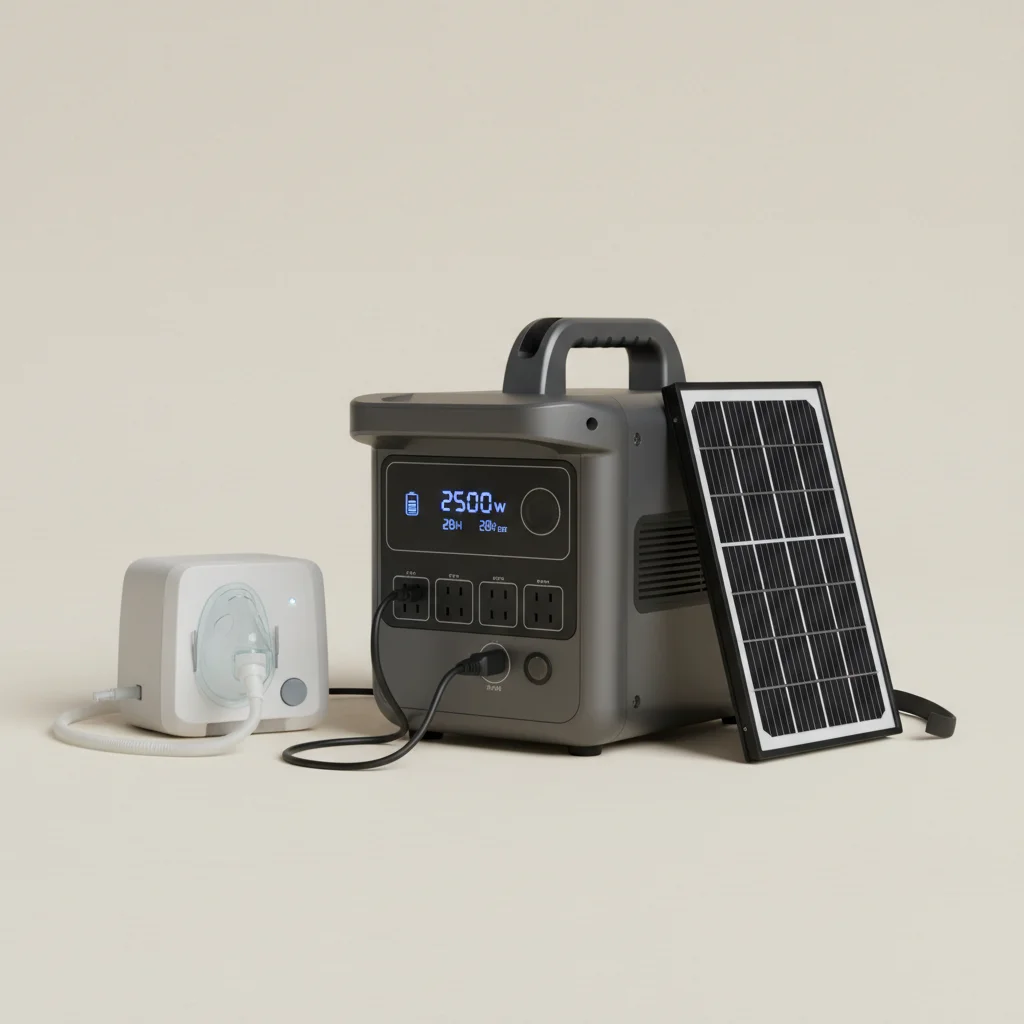
A typical portable power station can run a CPAP machine for approximately 8 to 24 hours, depending on the power station’s capacity, the CPAP machine’s wattage, and whether the humidifier and heated tubing are used. For example, a 500Wh power station can power a 50W CPAP machine for about 10 hours without a humidifier.
Understanding CPAP Power Consumption
CPAP machines vary significantly in their power draw. A basic CPAP unit without a humidifier or heated tubing might consume as little as 30-40 watts per hour. However, adding a humidifier can increase consumption to 60-80 watts, and heated tubing can push it even higher, sometimes exceeding 100 watts. It’s crucial to check your specific CPAP machine’s manual or power adapter for its exact wattage.
When calculating run time, remember that the power station’s efficiency also plays a role. There’s always some energy loss during conversion from DC to AC, typically around 10-20%. Therefore, a 500Wh power station won’t deliver a full 500Wh of usable AC power.
Calculating Your CPAP Run Time
To estimate how long your power station will last, use this simple formula: (Power Station Capacity in Wh * 0.85) / CPAP Machine Wattage in W = Estimated Run Time in Hours. The 0.85 factor accounts for an average 15% efficiency loss. For instance, if you have a 1000Wh power station and your CPAP machine draws 60W (with humidifier), your estimated run time would be (1000 * 0.85) / 60 = 14.17 hours.
Consider your typical usage patterns. If you only need power for 7-8 hours overnight, a smaller capacity unit might suffice. For extended trips or multiple nights without recharging, a larger capacity is essential.
Factors Affecting Battery Life
|
Our Picks for the Best Power Station in 2026
As an Amazon Associate I earn from qualifying purchases.
|
||
| Num | Product | Action |
|---|---|---|
| 1 | Jackery Explorer 2000 v2 Portable Power Station with 2x200W Solar Panels, 2042Wh LiFePo4 Battery, 2200W Solar Generator, 20ms UPS, USB-C PD 100W Fast Charging for Power Outages, Emergencies, Camping |

|
| 2 | Anker SOLIX C300 Portable Power Station with Car Charging Cable, Outdoor 288Wh LiFePO4 Battery, 300W (600W Surge) Solar Generator, 140W Two-Way Fast Charging, for Camping, Traveling, and Emergencies. |
|
| 3 | Anker SOLIX C1000 Gen 2 Portable Power Station, 2,000W (Peak 3,000W) Solar Generator, Full Charge in 49 Min, 1,024Wh LiFePO4 Battery for Home Backup, Power Outages, and Camping (Optional Solar Panel) |
|
| 4 | BLUETTI Portable Power Station AC180, 1152Wh LiFePO4 Battery Backup w/ 2 1800W (2700W peak) AC Outlets, 0-80% in 45Min, Solar Generator for Camping, Off-grid, Power Outage |
|
| 5 | Anker SOLIX C1000 Portable Power Station, 1800W (Peak 2400W) Solar Generator, Full Charge in 58 Min, 1056wh LiFePO4 Battery for Home Backup, Power Outages, and Outdoor Camping (Optional Solar Panel) |
|
| 6 | 550W Power Station Compatible with Dewalt: LIVOWALNY Portable Generator DC 20V to AC 110-120V, Pure Sine Wave Power Inverter Battery Adapter Phone Charger 2 USB-A & 1 Type-C & 2 AC Outlet (Tool Only) |
|
| 7 | UGREEN Power Strip Surge Protector with 4 Power Outlets, 15w Wireless Charger, 20W PD3.0 USB C Fast Charging, 2 USB-C Ports, 2 USB A Ports, Desk Charging Station for Office, Conference, Home Use |
|
| 8 | 550W Portable Power Inverter Compatible with Dewalt 20V Battery, Power Station DC 20V to AC 110V Pure Sine Wave, Battery Power Adapter 2USB&Type-C, Generator Phone Charger LED Light Camping Emergency |
|
| 9 | Anker SOLIX F3800 Portable Power Station, 3840Wh, LiFePO4 Batteries, Ultra-High 6000W AC Output with 120V/240V, Solar Generator for Home Backup, RVs, Emergencies, Power Outages, and Outdoor Camping |
|
| 10 | Westinghouse 155Wh 150 Peak Watt Portable Power Station & Solar Generator, Modified Sine Wave AC Outlet, Backup Lithium Battery for Camping, Home, Travel, Indoor/Outdoor Use (Solar Panel Not Included) |
|
- Humidifier and Heated Tubing: These features significantly increase power consumption. Disabling them can extend your run time by several hours.
- CPAP Pressure Settings: Higher pressure settings can sometimes lead to slightly increased power draw, though this is usually less impactful than the humidifier.
- Battery Age and Health: Over time, a power station’s battery capacity can degrade, leading to shorter run times.
- Temperature: Extreme cold can reduce battery efficiency and overall usable capacity.
- Power Station Output Type: Using a DC converter for your CPAP (if available) can be more efficient than using the AC outlet, as it bypasses the inverter loss.
Recommended Power Station Capacities for CPAP Users
For occasional overnight use (1-2 nights), a power station with 300-500Wh capacity is often sufficient, especially if you can forgo the humidifier. For longer trips or if you rely heavily on the humidifier and heated tubing, a 700-1000Wh unit provides a more comfortable buffer. For extended off-grid living or emergency preparedness, consider units with 1500Wh or more, potentially with solar charging capabilities.
Always prioritize safety. Ensure your power station has adequate surge protection and pure sine wave output to protect your sensitive CPAP equipment.
Tips for Maximizing CPAP Run Time
To get the most out of your power station when running a CPAP machine, consider these strategies:
- Disable Humidifier and Heated Tubing: This is the single most effective way to conserve power.
- Use a DC Converter: If your CPAP machine offers a 12V DC input, using a compatible DC converter directly from your power station’s 12V port will be more efficient than using the AC outlet.
- Charge During the Day: If you have solar panels, charge your power station during daylight hours to ensure it’s topped up for the night.
- Monitor Power Consumption: Many modern power stations display real-time power draw, allowing you to see how different settings affect consumption.
- Keep the Power Station Warm: In cold environments, keep your power station insulated to maintain optimal battery performance.
By understanding your CPAP’s power needs and choosing an appropriately sized power station, you can ensure uninterrupted sleep therapy wherever you are.

The information about heated tubing increasing consumption was a bit of a bummer for me. I really rely on my heated hose, and it sounds like that’s going to drastically cut down my run time, even with a larger power station. I was hoping for closer to 24 hours, but it seems more like 8-10 with my setup. Still, it’s good to know the reality before buying.
This really clarified the whole wattage vs. run time confusion for me. I always just guessed. My CPAP is pretty basic, around 35W, so it’s good to know I can get a solid 12-15 hours from a smaller unit. I’m still debating between a 300Wh and 500Wh model, but at least I understand the math now. Great breakdown of the factors involved.
Finally, a clear explanation of how to calculate CPAP run time with a portable power station! I’ve been struggling to figure out what size unit I’d need for camping trips. Knowing that a 50W machine without a humidifier can run for 10 hours on a 500Wh station makes my decision much easier. I’m confident I can find a good solution now.
I’ve been looking for a reliable backup for my CPAP during power outages, and this info was super helpful. I have a 60W machine with a humidifier, and knowing that a 500Wh station could give me around 8 hours is exactly what I needed to plan. I’m definitely investing in one of the recommended brands now. No more worrying about sleepless nights when the grid goes down!