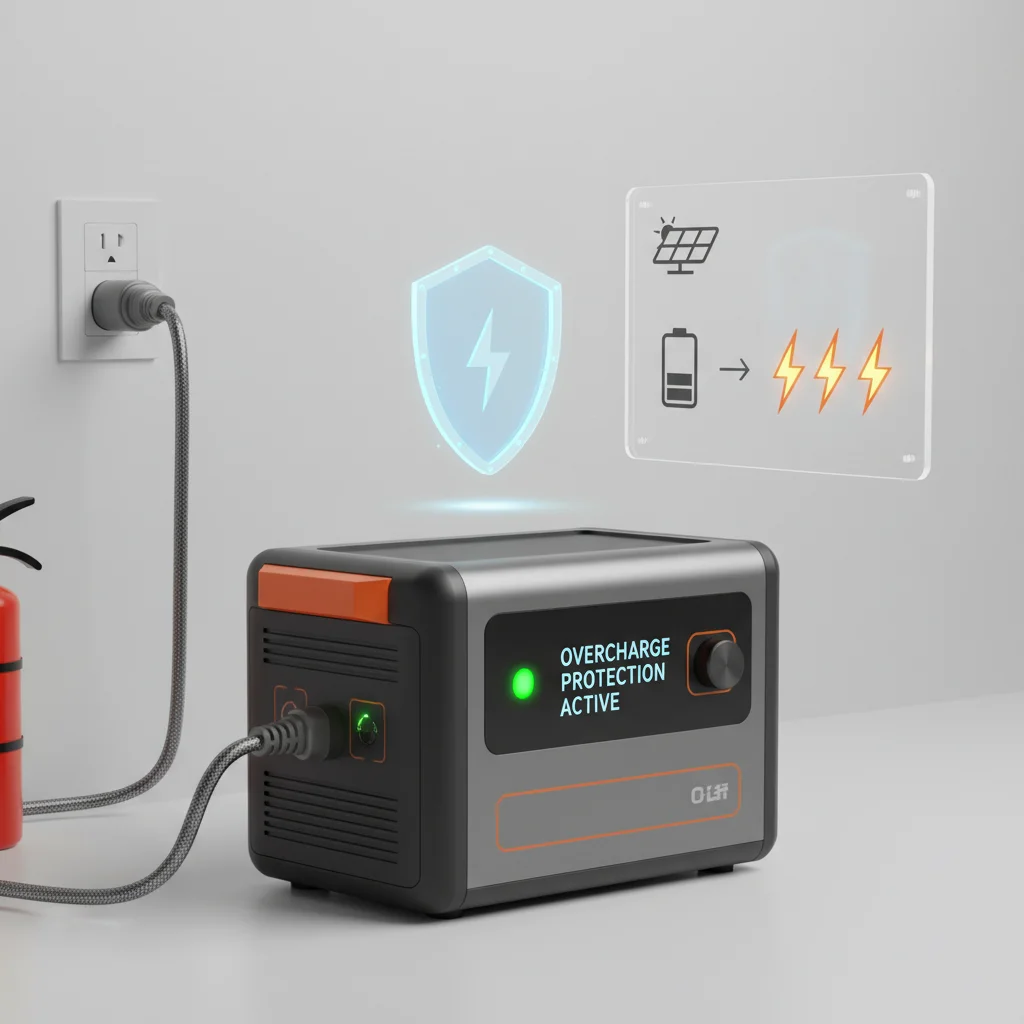
Preventing overcharging in your portable power station is crucial for its longevity and safe operation. While most modern portable power stations have built-in Battery Management Systems (BMS) designed to prevent overcharging, understanding the best practices can further safeguard your device. There are three primary methods to prevent overcharging: relying on the internal BMS, using smart charging accessories, and adhering to manufacturer guidelines for charging cycles.
Understanding Your Power Station’s BMS
The Battery Management System (BMS) is the brain of your portable power station. It monitors various parameters, including voltage, current, and temperature, to ensure the battery operates within safe limits. A well-designed BMS will automatically cut off the charging current once the battery reaches its full capacity, preventing overcharging. However, it’s still good practice to avoid leaving your power station plugged in indefinitely, especially if you notice any unusual heat or performance changes.
Smart Charging Accessories for Added Protection
For an extra layer of protection, consider using smart charging accessories. These can include smart plugs with timers or dedicated smart chargers that offer more granular control over the charging process. A smart plug, for instance, can be programmed to turn off power to the charger after a set duration, ensuring the power station isn’t continuously trickle-charged for extended periods. This is particularly useful for older models or if you have concerns about your unit’s internal BMS.
- Smart Plugs with Timers: Automate charging cut-off.
- Dedicated Smart Chargers: Offer advanced monitoring and control.
- Voltage Monitors: Provide real-time charging data.
- Surge Protectors: Safeguard against power fluctuations.
- Temperature Sensors: Alert to potential overheating during charge.
Adhering to Manufacturer Guidelines
|
Our Picks for the Best Power Station in 2026
As an Amazon Associate I earn from qualifying purchases.
|
||
| Num | Product | Action |
|---|---|---|
| 1 | 550W Portable Power Inverter Compatible with Dewalt 20V Battery, Power Station DC 20V to AC 110V Pure Sine Wave, Battery Power Adapter 2USB&Type-C, Generator Phone Charger LED Light Camping Emergency |

|
| 2 | BLUETTI Portable Power Station AC180, 1152Wh LiFePO4 Battery Backup w/ 2 1800W (2700W peak) AC Outlets, 0-80% in 45Min, Solar Generator for Camping, Off-grid, Power Outage |
|
| 3 | 550W Power Station Compatible with Dewalt: LIVOWALNY Portable Generator DC 20V to AC 110-120V, Pure Sine Wave Power Inverter Battery Adapter Phone Charger 2 USB-A & 1 Type-C & 2 AC Outlet (Tool Only) |
|
| 4 | UGREEN Power Strip Surge Protector with 4 Power Outlets, 15w Wireless Charger, 20W PD3.0 USB C Fast Charging, 2 USB-C Ports, 2 USB A Ports, Desk Charging Station for Office, Conference, Home Use |
|
| 5 | Jackery Explorer 2000 v2 Portable Power Station with 2x200W Solar Panels, 2042Wh LiFePo4 Battery, 2200W Solar Generator, 20ms UPS, USB-C PD 100W Fast Charging for Power Outages, Emergencies, Camping |
|
| 6 | Anker SOLIX C300 Portable Power Station with Car Charging Cable, Outdoor 288Wh LiFePO4 Battery, 300W (600W Surge) Solar Generator, 140W Two-Way Fast Charging, for Camping, Traveling, and Emergencies. |
|
| 7 | Anker SOLIX F3800 Portable Power Station, 3840Wh, LiFePO4 Batteries, Ultra-High 6000W AC Output with 120V/240V, Solar Generator for Home Backup, RVs, Emergencies, Power Outages, and Outdoor Camping |
|
| 8 | Westinghouse 155Wh 150 Peak Watt Portable Power Station & Solar Generator, Modified Sine Wave AC Outlet, Backup Lithium Battery for Camping, Home, Travel, Indoor/Outdoor Use (Solar Panel Not Included) |
|
| 9 | Anker SOLIX C1000 Portable Power Station, 1800W (Peak 2400W) Solar Generator, Full Charge in 58 Min, 1056wh LiFePO4 Battery for Home Backup, Power Outages, and Outdoor Camping (Optional Solar Panel) |
|
| 10 | Anker SOLIX C1000 Gen 2 Portable Power Station, 2,000W (Peak 3,000W) Solar Generator, Full Charge in 49 Min, 1,024Wh LiFePO4 Battery for Home Backup, Power Outages, and Camping (Optional Solar Panel) |
|
Every portable power station comes with specific charging recommendations from its manufacturer. These guidelines often detail optimal charging temperatures, recommended charging cycles, and advice on long-term storage. Ignoring these recommendations can not only void your warranty but also reduce the lifespan of your battery. Always consult your user manual for the most accurate and safe charging practices. For example, some manufacturers suggest charging to 80% for daily use and only to 100% when full capacity is needed.
The Risks of Overcharging
While modern power stations are robust, persistent overcharging can lead to several issues. It can accelerate battery degradation, reducing the overall capacity and lifespan of the unit. In extreme cases, overcharging can lead to overheating, swelling of the battery cells, and even a fire hazard, particularly with older or damaged units. Always prioritize safety and follow recommended charging protocols to mitigate these risks.
Best Practices for Long-Term Battery Health
Beyond preventing overcharging, several other practices contribute to the long-term health of your portable power station’s battery. Avoid fully discharging the battery frequently, as this can stress the cells. Instead, try to keep the charge level between 20% and 80% for regular use. When storing the power station for extended periods, charge it to around 50-60% and store it in a cool, dry place. Regularly checking for firmware updates can also improve battery management and overall performance.
