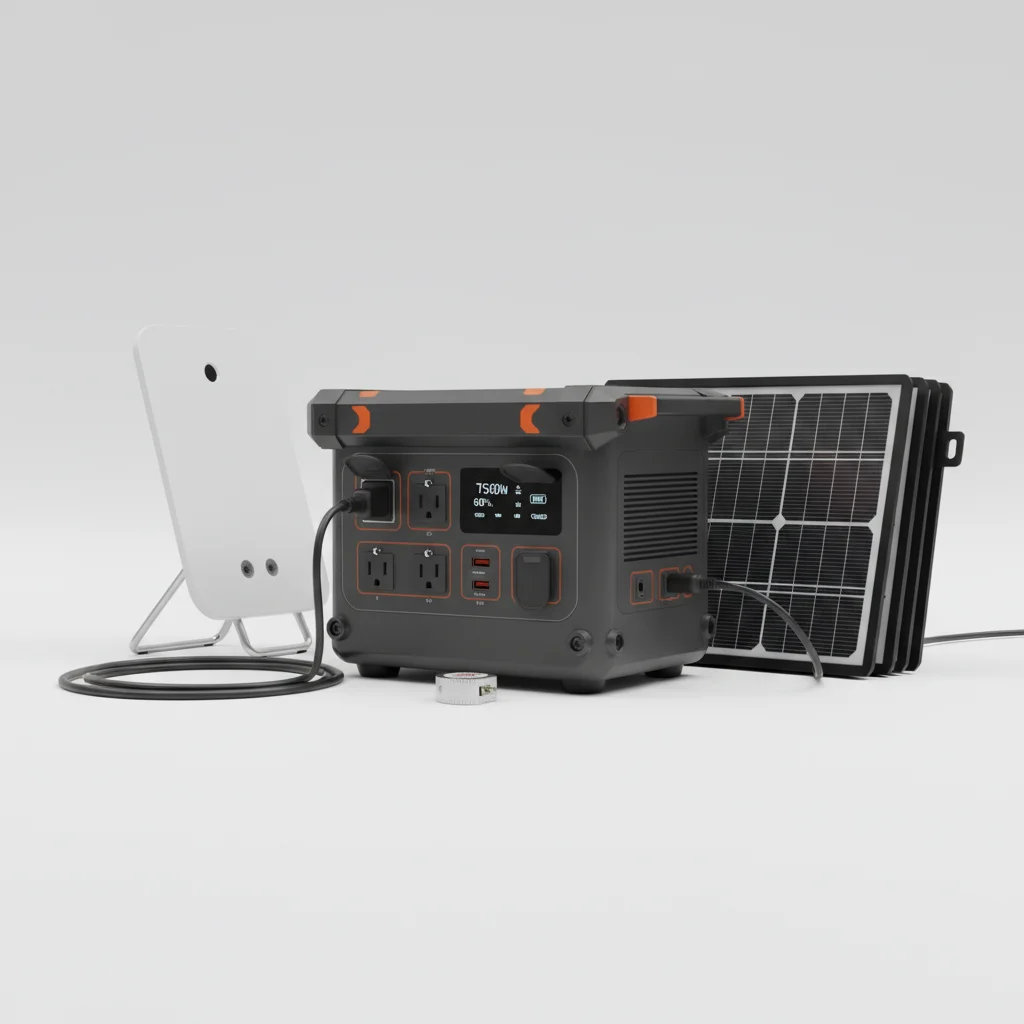
A portable power station can run a Starlink system for approximately 6 to 12 hours, depending on the power station’s capacity and the specific Starlink model’s power consumption. Starlink systems typically draw between 50 to 75 watts during operation, with some variations based on ambient temperature and signal strength.
Understanding Starlink Power Requirements
Starlink’s power draw isn’t constant; it fluctuates based on several factors. The standard Starlink dish (Dishy McFlatface) requires power for its phased array antenna, internal heating elements (especially in cold weather to melt snow), and the router. The average consumption for the standard residential kit is around 50-75W. The newer Gen 2 (Standard Actuated) and Gen 3 (Standard) dishes have similar power profiles. Knowing this average draw is crucial for calculating how long a portable power station can sustain your internet connection in off-grid scenarios.
Calculating Runtime for Your Power Station
To determine how long your portable power station will power your Starlink, you’ll need to know your power station’s usable capacity in Watt-hours (Wh) and your Starlink’s average power consumption in Watts (W). The formula is simple: Usable Capacity (Wh) / Starlink Consumption (W) = Runtime (Hours). For example, a 500Wh power station powering a Starlink drawing 60W would last approximately 8.3 hours (500Wh / 60W = 8.33h). Always account for some efficiency loss, typically around 10-20%, when making your calculations.
- Check your power station’s usable capacity (Wh).
- Identify your Starlink model’s average power draw (W).
- Divide usable capacity by power draw for estimated runtime.
- Consider a 10-20% efficiency loss for realistic estimates.
- Factor in environmental conditions like temperature, which can increase Starlink’s power needs.
Choosing the Right Portable Power Station
|
Our Picks for the Best Power Station in 2026
As an Amazon Associate I earn from qualifying purchases.
|
||
| Num | Product | Action |
|---|---|---|
| 1 | Anker SOLIX F3800 Portable Power Station, 3840Wh, LiFePO4 Batteries, Ultra-High 6000W AC Output with 120V/240V, Solar Generator for Home Backup, RVs, Emergencies, Power Outages, and Outdoor Camping |

|
| 2 | Anker SOLIX C1000 Gen 2 Portable Power Station, 2,000W (Peak 3,000W) Solar Generator, Full Charge in 49 Min, 1,024Wh LiFePO4 Battery for Home Backup, Power Outages, and Camping (Optional Solar Panel) |
|
| 3 | 550W Power Station Compatible with Dewalt: LIVOWALNY Portable Generator DC 20V to AC 110-120V, Pure Sine Wave Power Inverter Battery Adapter Phone Charger 2 USB-A & 1 Type-C & 2 AC Outlet (Tool Only) |
|
| 4 | 550W Portable Power Inverter Compatible with Dewalt 20V Battery, Power Station DC 20V to AC 110V Pure Sine Wave, Battery Power Adapter 2USB&Type-C, Generator Phone Charger LED Light Camping Emergency |
|
| 5 | Westinghouse 155Wh 150 Peak Watt Portable Power Station & Solar Generator, Modified Sine Wave AC Outlet, Backup Lithium Battery for Camping, Home, Travel, Indoor/Outdoor Use (Solar Panel Not Included) |
|
| 6 | Anker SOLIX C1000 Portable Power Station, 1800W (Peak 2400W) Solar Generator, Full Charge in 58 Min, 1056wh LiFePO4 Battery for Home Backup, Power Outages, and Outdoor Camping (Optional Solar Panel) |
|
| 7 | UGREEN Power Strip Surge Protector with 4 Power Outlets, 15w Wireless Charger, 20W PD3.0 USB C Fast Charging, 2 USB-C Ports, 2 USB A Ports, Desk Charging Station for Office, Conference, Home Use |
|
| 8 | Anker SOLIX C300 Portable Power Station with Car Charging Cable, Outdoor 288Wh LiFePO4 Battery, 300W (600W Surge) Solar Generator, 140W Two-Way Fast Charging, for Camping, Traveling, and Emergencies. |
|
| 9 | Jackery Explorer 2000 v2 Portable Power Station with 2x200W Solar Panels, 2042Wh LiFePo4 Battery, 2200W Solar Generator, 20ms UPS, USB-C PD 100W Fast Charging for Power Outages, Emergencies, Camping |
|
| 10 | BLUETTI Portable Power Station AC180, 1152Wh LiFePO4 Battery Backup w/ 2 1800W (2700W peak) AC Outlets, 0-80% in 45Min, Solar Generator for Camping, Off-grid, Power Outage |
|
When selecting a portable power station for Starlink, prioritize models with a capacity of at least 500Wh for reliable overnight use. Look for units with pure sine wave inverters, as these provide clean, stable power that is safe for sensitive electronics like Starlink. Consider models with multiple AC outlets and DC ports for versatility. Brands like EcoFlow, Jackery, and Bluetti offer a range of suitable options.Additionally, features like fast charging and the ability to accept solar input are valuable for extended off-grid adventures.
Optimizing Starlink Power Consumption
To maximize your Starlink’s runtime on a portable power station, consider a few optimization strategies. In warmer climates, you can disable the dish’s snow melt feature if it’s not needed, significantly reducing power draw. Using a 12V DC adapter for your Starlink router, if available, can bypass the inverter’s efficiency losses, extending battery life. Minimize unnecessary usage, such as streaming high-definition video when lower quality will suffice. Regularly check for firmware updates, as these can sometimes include power efficiency improvements.
Solar Charging for Extended Off-Grid Use
For prolonged off-grid Starlink operation, integrating solar panels with your portable power station is essential. Ensure your power station has a robust solar input capacity (measured in Watts) that matches or exceeds the output of your chosen solar panels. A 100W to 200W solar panel can often replenish the power consumed by Starlink during daylight hours, allowing for continuous operation. Look for power stations with MPPT (Maximum Power Point Tracking) controllers for optimal solar charging efficiency, especially in varying light conditions. This setup creates a sustainable power loop, keeping your Starlink online indefinitely.

The calculations for how long a power station lasts were a bit optimistic for my setup. I have the standard residential kit and a 750Wh battery, and I’m only getting about 8 hours, not the 10-12 I was hoping for. It’s still useful, but I wish it lasted a bit longer. Maybe my dish is just a power hog.
Great info on the power draw fluctuations. I noticed my Starlink uses more power in colder weather, just like it mentioned, probably for the heating elements. My 500Wh unit gives me about 6-7 hours, which is decent for a day trip, but I might upgrade to something bigger for longer off-grid stays. Still, it’s good to know what to expect.
I’ve been looking for a reliable way to power my Starlink when I’m out camping, and this was super helpful. I picked up a 1000Wh portable power station after reading this, and it easily keeps my Gen 2 dish running for a full overnight trip. No more dead zones in the wilderness! It’s a game-changer for staying connected.
This really clarified the wattage needed for Starlink. I was confused about the 50-75W average consumption, but now it makes sense. I got a smaller 300Wh unit for short outages and it’s perfect for keeping the internet on for a few hours. It’s great to have a backup for when the grid goes down.