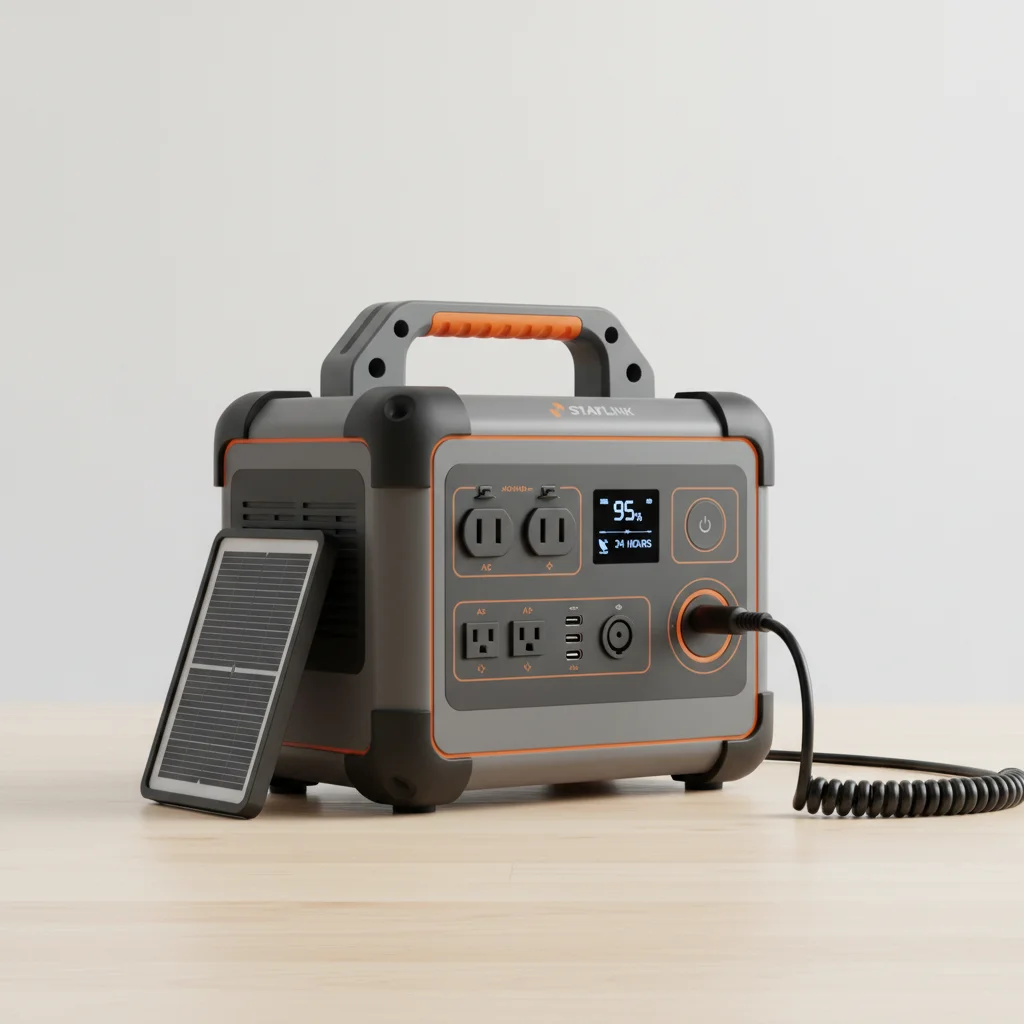
A portable power station can run a Starlink system for approximately 6 to 12 hours, depending on the power station’s capacity and the specific Starlink model’s power consumption. Starlink’s power draw varies, but typically ranges from 50 to 75 watts for the standard residential kit. To accurately determine runtime, divide the power station’s usable watt-hours by the Starlink’s wattage.
Understanding Starlink Power Consumption
Starlink systems, while revolutionary for off-grid internet, do require a consistent power supply. The standard Starlink dish (often referred to as ‘Dishy’) and router consume power primarily for signal acquisition, data transmission, and internal heating (especially in colder climates to melt snow). The average power draw for a residential Starlink kit is around 50-75 watts. However, this can spike during initial boot-up or in extreme weather conditions. It’s crucial to check the specific power requirements of your Starlink model, as newer versions may be more energy-efficient.
Calculating Runtime for Your Power Station
To calculate how long your portable power station will power your Starlink, you need two key pieces of information: the usable capacity of your power station (in Watt-hours, Wh) and the average power consumption of your Starlink (in Watts, W). The formula is simple: Runtime (hours) = Usable Power Station Capacity (Wh) / Starlink Power Consumption (W). For example, a 500Wh power station powering a Starlink drawing 50W would last 10 hours. Always account for some efficiency loss (typically 10-20%) in the power station’s inverter.
Choosing the Right Power Station Capacity
|
Our Picks for the Best Power Station in 2026
As an Amazon Associate I earn from qualifying purchases.
|
||
| Num | Product | Action |
|---|---|---|
| 1 | Anker SOLIX F3800 Portable Power Station, 3840Wh, LiFePO4 Batteries, Ultra-High 6000W AC Output with 120V/240V, Solar Generator for Home Backup, RVs, Emergencies, Power Outages, and Outdoor Camping |

|
| 2 | 550W Portable Power Inverter Compatible with Dewalt 20V Battery, Power Station DC 20V to AC 110V Pure Sine Wave, Battery Power Adapter 2USB&Type-C, Generator Phone Charger LED Light Camping Emergency |
|
| 3 | Anker SOLIX C300 Portable Power Station with Car Charging Cable, Outdoor 288Wh LiFePO4 Battery, 300W (600W Surge) Solar Generator, 140W Two-Way Fast Charging, for Camping, Traveling, and Emergencies. |
|
| 4 | UGREEN Power Strip Surge Protector with 4 Power Outlets, 15w Wireless Charger, 20W PD3.0 USB C Fast Charging, 2 USB-C Ports, 2 USB A Ports, Desk Charging Station for Office, Conference, Home Use |
|
| 5 | Westinghouse 155Wh 150 Peak Watt Portable Power Station & Solar Generator, Modified Sine Wave AC Outlet, Backup Lithium Battery for Camping, Home, Travel, Indoor/Outdoor Use (Solar Panel Not Included) |
|
| 6 | Jackery Explorer 2000 v2 Portable Power Station with 2x200W Solar Panels, 2042Wh LiFePo4 Battery, 2200W Solar Generator, 20ms UPS, USB-C PD 100W Fast Charging for Power Outages, Emergencies, Camping |
|
| 7 | BLUETTI Portable Power Station AC180, 1152Wh LiFePO4 Battery Backup w/ 2 1800W (2700W peak) AC Outlets, 0-80% in 45Min, Solar Generator for Camping, Off-grid, Power Outage |
|
| 8 | Anker SOLIX C1000 Portable Power Station, 1800W (Peak 2400W) Solar Generator, Full Charge in 58 Min, 1056wh LiFePO4 Battery for Home Backup, Power Outages, and Outdoor Camping (Optional Solar Panel) |
|
| 9 | 550W Power Station Compatible with Dewalt: LIVOWALNY Portable Generator DC 20V to AC 110-120V, Pure Sine Wave Power Inverter Battery Adapter Phone Charger 2 USB-A & 1 Type-C & 2 AC Outlet (Tool Only) |
|
| 10 | Anker SOLIX C1000 Gen 2 Portable Power Station, 2,000W (Peak 3,000W) Solar Generator, Full Charge in 49 Min, 1,024Wh LiFePO4 Battery for Home Backup, Power Outages, and Camping (Optional Solar Panel) |
|
For reliable Starlink operation, especially for extended off-grid use, consider a portable power station with at least 500Wh of usable capacity. If you plan to power other devices simultaneously or anticipate longer periods without recharging, a 1000Wh or even 1500Wh unit would be more suitable. Look for models with LiFePO4 batteries for longer cycle life and better overall durability. Many users find that a power station in the 700-1000Wh range strikes a good balance between portability and sufficient runtime for a Starlink system.
- Consider a minimum of 500Wh for occasional use.
- Aim for 700-1000Wh for regular off-grid internet.
- Factor in additional devices you might power.
- Prioritize LiFePO4 battery chemistry for longevity.
- Check for multiple output ports for versatility.
Optimizing Starlink Power Usage
To maximize the runtime of your Starlink on a portable power station, there are several optimization strategies. First, ensure your Starlink dish has a clear line of sight to the sky to minimize signal acquisition efforts. In warmer climates, you can often disable the ‘Snow Melt’ feature in the Starlink app, which significantly reduces power consumption. Additionally, consider using a DC-to-DC converter if your Starlink router supports it, as this can bypass the inverter losses associated with AC power, improving efficiency by up to 15-20%.
Recharging Your Power Station Off-Grid
When using Starlink off-grid, recharging your portable power station becomes a critical consideration. Solar panels are the most common and effective solution. Match the input capacity of your power station with appropriately sized solar panels. For example, a 100W solar panel can recharge a 500Wh power station in about 5-7 hours of peak sunlight. Many power stations also support car charging, which can be a viable option while driving. Always ensure your charging method is compatible with your power station’s input specifications.
