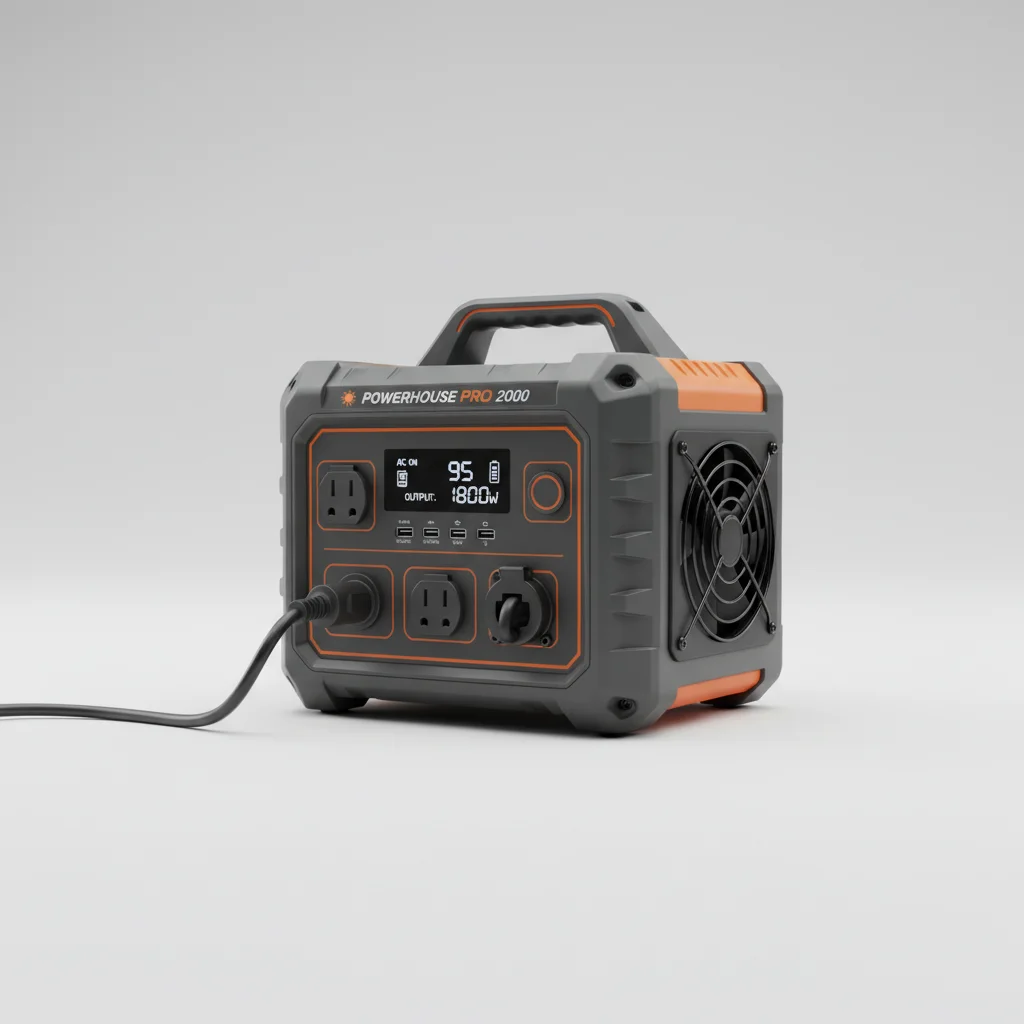
A portable power station can run an RV air conditioner for approximately 1 to 4 hours, depending on the power station’s capacity and the air conditioner’s wattage. For instance, a 2000Wh power station might power a 1000W RV AC unit for about 1.5 to 2 hours, while a larger 4000Wh unit could extend that to 3 to 4 hours. Factors like ambient temperature, AC settings, and the efficiency of both devices will influence the exact runtime.
Understanding RV Air Conditioner Power Consumption
RV air conditioners are significant power consumers, typically drawing between 800W and 2000W when running. Smaller, more efficient units might be at the lower end, while larger or older models will be at the higher end. It’s crucial to check the specific wattage of your RV’s AC unit, usually found on a label or in the owner’s manual, to accurately estimate runtime with a portable power station. Starting wattage, or surge power, can also be much higher than continuous running wattage, which is an important consideration for the power station’s inverter capacity. For portable power buying guides on this site.
Calculating Runtime: A Practical Approach
To calculate how long your portable power station will power your RV air conditioner, you’ll need the power station’s usable capacity (in Watt-hours, Wh) and the air conditioner’s running wattage (in Watts, W). The basic formula is: Runtime (hours) = Usable Power Station Capacity (Wh) / AC Running Wattage (W). Remember that power stations are not 100% efficient; expect about 80-90% usable capacity due to inverter losses. For example, a 2000Wh power station with 85% efficiency provides 1700Wh of usable power. If your AC draws 1000W, the runtime would be 1700Wh / 1000W = 1.7 hours.
- Check your RV AC unit’s running wattage.
- Determine the usable capacity of your portable power station (factor in 10-20% efficiency loss).
- Consider the surge wattage required by your AC during startup.
- Account for other devices drawing power simultaneously.
- Monitor the power station’s display for real-time power draw and estimated runtime.
Choosing the Right Power Station for Your RV AC Needs
|
Our Picks for the Best Power Station in 2026
As an Amazon Associate I earn from qualifying purchases.
|
||
| Num | Product | Action |
|---|---|---|
| 1 | Anker SOLIX F3800 Portable Power Station, 3840Wh, LiFePO4 Batteries, Ultra-High 6000W AC Output with 120V/240V, Solar Generator for Home Backup, RVs, Emergencies, Power Outages, and Outdoor Camping |

|
| 2 | BLUETTI Portable Power Station AC180, 1152Wh LiFePO4 Battery Backup w/ 2 1800W (2700W peak) AC Outlets, 0-80% in 45Min, Solar Generator for Camping, Off-grid, Power Outage |
|
| 3 | Anker SOLIX C1000 Portable Power Station, 1800W (Peak 2400W) Solar Generator, Full Charge in 58 Min, 1056wh LiFePO4 Battery for Home Backup, Power Outages, and Outdoor Camping (Optional Solar Panel) |
|
| 4 | Jackery Explorer 2000 v2 Portable Power Station with 2x200W Solar Panels, 2042Wh LiFePo4 Battery, 2200W Solar Generator, 20ms UPS, USB-C PD 100W Fast Charging for Power Outages, Emergencies, Camping |
|
| 5 | Westinghouse 155Wh 150 Peak Watt Portable Power Station & Solar Generator, Modified Sine Wave AC Outlet, Backup Lithium Battery for Camping, Home, Travel, Indoor/Outdoor Use (Solar Panel Not Included) |
|
| 6 | 550W Portable Power Inverter Compatible with Dewalt 20V Battery, Power Station DC 20V to AC 110V Pure Sine Wave, Battery Power Adapter 2USB&Type-C, Generator Phone Charger LED Light Camping Emergency |
|
| 7 | Anker SOLIX C1000 Gen 2 Portable Power Station, 2,000W (Peak 3,000W) Solar Generator, Full Charge in 49 Min, 1,024Wh LiFePO4 Battery for Home Backup, Power Outages, and Camping (Optional Solar Panel) |
|
| 8 | Anker SOLIX C300 Portable Power Station with Car Charging Cable, Outdoor 288Wh LiFePO4 Battery, 300W (600W Surge) Solar Generator, 140W Two-Way Fast Charging, for Camping, Traveling, and Emergencies. |
|
| 9 | 550W Power Station Compatible with Dewalt: LIVOWALNY Portable Generator DC 20V to AC 110-120V, Pure Sine Wave Power Inverter Battery Adapter Phone Charger 2 USB-A & 1 Type-C & 2 AC Outlet (Tool Only) |
|
| 10 | UGREEN Power Strip Surge Protector with 4 Power Outlets, 15w Wireless Charger, 20W PD3.0 USB C Fast Charging, 2 USB-C Ports, 2 USB A Ports, Desk Charging Station for Office, Conference, Home Use |
|
When selecting a portable power station for an RV air conditioner, prioritize models with high capacity (2000Wh or more) and a robust inverter (at least 2000W continuous output, with a good surge rating). Look for power stations with LiFePO4 batteries for longer cycle life and better overall performance. Features like multiple AC outlets, fast charging, and the ability to connect to solar panels for recharging are also highly beneficial for extended use. Consider brands known for their reliability and customer support in the portable power station market.
Optimizing Power Station Usage for RV Air Conditioning
To maximize the runtime of your portable power station when powering an RV air conditioner, consider several strategies. First, pre-cool your RV using shore power before switching to the power station. Set the AC to a higher, more comfortable temperature rather than the lowest possible. Use the ‘fan only’ mode when cooling isn’t strictly necessary. Ensure your RV is well-insulated and keep windows and doors closed to prevent cool air from escaping. If possible, park in the shade to reduce the heat load on your RV and, consequently, on your air conditioner.
Recharging Options for Extended Use
For longer trips or off-grid living, relying solely on a portable power station for your RV AC might be challenging without a robust recharging strategy. Solar panels are an excellent option, allowing you to replenish the power station’s charge during the day. Ensure your power station has a high-wattage solar input and pair it with efficient solar panels. Alternatively, charging from your RV’s alternator while driving or from a generator can provide significant power. Some power stations also support fast AC charging, allowing for quick top-ups when grid power is available.
