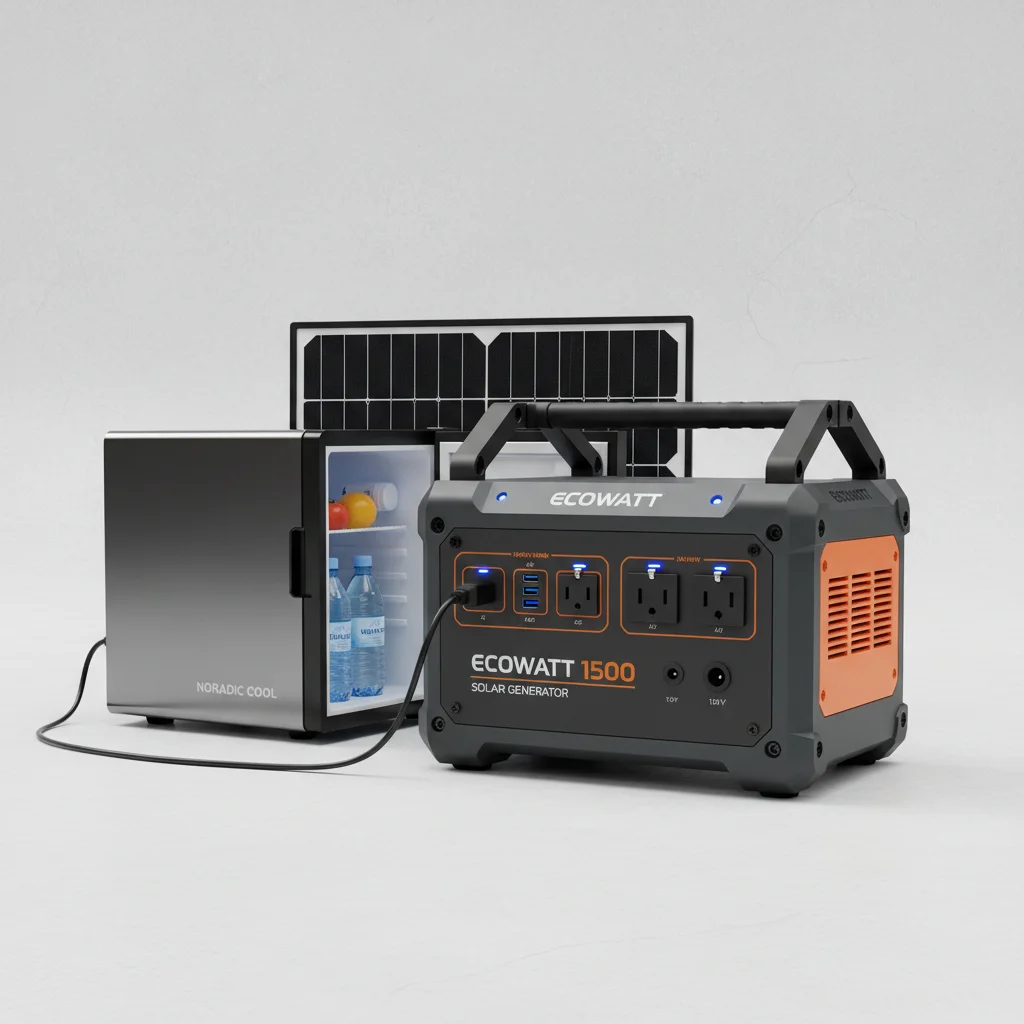
A portable power station can run a standard refrigerator for an average of 10 to 24 hours, depending on the power station’s capacity and the refrigerator’s energy consumption. For instance, a 1000Wh power station can typically power a 100W refrigerator for about 10 hours, while a 2000Wh unit could extend that to 20 hours or more. Factors like the refrigerator’s efficiency, ambient temperature, and how often the door is opened will significantly influence the actual runtime.
Understanding Refrigerator Power Consumption
Refrigerators are not constant power draws; they cycle on and off to maintain temperature. A typical household refrigerator might consume between 80 to 200 watts when its compressor is running. However, the average daily consumption is often lower, as the compressor isn’t active 24/7. Energy Star-rated refrigerators are more efficient and will extend the runtime of your portable power station. Always check your refrigerator’s label for its specific wattage and amp draw to get the most accurate estimate.
Calculating Runtime for Your Power Station
To estimate how long your portable power station will run your refrigerator, you’ll need two key pieces of information: the power station’s usable capacity (in Watt-hours, Wh) and the refrigerator’s average running wattage. The formula is straightforward: Runtime (hours) = Power Station Capacity (Wh) / Refrigerator Running Wattage (W). Remember to account for an inverter efficiency loss, typically around 10-15%, by multiplying your result by 0.85 or 0.9. For example, a 1500Wh power station powering a 120W refrigerator would last approximately 1500 Wh / 120 W * 0.85 = 10.6 hours.
Optimizing Power Station Usage for Refrigerators
|
Our Picks for the Best Power Station in 2026
As an Amazon Associate I earn from qualifying purchases.
|
||
| Num | Product | Action |
|---|---|---|
| 1 | Jackery Explorer 2000 v2 Portable Power Station with 2x200W Solar Panels, 2042Wh LiFePo4 Battery, 2200W Solar Generator, 20ms UPS, USB-C PD 100W Fast Charging for Power Outages, Emergencies, Camping |

|
| 2 | 550W Power Station Compatible with Dewalt: LIVOWALNY Portable Generator DC 20V to AC 110-120V, Pure Sine Wave Power Inverter Battery Adapter Phone Charger 2 USB-A & 1 Type-C & 2 AC Outlet (Tool Only) |
|
| 3 | Anker SOLIX C300 Portable Power Station with Car Charging Cable, Outdoor 288Wh LiFePO4 Battery, 300W (600W Surge) Solar Generator, 140W Two-Way Fast Charging, for Camping, Traveling, and Emergencies. |
|
| 4 | Anker SOLIX F3800 Portable Power Station, 3840Wh, LiFePO4 Batteries, Ultra-High 6000W AC Output with 120V/240V, Solar Generator for Home Backup, RVs, Emergencies, Power Outages, and Outdoor Camping |
|
| 5 | Anker SOLIX C1000 Gen 2 Portable Power Station, 2,000W (Peak 3,000W) Solar Generator, Full Charge in 49 Min, 1,024Wh LiFePO4 Battery for Home Backup, Power Outages, and Camping (Optional Solar Panel) |
|
| 6 | BLUETTI Portable Power Station AC180, 1152Wh LiFePO4 Battery Backup w/ 2 1800W (2700W peak) AC Outlets, 0-80% in 45Min, Solar Generator for Camping, Off-grid, Power Outage |
|
| 7 | UGREEN Power Strip Surge Protector with 4 Power Outlets, 15w Wireless Charger, 20W PD3.0 USB C Fast Charging, 2 USB-C Ports, 2 USB A Ports, Desk Charging Station for Office, Conference, Home Use |
|
| 8 | Anker SOLIX C1000 Portable Power Station, 1800W (Peak 2400W) Solar Generator, Full Charge in 58 Min, 1056wh LiFePO4 Battery for Home Backup, Power Outages, and Outdoor Camping (Optional Solar Panel) |
|
| 9 | Westinghouse 155Wh 150 Peak Watt Portable Power Station & Solar Generator, Modified Sine Wave AC Outlet, Backup Lithium Battery for Camping, Home, Travel, Indoor/Outdoor Use (Solar Panel Not Included) |
|
| 10 | 550W Portable Power Inverter Compatible with Dewalt 20V Battery, Power Station DC 20V to AC 110V Pure Sine Wave, Battery Power Adapter 2USB&Type-C, Generator Phone Charger LED Light Camping Emergency |
|
To maximize the runtime of your portable power station when powering a refrigerator, consider several strategies. First, ensure your refrigerator is as full as possible, as full refrigerators retain cold better. Minimize door openings to prevent warm air from entering. If possible, pre-cool your refrigerator using grid power before switching to the power station. Additionally, consider using a power station with pass-through charging capabilities, allowing you to charge it via solar panels while it’s simultaneously powering your appliance.
- Pre-cool refrigerator before connecting to power station.
- Minimize opening the refrigerator door.
- Ensure refrigerator seals are intact and clean.
- Set refrigerator to a slightly higher, but still safe, temperature.
- Utilize solar charging if available to extend runtime.
Choosing the Right Portable Power Station
When selecting a portable power station specifically for refrigerator backup, prioritize models with a high Watt-hour (Wh) capacity, ideally 1000Wh or more for extended use. Look for units with pure sine wave inverters, which are crucial for sensitive electronics like refrigerators, preventing potential damage. Consider models with multiple AC outlets to accommodate other essential appliances if needed. Brands like EcoFlow, Jackery, and Bluetti offer robust options suitable for this purpose.
Monitoring and Maintenance Tips
Regularly monitor your power station’s charge level, especially during extended outages. Many modern power stations come with companion apps that allow you to track power consumption and remaining runtime from your smartphone. Keep the power station in a well-ventilated area to prevent overheating, which can reduce efficiency and lifespan. Periodically cycle the battery by fully charging and discharging it to maintain its health, as recommended by the manufacturer.

This was super helpful for understanding the real-world usage. I have an older, less efficient fridge, so I knew my 1000Wh station wouldn’t hit the 10-hour mark. It still gave me about 7-8 hours, which was enough to save most of my perishables during a short outage. Just wish I’d sprung for a bigger one initially.
I got a smaller power station, around 500Wh, hoping it would give me a few hours for my mini-fridge. While it did work, the runtime was shorter than I expected, maybe 3-4 hours. I think my fridge must be less efficient than I thought, or I open the door too much. It’s good for small emergencies, but not for extended use.
The info about Energy Star-rated refrigerators was a game-changer for me. I upgraded my old fridge last year, and now my 1500Wh power station easily keeps it running for over 15 hours during blackouts. It’s amazing how much difference that efficiency makes. Highly recommend checking your fridge’s rating!
I bought a 2000Wh unit specifically for hurricane season after reading about how long it could power a fridge. We lost power for 18 hours last month, and this thing kept our food perfectly cold. It was a lifesaver, especially with a full freezer. Definitely worth the investment for peace of mind.