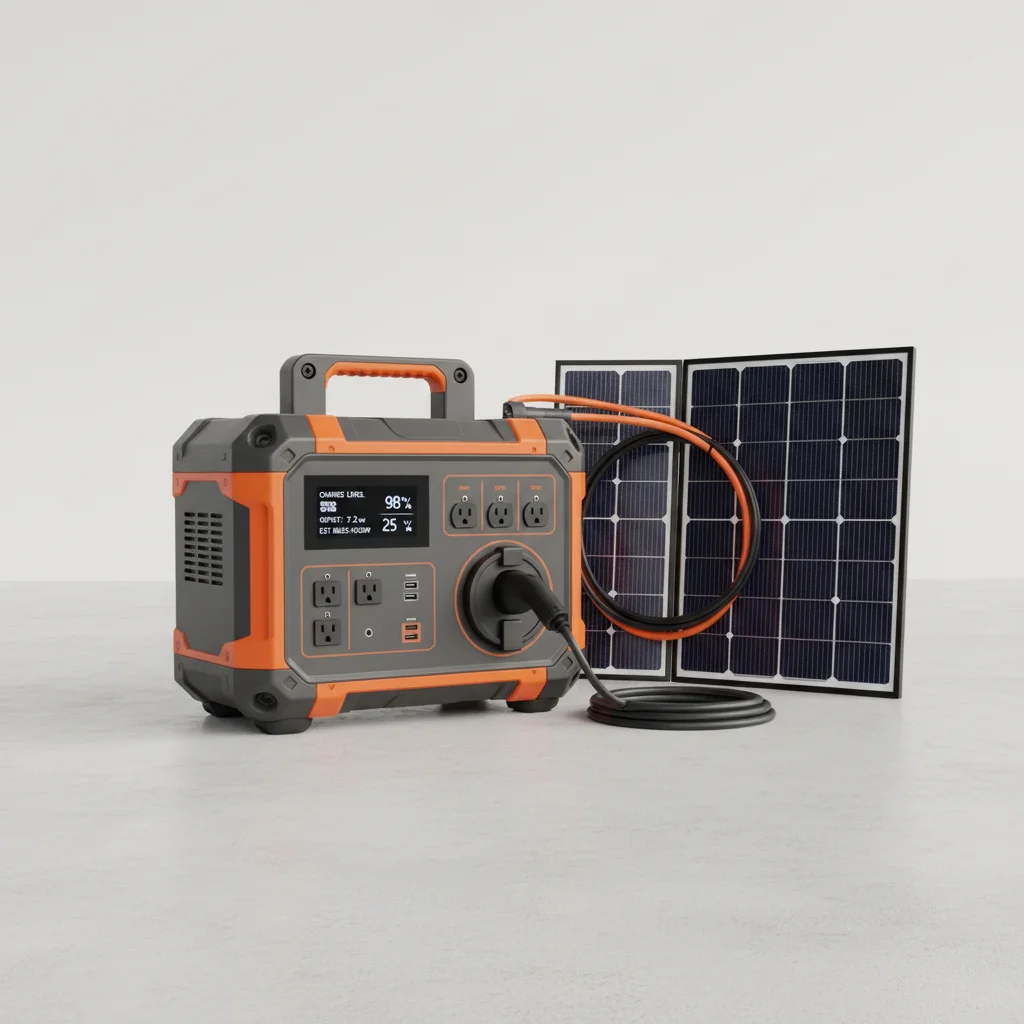
A portable power station can provide approximately 3 to 5 miles of range to an electric vehicle (EV) for every kilowatt-hour (kWh) of stored energy. This makes them suitable for emergency top-ups or extending range in remote areas, rather than a primary charging solution. The actual mileage gained depends on the EV’s efficiency, the power station’s output, and the charging cable used.
Understanding EV Charging with Portable Power Stations
While not designed for full EV charges, portable power stations offer a convenient way to add a few crucial miles. Most EVs consume around 250-350 Wh per mile, meaning a 1 kWh power station could theoretically add 2.8 to 4 miles. However, charging inefficiencies and the power station’s inverter losses will reduce this slightly. It’s important to use a compatible Level 1 (120V) charger, as most portable power stations cannot support Level 2 (240V) charging. For expert portable power reviews on this site.
Factors Affecting Miles Gained
Several factors influence how many miles you can add to your EV. The capacity of your portable power station is paramount; a larger capacity unit like a 2000Wh or 3000Wh model will naturally provide more range. The efficiency of your EV also plays a significant role; smaller, more aerodynamic vehicles typically get more miles per kWh. Lastly, ambient temperature can impact charging efficiency and battery performance, with colder temperatures generally reducing both.
- Power Station Capacity: Higher Wh/kWh means more potential miles.
- EV Efficiency: Lower Wh/mile consumption yields greater range.
- Charging Cable Type: Ensure compatibility and minimal power loss.
- Temperature: Extreme temperatures can reduce charging efficiency.
- Inverter Efficiency: Some power is lost during DC to AC conversion.
Best Practices for Emergency EV Charging
|
Our Picks for the Best Power Station in 2026
As an Amazon Associate I earn from qualifying purchases.
|
||
| Num | Product | Action |
|---|---|---|
| 1 | BLUETTI Portable Power Station AC180, 1152Wh LiFePO4 Battery Backup w/ 2 1800W (2700W peak) AC Outlets, 0-80% in 45Min, Solar Generator for Camping, Off-grid, Power Outage |

|
| 2 | Anker SOLIX C1000 Gen 2 Portable Power Station, 2,000W (Peak 3,000W) Solar Generator, Full Charge in 49 Min, 1,024Wh LiFePO4 Battery for Home Backup, Power Outages, and Camping (Optional Solar Panel) |
|
| 3 | Westinghouse 155Wh 150 Peak Watt Portable Power Station & Solar Generator, Modified Sine Wave AC Outlet, Backup Lithium Battery for Camping, Home, Travel, Indoor/Outdoor Use (Solar Panel Not Included) |
|
| 4 | Jackery Explorer 2000 v2 Portable Power Station with 2x200W Solar Panels, 2042Wh LiFePo4 Battery, 2200W Solar Generator, 20ms UPS, USB-C PD 100W Fast Charging for Power Outages, Emergencies, Camping |
|
| 5 | Anker SOLIX C300 Portable Power Station with Car Charging Cable, Outdoor 288Wh LiFePO4 Battery, 300W (600W Surge) Solar Generator, 140W Two-Way Fast Charging, for Camping, Traveling, and Emergencies. |
|
| 6 | Anker SOLIX C1000 Portable Power Station, 1800W (Peak 2400W) Solar Generator, Full Charge in 58 Min, 1056wh LiFePO4 Battery for Home Backup, Power Outages, and Outdoor Camping (Optional Solar Panel) |
|
| 7 | 550W Power Station Compatible with Dewalt: LIVOWALNY Portable Generator DC 20V to AC 110-120V, Pure Sine Wave Power Inverter Battery Adapter Phone Charger 2 USB-A & 1 Type-C & 2 AC Outlet (Tool Only) |
|
| 8 | 550W Portable Power Inverter Compatible with Dewalt 20V Battery, Power Station DC 20V to AC 110V Pure Sine Wave, Battery Power Adapter 2USB&Type-C, Generator Phone Charger LED Light Camping Emergency |
|
| 9 | UGREEN Power Strip Surge Protector with 4 Power Outlets, 15w Wireless Charger, 20W PD3.0 USB C Fast Charging, 2 USB-C Ports, 2 USB A Ports, Desk Charging Station for Office, Conference, Home Use |
|
| 10 | Anker SOLIX F3800 Portable Power Station, 3840Wh, LiFePO4 Batteries, Ultra-High 6000W AC Output with 120V/240V, Solar Generator for Home Backup, RVs, Emergencies, Power Outages, and Outdoor Camping |
|
When using a portable power station for an emergency EV charge, always prioritize safety and efficiency. Ensure the power station is fully charged before you head out. Use the shortest possible extension cord, if one is needed, to minimize voltage drop. Monitor both the power station and your EV’s charging status. Remember, this method is for getting to the nearest charging station, not for daily use.
For reliable emergency power, consider models with high surge capacities and pure sine wave inverters to protect your EV’s sensitive electronics. Brands like EcoFlow and Jackery offer robust options suitable for this purpose.
Limitations and Expectations
It’s crucial to manage expectations when using a portable power station for EV charging. These devices are not replacements for dedicated EV charging infrastructure. The charging speed will be slow, often adding only a few miles per hour. Their primary benefit lies in their portability and ability to provide a critical boost in situations where no other charging options are available. Think of it as a spare fuel can for a gasoline car.
While the initial investment in a high-capacity portable power station can be significant, the peace of mind it offers for EV owners in remote areas or during power outages can be invaluable. Always check the power station’s output specifications and your EV’s charging requirements to ensure compatibility.
