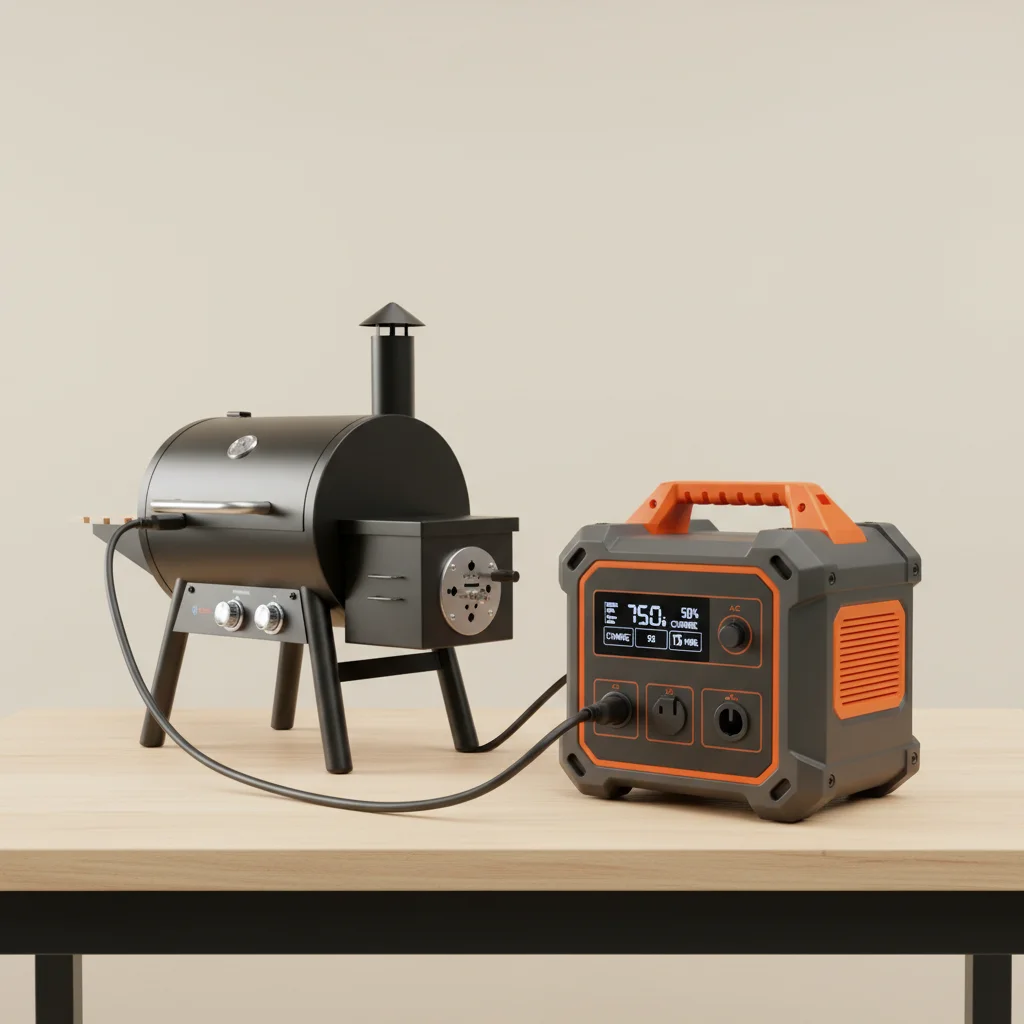
A portable power station can run a pellet grill for approximately 4 to 10 hours, depending on the grill’s wattage and the power station’s capacity. For instance, a 500Wh power station can operate a 60W pellet grill for over 8 hours, while a 1000Wh unit could power a 100W grill for about 10 hours. The actual runtime is influenced by factors like ambient temperature, the grill’s heating cycles, and the power station’s efficiency.
Understanding Pellet Grill Power Consumption
Pellet grills are popular for their consistent heat and smoky flavor, but their power draw can vary. Most pellet grills consume between 50 to 300 watts. The higher wattage is typically during startup when the igniter rod is active, which can draw up to 300W for a few minutes. Once the fire is established, the grill primarily uses power for the auger, fan, and controller, which usually falls into the 50-100W range. Understanding these power fluctuations is crucial for estimating how long your portable power station will last.
Consider the specific model of your pellet grill. Manufacturers often provide power consumption details in the user manual or on their website. A grill with a higher average running wattage will naturally deplete your power station faster. For extended cooking sessions, especially low-and-slow BBQ, a power station with a larger capacity is highly recommended.
Calculating Runtime for Your Setup
To accurately determine how long your portable power station will power your pellet grill, you can use a simple formula: (Power Station Capacity in Wh / Pellet Grill Running Wattage) x 0.85 (for efficiency loss). For example, if you have a 700Wh power station and your pellet grill runs at an average of 75W, the calculation would be (700Wh / 75W) x 0.85 = approximately 7.9 hours. The 0.85 factor accounts for typical inverter efficiency losses, which can range from 10-20%.
It’s always a good practice to overestimate your power needs slightly, especially if you’re planning a long cook or are in a remote location. Cold weather can also impact battery performance, potentially reducing the effective capacity of your power station. Always ensure your power station is fully charged before starting your grilling session.
Factors Affecting Power Station Performance
|
Our Picks for the Best Power Station in 2026
As an Amazon Associate I earn from qualifying purchases.
|
||
| Num | Product | Action |
|---|---|---|
| 1 | Anker SOLIX F3800 Portable Power Station, 3840Wh, LiFePO4 Batteries, Ultra-High 6000W AC Output with 120V/240V, Solar Generator for Home Backup, RVs, Emergencies, Power Outages, and Outdoor Camping |

|
| 2 | Jackery Explorer 2000 v2 Portable Power Station with 2x200W Solar Panels, 2042Wh LiFePo4 Battery, 2200W Solar Generator, 20ms UPS, USB-C PD 100W Fast Charging for Power Outages, Emergencies, Camping |
|
| 3 | Anker SOLIX C1000 Portable Power Station, 1800W (Peak 2400W) Solar Generator, Full Charge in 58 Min, 1056wh LiFePO4 Battery for Home Backup, Power Outages, and Outdoor Camping (Optional Solar Panel) |
|
| 4 | 550W Portable Power Inverter Compatible with Dewalt 20V Battery, Power Station DC 20V to AC 110V Pure Sine Wave, Battery Power Adapter 2USB&Type-C, Generator Phone Charger LED Light Camping Emergency |
|
| 5 | UGREEN Power Strip Surge Protector with 4 Power Outlets, 15w Wireless Charger, 20W PD3.0 USB C Fast Charging, 2 USB-C Ports, 2 USB A Ports, Desk Charging Station for Office, Conference, Home Use |
|
| 6 | Anker SOLIX C300 Portable Power Station with Car Charging Cable, Outdoor 288Wh LiFePO4 Battery, 300W (600W Surge) Solar Generator, 140W Two-Way Fast Charging, for Camping, Traveling, and Emergencies. |
|
| 7 | Westinghouse 155Wh 150 Peak Watt Portable Power Station & Solar Generator, Modified Sine Wave AC Outlet, Backup Lithium Battery for Camping, Home, Travel, Indoor/Outdoor Use (Solar Panel Not Included) |
|
| 8 | Anker SOLIX C1000 Gen 2 Portable Power Station, 2,000W (Peak 3,000W) Solar Generator, Full Charge in 49 Min, 1,024Wh LiFePO4 Battery for Home Backup, Power Outages, and Camping (Optional Solar Panel) |
|
| 9 | 550W Power Station Compatible with Dewalt: LIVOWALNY Portable Generator DC 20V to AC 110-120V, Pure Sine Wave Power Inverter Battery Adapter Phone Charger 2 USB-A & 1 Type-C & 2 AC Outlet (Tool Only) |
|
| 10 | BLUETTI Portable Power Station AC180, 1152Wh LiFePO4 Battery Backup w/ 2 1800W (2700W peak) AC Outlets, 0-80% in 45Min, Solar Generator for Camping, Off-grid, Power Outage |
|
Several elements can influence how long your portable power station will run a pellet grill. The ambient temperature is a significant factor; colder temperatures can reduce battery efficiency and overall runtime. The grill’s set temperature also plays a role, as maintaining higher temperatures requires more frequent heating cycles and thus more power. The age and condition of your power station’s battery can also affect its capacity and performance over time.
- Battery Health: Older batteries or those with many charge cycles may have reduced capacity.
- Ambient Temperature: Extreme cold or heat can impact battery efficiency.
- Grill Settings: Higher cooking temperatures and frequent lid openings increase power draw.
- Power Station Efficiency: Inverter losses can reduce usable capacity.
- Startup vs. Running Watts: Initial high draw during ignition, then lower sustained draw.
Choosing the Right Power Station for Grilling
When selecting a portable power station for your pellet grill, prioritize capacity (Wh) and output wattage (W). Look for a power station with at least 500Wh for shorter grilling sessions and 1000Wh or more for all-day cooks. Ensure the continuous output wattage of the power station exceeds the maximum running wattage of your pellet grill, especially during the startup phase. Many modern power stations offer pure sine wave inverters, which are ideal for sensitive electronics like grill controllers.
Consider features like multiple AC outlets, fast charging capabilities, and the option for solar panel input for recharging in off-grid scenarios. A robust build quality and a clear display showing remaining runtime are also beneficial. For reliable power during your outdoor cooking adventures, a high-quality portable power station is an essential investment.For those needing extended power, consider models with larger capacities.
