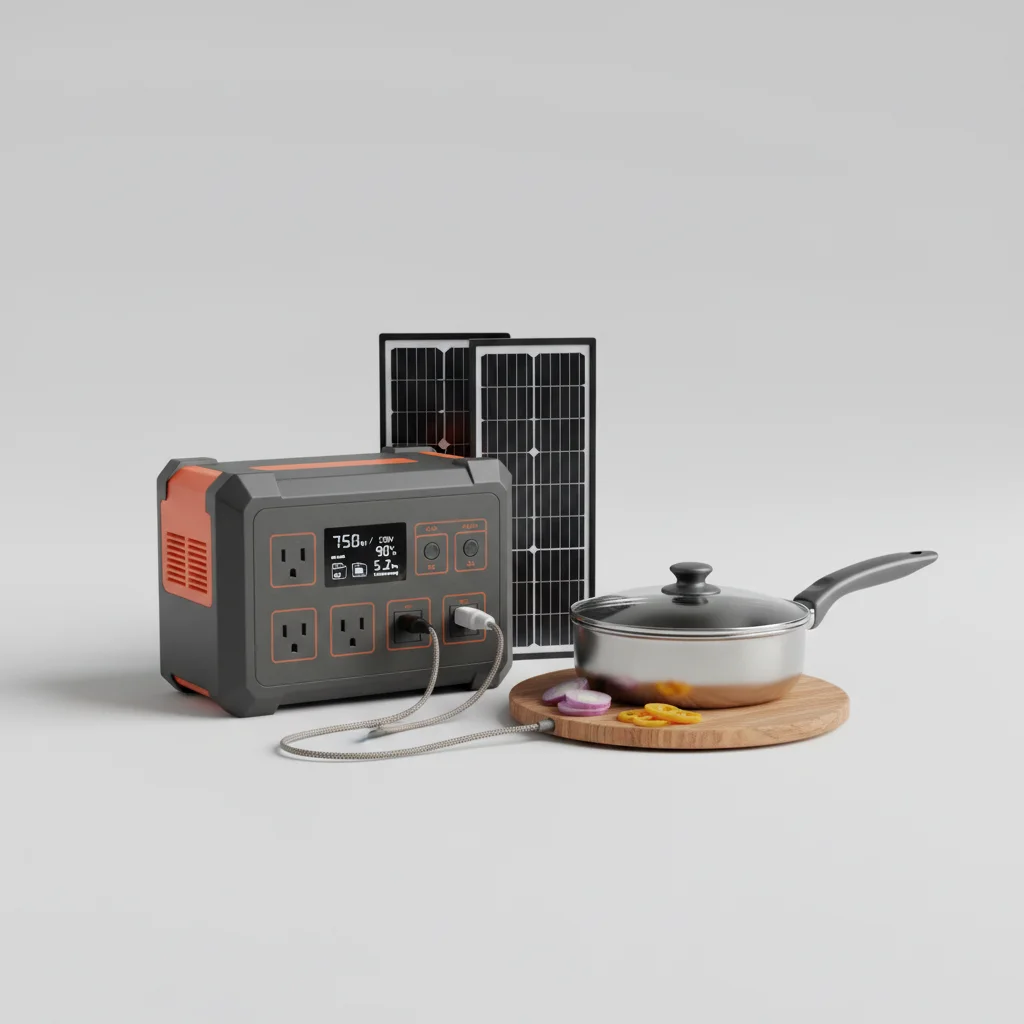
A portable power station can run an electric skillet for approximately 1 to 3 hours, depending on the skillet’s wattage and the power station’s capacity. For instance, a 1500W electric skillet connected to a 1000Wh power station will last about 40 minutes, while a 500W skillet on the same power station could run for nearly 2 hours. Understanding these variables is crucial for planning your off-grid cooking.
Understanding Electric Skillet Power Consumption
Electric skillets are known for their high wattage, typically ranging from 500W to 1500W, with some models even exceeding 1800W. This high power draw is necessary for rapid heating and maintaining consistent temperatures for cooking. When selecting a portable power station, it’s essential to match its continuous output wattage to your skillet’s requirements. If your skillet draws 1200W, your power station must be capable of sustaining at least that much output. For best portable power roundups on this site.
The efficiency of the power station also plays a role. Inverters, which convert DC battery power to AC household power, have some energy loss, usually around 10-15%. This means a 1000Wh battery might only deliver 850-900Wh of usable AC power. Always factor in this efficiency loss when calculating runtime.
Calculating Runtime for Your Electric Skillet
To accurately determine how long your portable power station will run an electric skillet, you’ll need two key pieces of information: the power station’s usable capacity (in Watt-hours, Wh) and the electric skillet’s wattage (in Watts, W). The formula is straightforward: Runtime (hours) = Usable Power Station Capacity (Wh) / Skillet Wattage (W).
For example, if you have a 1200Wh power station with 85% inverter efficiency (meaning 1020Wh usable capacity) and a 700W electric skillet, your runtime would be 1020Wh / 700W = approximately 1.45 hours. Remember that the skillet doesn’t always draw its maximum wattage continuously; it cycles on and off to maintain temperature, which can extend actual runtime.
Factors Affecting Skillet Runtime
|
Our Picks for the Best Power Station in 2026
As an Amazon Associate I earn from qualifying purchases.
|
||
| Num | Product | Action |
|---|---|---|
| 1 | Anker SOLIX F3800 Portable Power Station, 3840Wh, LiFePO4 Batteries, Ultra-High 6000W AC Output with 120V/240V, Solar Generator for Home Backup, RVs, Emergencies, Power Outages, and Outdoor Camping |

|
| 2 | UGREEN Power Strip Surge Protector with 4 Power Outlets, 15w Wireless Charger, 20W PD3.0 USB C Fast Charging, 2 USB-C Ports, 2 USB A Ports, Desk Charging Station for Office, Conference, Home Use |
|
| 3 | Westinghouse 155Wh 150 Peak Watt Portable Power Station & Solar Generator, Modified Sine Wave AC Outlet, Backup Lithium Battery for Camping, Home, Travel, Indoor/Outdoor Use (Solar Panel Not Included) |
|
| 4 | BLUETTI Portable Power Station AC180, 1152Wh LiFePO4 Battery Backup w/ 2 1800W (2700W peak) AC Outlets, 0-80% in 45Min, Solar Generator for Camping, Off-grid, Power Outage |
|
| 5 | Anker SOLIX C1000 Gen 2 Portable Power Station, 2,000W (Peak 3,000W) Solar Generator, Full Charge in 49 Min, 1,024Wh LiFePO4 Battery for Home Backup, Power Outages, and Camping (Optional Solar Panel) |
|
| 6 | 550W Portable Power Inverter Compatible with Dewalt 20V Battery, Power Station DC 20V to AC 110V Pure Sine Wave, Battery Power Adapter 2USB&Type-C, Generator Phone Charger LED Light Camping Emergency |
|
| 7 | Anker SOLIX C300 Portable Power Station with Car Charging Cable, Outdoor 288Wh LiFePO4 Battery, 300W (600W Surge) Solar Generator, 140W Two-Way Fast Charging, for Camping, Traveling, and Emergencies. |
|
| 8 | 550W Power Station Compatible with Dewalt: LIVOWALNY Portable Generator DC 20V to AC 110-120V, Pure Sine Wave Power Inverter Battery Adapter Phone Charger 2 USB-A & 1 Type-C & 2 AC Outlet (Tool Only) |
|
| 9 | Jackery Explorer 2000 v2 Portable Power Station with 2x200W Solar Panels, 2042Wh LiFePo4 Battery, 2200W Solar Generator, 20ms UPS, USB-C PD 100W Fast Charging for Power Outages, Emergencies, Camping |
|
| 10 | Anker SOLIX C1000 Portable Power Station, 1800W (Peak 2400W) Solar Generator, Full Charge in 58 Min, 1056wh LiFePO4 Battery for Home Backup, Power Outages, and Outdoor Camping (Optional Solar Panel) |
|
- Skillet Wattage: Higher wattage skillets drain batteries faster. A 1500W skillet will deplete a battery much quicker than a 600W model.
- Power Station Capacity: Larger capacity power stations (e.g., 2000Wh vs. 500Wh) naturally provide longer runtimes.
- Inverter Efficiency: As mentioned, inverter losses reduce usable capacity. Look for power stations with high-efficiency inverters.
- Cooking Duration and Intensity: Continuous high-heat cooking will consume more power than intermittent warming or low-temperature cooking.
- Battery Health and Age: Older batteries or those with many charge cycles may have reduced capacity, impacting runtime.
Choosing the Right Power Station for Cooking
When planning to use an electric skillet off-grid, consider a power station with a minimum capacity of 1000Wh and a continuous output of at least 1500W to handle most standard skillets. For more demanding cooking or longer durations, a 2000Wh or larger unit is advisable. Look for models with LiFePO4 batteries for their longevity and safety.
Many power stations designed for heavy-duty use also feature multiple AC outlets, allowing you to power other small appliances simultaneously. Prioritize power stations with robust cooling systems to prevent overheating, especially when drawing high wattage for extended periods.
Tips for Maximizing Skillet Runtime
To get the most out of your portable power station when using an electric skillet, consider these practical tips. Preheat your skillet using grid power if possible before heading off-grid. When cooking, use the lowest effective heat setting to conserve energy. Utilize a lid on your skillet to trap heat and reduce the energy needed to maintain temperature. If you have a solar panel setup, connect it to your power station to continuously recharge it while cooking, effectively extending your runtime indefinitely under good sunlight conditions.
