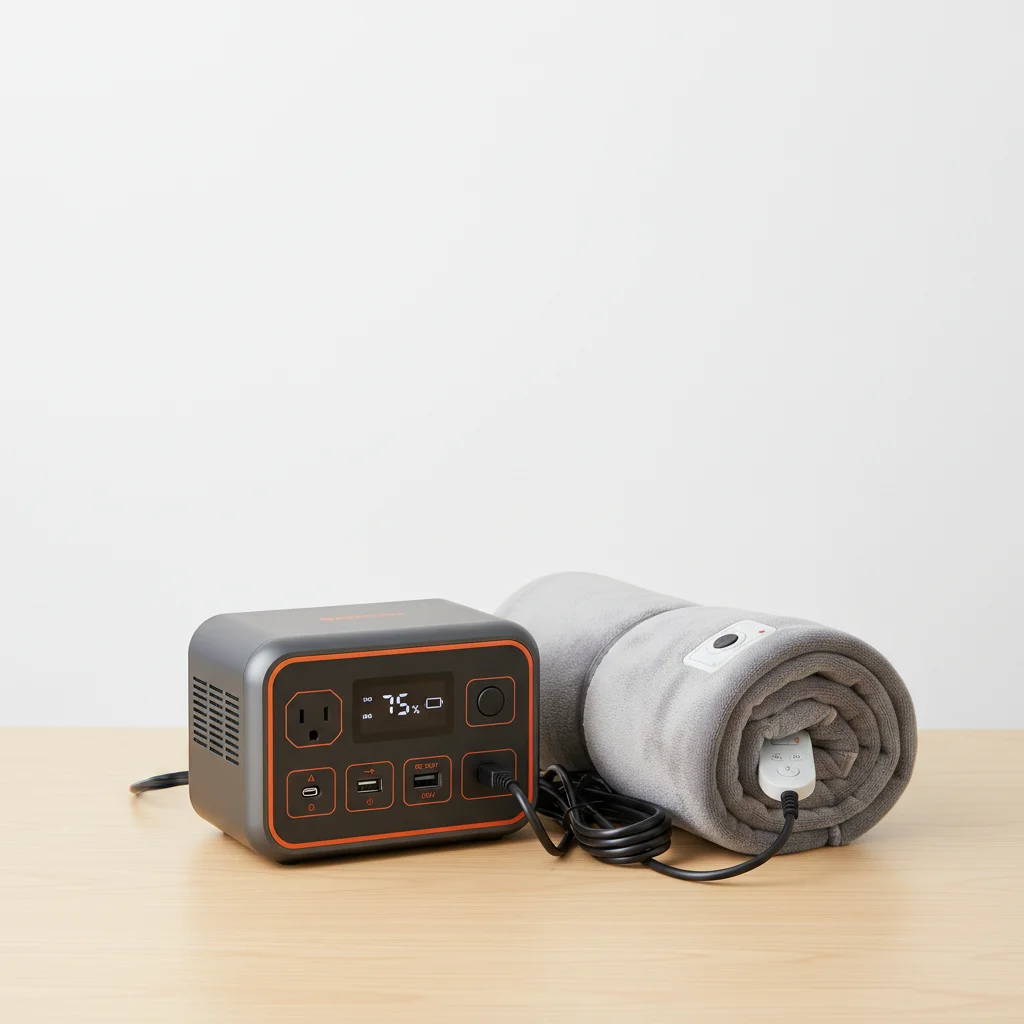
A portable power station can run an electric blanket for approximately 4 to 12 hours, depending on the blanket’s wattage and the power station’s capacity. For example, a 100W electric blanket connected to a 1000Wh power station will last around 10 hours, accounting for efficiency losses. Understanding these factors is crucial for ensuring a comfortable night in off-grid settings.
Understanding Electric Blanket Power Consumption
Electric blankets vary significantly in their power draw. A typical twin-size electric blanket might consume between 60W and 100W on a medium setting, while a king-size blanket could draw 120W to 200W. The wattage listed on your blanket’s label or manual is the maximum draw, but many blankets have multiple heat settings, with lower settings consuming less power. Always check your specific blanket’s specifications to get an accurate estimate. For more portable power guides on this site.
Factors like ambient temperature and the blanket’s insulation also play a role. In colder environments, you might need to use a higher heat setting, which will naturally deplete your power station faster. Conversely, a well-insulated sleeping bag combined with an electric blanket can reduce the need for maximum heat, extending runtime.
Calculating Runtime for Your Setup
To calculate the approximate runtime, you’ll need two key pieces of information: your power station’s usable capacity (in Watt-hours, Wh) and your electric blanket’s wattage (W). The formula is simple: Runtime (hours) = Power Station Capacity (Wh) / Electric Blanket Wattage (W). However, it’s important to factor in an efficiency loss, typically around 10-20%, due to the inverter converting DC to AC power. So, a more realistic calculation would be: Runtime = (Power Station Capacity * 0.85) / Electric Blanket Wattage.
For instance, if you have a 500Wh power station and a 75W electric blanket, the calculation would be (500Wh * 0.85) / 75W = 425Wh / 75W = 5.67 hours. This gives you a practical estimate for planning your off-grid power needs. Remember that other devices drawing power simultaneously will reduce this runtime.
Choosing the Right Power Station Capacity
|
Our Picks for the Best Power Station in 2026
As an Amazon Associate I earn from qualifying purchases.
|
||
| Num | Product | Action |
|---|---|---|
| 1 | UGREEN Power Strip Surge Protector with 4 Power Outlets, 15w Wireless Charger, 20W PD3.0 USB C Fast Charging, 2 USB-C Ports, 2 USB A Ports, Desk Charging Station for Office, Conference, Home Use |

|
| 2 | 550W Power Station Compatible with Dewalt: LIVOWALNY Portable Generator DC 20V to AC 110-120V, Pure Sine Wave Power Inverter Battery Adapter Phone Charger 2 USB-A & 1 Type-C & 2 AC Outlet (Tool Only) |
|
| 3 | Anker SOLIX F3800 Portable Power Station, 3840Wh, LiFePO4 Batteries, Ultra-High 6000W AC Output with 120V/240V, Solar Generator for Home Backup, RVs, Emergencies, Power Outages, and Outdoor Camping |
|
| 4 | Jackery Explorer 2000 v2 Portable Power Station with 2x200W Solar Panels, 2042Wh LiFePo4 Battery, 2200W Solar Generator, 20ms UPS, USB-C PD 100W Fast Charging for Power Outages, Emergencies, Camping |
|
| 5 | 550W Portable Power Inverter Compatible with Dewalt 20V Battery, Power Station DC 20V to AC 110V Pure Sine Wave, Battery Power Adapter 2USB&Type-C, Generator Phone Charger LED Light Camping Emergency |
|
| 6 | BLUETTI Portable Power Station AC180, 1152Wh LiFePO4 Battery Backup w/ 2 1800W (2700W peak) AC Outlets, 0-80% in 45Min, Solar Generator for Camping, Off-grid, Power Outage |
|
| 7 | Anker SOLIX C1000 Gen 2 Portable Power Station, 2,000W (Peak 3,000W) Solar Generator, Full Charge in 49 Min, 1,024Wh LiFePO4 Battery for Home Backup, Power Outages, and Camping (Optional Solar Panel) |
|
| 8 | Westinghouse 155Wh 150 Peak Watt Portable Power Station & Solar Generator, Modified Sine Wave AC Outlet, Backup Lithium Battery for Camping, Home, Travel, Indoor/Outdoor Use (Solar Panel Not Included) |
|
| 9 | Anker SOLIX C300 Portable Power Station with Car Charging Cable, Outdoor 288Wh LiFePO4 Battery, 300W (600W Surge) Solar Generator, 140W Two-Way Fast Charging, for Camping, Traveling, and Emergencies. |
|
| 10 | Anker SOLIX C1000 Portable Power Station, 1800W (Peak 2400W) Solar Generator, Full Charge in 58 Min, 1056wh LiFePO4 Battery for Home Backup, Power Outages, and Outdoor Camping (Optional Solar Panel) |
|
When selecting a portable power station for an electric blanket, consider your desired runtime and the blanket’s wattage. For overnight use (8-10 hours) with a standard 100W blanket, you’ll need a power station with at least 800Wh to 1000Wh of usable capacity. If you plan to use the blanket for shorter periods or have a very low-wattage blanket, a smaller 300Wh to 500Wh unit might suffice.
It’s always advisable to choose a power station with a slightly higher capacity than your minimum calculated need. This provides a buffer for unexpected cold snaps or if you decide to run other small devices like a phone charger or a small LED light. Look for models with LiFePO4 batteries for longer cycle life and enhanced safety.
Tips for Maximizing Electric Blanket Runtime
- Use Lower Heat Settings: The highest heat settings consume significantly more power. Use the lowest comfortable setting.
- Layer Up: Combine your electric blanket with a sleeping bag or additional blankets to trap heat and reduce the need for high power.
- Pre-heat and Turn Off: Pre-heat your bed for 30 minutes before getting in, then turn the blanket off or to a very low setting once you’re warm.
- Insulate Your Sleeping Area: A well-insulated tent or RV will retain heat better, reducing the demand on your electric blanket.
- Consider a 12V Blanket: Some electric blankets are designed to run directly from a 12V DC car outlet. If your power station has a 12V DC output, using a 12V blanket can bypass the inverter, improving efficiency by 10-15%.
Safety Considerations and Best Practices
Always ensure your portable power station has sufficient output wattage (AC output) to handle your electric blanket’s peak draw. Most modern power stations have built-in safety features like overcharge, over-discharge, and short-circuit protection, but it’s still wise to monitor your setup, especially during initial use. Avoid placing the power station in an enclosed space where heat can build up, and ensure proper ventilation.
Regularly check the cables and connections for any signs of wear or damage. Never use an electric blanket that has frayed wires or appears damaged. When storing your power station, follow the manufacturer’s guidelines regarding charge levels and temperature to prolong its battery life.
