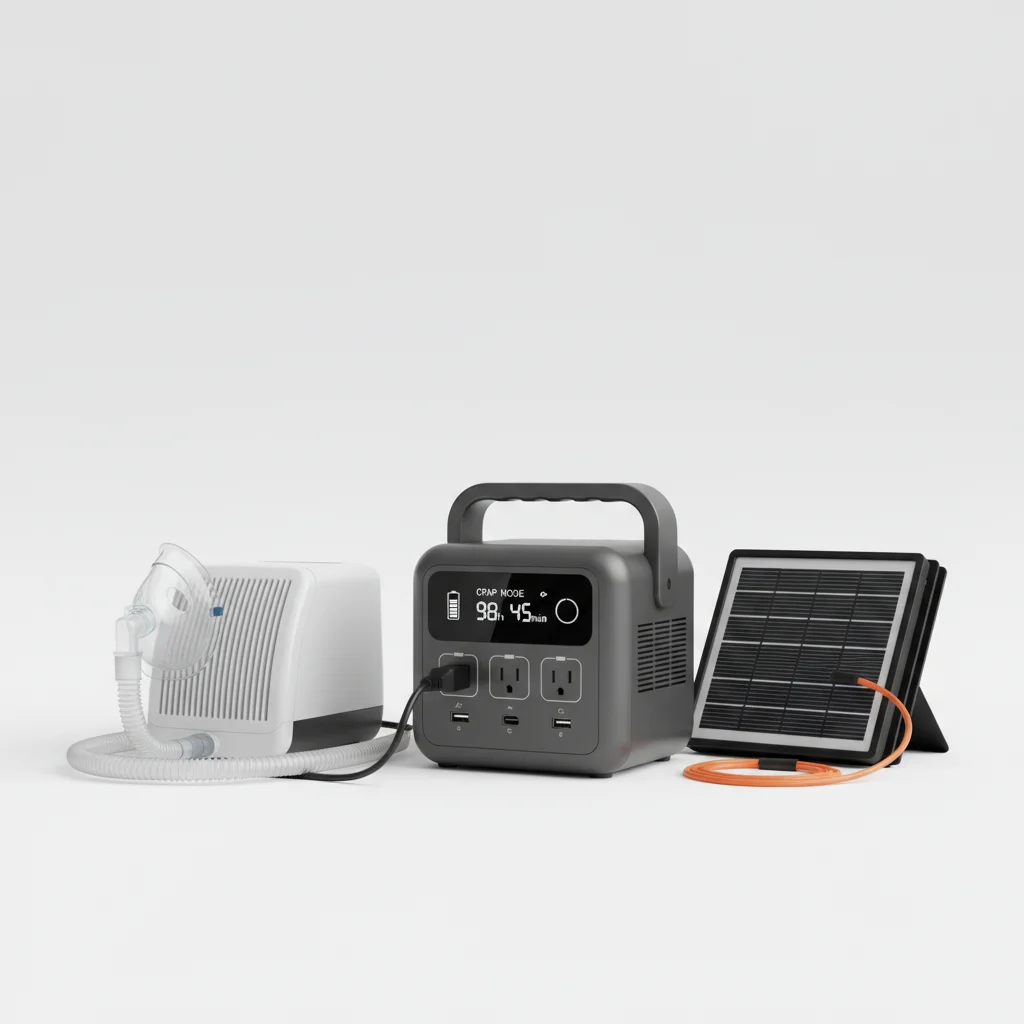
When considering a portable power station for your CPAP machine, the duration it will last depends on several factors, primarily the power station’s capacity and your CPAP machine’s wattage. On average, a portable power station with a capacity of 500Wh can power a standard CPAP machine for approximately 8-12 hours, providing a full night’s sleep. This estimate assumes the humidifier and heated tubing features are turned off, as these significantly increase power consumption. For extended use or if you require these comfort features, a higher capacity unit is essential.
Understanding CPAP Power Consumption
CPAP machines vary in their power draw. A typical CPAP machine without a humidifier or heated tubing uses between 30-60 watts per hour. However, activating the humidifier can increase consumption to 60-100 watts, and adding heated tubing can push it even higher, sometimes exceeding 100 watts. To accurately determine how long a power station will last, you need to know your specific CPAP model’s wattage. This information is usually found in the user manual or on the device’s power adapter.
Calculating Run Time for Your CPAP
To calculate the approximate run time, divide the power station’s usable capacity (in Wh) by your CPAP machine’s wattage (in W). For example, a 500Wh power station powering a 40W CPAP machine would theoretically last 12.5 hours (500Wh / 40W = 12.5 hours). It’s important to note that power stations are not 100% efficient, so always factor in a 10-20% loss. Therefore, a 500Wh unit might realistically provide 10-11 hours of power for a 40W CPAP. Always test your setup before relying on it for critical situations.
Key Features to Look for in a CPAP Power Station
|
Our Picks for the Best Power Station in 2026
As an Amazon Associate I earn from qualifying purchases.
|
||
| Num | Product | Action |
|---|---|---|
| 1 | 550W Portable Power Inverter Compatible with Dewalt 20V Battery, Power Station DC 20V to AC 110V Pure Sine Wave, Battery Power Adapter 2USB&Type-C, Generator Phone Charger LED Light Camping Emergency |

|
| 2 | UGREEN Power Strip Surge Protector with 4 Power Outlets, 15w Wireless Charger, 20W PD3.0 USB C Fast Charging, 2 USB-C Ports, 2 USB A Ports, Desk Charging Station for Office, Conference, Home Use |
|
| 3 | 550W Power Station Compatible with Dewalt: LIVOWALNY Portable Generator DC 20V to AC 110-120V, Pure Sine Wave Power Inverter Battery Adapter Phone Charger 2 USB-A & 1 Type-C & 2 AC Outlet (Tool Only) |
|
| 4 | BLUETTI Portable Power Station AC180, 1152Wh LiFePO4 Battery Backup w/ 2 1800W (2700W peak) AC Outlets, 0-80% in 45Min, Solar Generator for Camping, Off-grid, Power Outage |
|
| 5 | Anker SOLIX F3800 Portable Power Station, 3840Wh, LiFePO4 Batteries, Ultra-High 6000W AC Output with 120V/240V, Solar Generator for Home Backup, RVs, Emergencies, Power Outages, and Outdoor Camping |
|
| 6 | Anker SOLIX C1000 Gen 2 Portable Power Station, 2,000W (Peak 3,000W) Solar Generator, Full Charge in 49 Min, 1,024Wh LiFePO4 Battery for Home Backup, Power Outages, and Camping (Optional Solar Panel) |
|
| 7 | Jackery Explorer 2000 v2 Portable Power Station with 2x200W Solar Panels, 2042Wh LiFePo4 Battery, 2200W Solar Generator, 20ms UPS, USB-C PD 100W Fast Charging for Power Outages, Emergencies, Camping |
|
| 8 | Anker SOLIX C1000 Portable Power Station, 1800W (Peak 2400W) Solar Generator, Full Charge in 58 Min, 1056wh LiFePO4 Battery for Home Backup, Power Outages, and Outdoor Camping (Optional Solar Panel) |
|
| 9 | Anker SOLIX C300 Portable Power Station with Car Charging Cable, Outdoor 288Wh LiFePO4 Battery, 300W (600W Surge) Solar Generator, 140W Two-Way Fast Charging, for Camping, Traveling, and Emergencies. |
|
| 10 | Westinghouse 155Wh 150 Peak Watt Portable Power Station & Solar Generator, Modified Sine Wave AC Outlet, Backup Lithium Battery for Camping, Home, Travel, Indoor/Outdoor Use (Solar Panel Not Included) |
|
When selecting a portable power station for CPAP use, several features are paramount. Look for units with a pure sine wave inverter, which is crucial for sensitive electronics like CPAP machines, preventing potential damage and ensuring smooth operation. High capacity is another critical factor, especially if you plan to use your humidifier or heated tubing. Consider units with multiple output ports, including AC, DC, and USB, to power other devices if needed. Finally, portability and recharge time are important for convenience, particularly if you’re traveling or camping.
- Pure Sine Wave Inverter: Essential for protecting sensitive CPAP electronics.
- High Capacity (500Wh+): Provides longer run times, especially with humidifier/heated tubing.
- Multiple Output Ports: Allows charging of other devices simultaneously.
- Fast Recharging Options: Important for quick turnaround between uses.
- Compact and Lightweight Design: Enhances portability for travel.
Optimizing Your CPAP Power Station Usage
To maximize the run time of your portable power station, consider these tips. First, always turn off the humidifier and heated tubing on your CPAP machine unless absolutely necessary. These features are significant power drains. Second, use the DC output if your CPAP machine has a DC adapter, as converting power from DC to AC and back to DC (which happens when using the AC outlet) results in energy loss. Third, ensure your power station is fully charged before each use. Regularly check the battery level and recharge as needed to maintain optimal performance.
Recommended Power Stations for CPAP Users
For reliable CPAP operation, we recommend power stations with at least 500Wh capacity. Brands like Jackery, EcoFlow, and Bluetti offer excellent options that provide stable power and sufficient run time for most CPAP users. For example, a 700Wh unit can typically power a CPAP machine for 12-18 hours with humidifier off, offering peace of mind for multiple nights. Always read reviews and compare specifications to find the best fit for your specific CPAP model and usage habits.

This information about wattage was super helpful. I realized my old battery pack wasn’t cutting it because I was trying to run my humidifier. Now I know to look for a higher capacity unit if I want those comfort features. For now, I just use it without the humidifier and it works great for a night or two away from home.
The portable power station I got (around 600Wh) does power my CPAP for a full night, which is good. My only gripe is that it’s a bit heavier than I expected, making it less ‘portable’ for hiking trips. I wish there were more lightweight options that still offered decent capacity for those of us who need to carry it further. Still, it does the job.
I was worried about power consumption with my CPAP, especially since I like to use the heated tubing. Based on the advice here, I invested in a larger capacity power station, over 1000Wh, and it’s fantastic. I can run all my features and still get multiple nights of sleep without recharging. It’s given me so much peace of mind for off-grid living.
I bought a 500Wh unit specifically for my ResMed CPAP after reading about the capacity needed. It’s been a lifesaver during camping trips and even a few power outages. I always turn off the humidifier and heated tubing, and it easily gets me through a full night, usually with power to spare. Highly recommend for anyone needing reliable backup power for their CPAP.