Portable power stations have become indispensable for countless households, offering reliable energy for emergencies, outdoor adventures, or remote work. These versatile devices, however, are powered by sophisticated lithium-ion or Lithium Iron Phosphate (LiFePO4) batteries that demand specific care, particularly when it comes to storage. Improper storage isn’t just a matter of reduced lifespan; it can pose significant safety risks, including overheating and even fire. To protect your investment and ensure it’s ready when you need it, understanding and implementing best practices for safe home storage is crucial. This comprehensive guide will walk you through the essential steps to keep your lithium power station in prime condition, securing both its longevity and your peace of mind.
Understanding the Heart of Your Power Station: Lithium Batteries
At the core of every portable power station lies its lithium battery. These advanced battery chemistries offer high energy density and a long cycle life, making them ideal for mobile power solutions. However, their active chemical properties mean they are sensitive to environmental conditions. Incorrect storage can accelerate degradation, lead to capacity loss, and in rare cases, trigger dangerous events such as thermal runaway—a self-sustaining chemical reaction that can cause intense heat and the release of hazardous gases. Therefore, treating your power station with the right storage approach is paramount for both safety and sustained performance.
The Ideal Environment: Temperature, Humidity, and Location
Creating the perfect storage environment for your lithium power station is the most critical step in safeguarding its health and ensuring safety. Think of it as finding the “Goldilocks Zone”—not too hot, not too cold, and just right in every other aspect.
The optimal temperature range for storing lithium batteries is generally between 15°C and 25°C (59°F to 77°F). Temperatures above this range, particularly exceeding 30°C (86°F), will significantly accelerate battery degradation and shorten its lifespan. Conversely, storing a battery in freezing conditions, especially below 0°C (32°F), can lead to lithium plating on the anode during subsequent charging cycles, causing irreversible damage and increasing internal short risks. Stability is key; consistent temperatures are always preferred over environments with wide daily fluctuations, which can stress the battery more than a constant, slightly warmer temperature.
Humidity also plays a vital role. Lithium power stations should be stored in a dry environment, ideally with relative humidity below 60%, or within a broader range of 45-75%. High humidity, common in damp basements, can cause corrosion on the power station’s ports and internal components, while excessively low humidity might contribute to static buildup or even material degradation over very long periods. If your storage area is prone to dampness, consider using desiccant packets to help control moisture levels.
When choosing a location, prioritize indoor spaces where temperature and humidity can be more easily controlled. Avoid direct sunlight, which can quickly elevate internal temperatures. Keep the power station away from all heat sources, such as heaters, radiators, or furnaces. Furthermore, ensure the storage spot is clear of flammable materials, preventing any potential fire hazards. A dedicated shelf in a cool, dry closet or a climate-controlled utility room often provides an excellent long-term storage solution.
Maintaining Optimal Charge for Longevity
One of the most common misconceptions about battery storage is that lithium power stations should either be fully charged or completely depleted. In reality, neither extreme is ideal for long-term health. The golden rule for storing lithium-ion and LiFePO4 batteries is to maintain a partial charge.
For extended periods of inactivity, aim to store your power station with a State of Charge (SoC) between 40% and 60%. A 50% charge level is frequently recommended by manufacturers as the sweet spot. Storing batteries fully charged puts excessive stress on the cell chemistry, leading to faster degradation and reduced overall capacity over time. Conversely, storing a battery completely empty risks deep discharge, a condition where the battery voltage drops below a safe threshold, potentially rendering it permanently unusable or significantly shortening its lifespan. This partial charge minimizes chemical stress, preserving the battery’s health and readiness for future use.
To prevent deep discharge during prolonged storage, it is essential to perform periodic checks. Inspect the battery level every three to six months and recharge it back to the recommended 40-60% SoC if it has self-discharged significantly. Setting a reminder can help you stay on top of this crucial maintenance step, ensuring your power station remains ready for deployment without compromising its long-term viability.
Physical Protection and Handling
Beyond environmental controls and charge management, proper physical care and handling contribute significantly to the safety and durability of your lithium power station. A clean, protected unit is less prone to damage and malfunctions.
Before storing, give your power station a gentle wipe-down with a dry, soft cloth to remove any dust or debris from its exterior. Pay close attention to the ports and vents; a can of compressed air can be useful for clearing out dust without introducing moisture. Storing the unit in its original packaging or a dedicated protective bag can shield it from dust accumulation and accidental physical damage.
Ensure the power station is placed in a stable position where it cannot be easily knocked over. Avoid stacking other heavy items on top of it, which could damage the casing or internal components. If storing multiple power stations or standalone lithium batteries, it’s advisable to keep them separated or, even better, place individual units in fireproof containers or protective sleeves. This measure helps to contain any potential issues should a single battery encounter a problem, preventing a chain reaction. Furthermore, always ensure that battery terminals are covered or protected to prevent accidental short circuits caused by contact with metal objects.
Adequate airflow around the power station is also crucial, even when it’s not in use. Good ventilation prevents heat from accumulating, which can be detrimental to battery health over time. If stored in an enclosed space like a cupboard or a small room, ensure there’s enough space around the unit for air to circulate, or consider slightly opening a window or installing a vent if possible.
Common Mistakes to Avoid
Many issues with lithium power stations arise from common storage errors that are easily preventable. Being aware of these pitfalls can save you from premature battery degradation and potential safety hazards.
One of the most frequent mistakes is storing the power station in unsuitable environments such as uninsulated garages or sheds. These locations often experience extreme temperature swings, becoming excessively hot in summer and freezing cold in winter, both of which are highly detrimental to lithium battery chemistry. Similarly, damp basements can lead to corrosion, while direct sunlight exposure can cause rapid overheating.
Another critical error is neglecting the State of Charge. Leaving a power station fully charged for months puts unnecessary strain on its cells, while allowing it to fully deplete can lead to deep discharge, often rendering the battery unrecoverable. Ignoring visible physical damage, such as cracks in the casing or exposed wiring, is also a serious oversight, as damaged units can pose electrical hazards. Finally, inadequate ventilation in storage spaces can lead to heat buildup, accelerating aging and increasing risk.
“The longevity and safety of a lithium power station are largely determined by meticulous storage practices. Treat your battery with respect, and it will serve you reliably for years.” – Dr. Evelyn Reed, Lead Battery Chemist
Expert Tips for Extended Storage
For those who rely on their power stations intermittently or need to store them for extended periods, a proactive approach to maintenance is vital. Here’s a summary checklist of expert recommendations:
- Optimal Temperature: Verify the storage area consistently maintains temperatures between 15°C and 25°C (59°F to 77°F).
- Ideal Charge Level: Before storage, ensure all batteries are charged to approximately 50% State of Charge (SoC).
- Humidity Control: Confirm the storage room is dry, with humidity levels ideally below 60% relative humidity. Consider desiccants if dampness is a concern.
- Fire Safety: Install smoke detectors in the storage vicinity and consider having specialized Class D or lithium fire suppressants available if storing multiple units.
- Regular Monitoring: For long-term storage, implement a schedule for monthly or bi-monthly voltage checks and recharge to 50% SoC as needed.
- Clearance: Ensure power stations are not stacked and have ample space around them for ventilation, ideally at least three meters away from other equipment or flammable items.
- Terminal Protection: Use non-conductive caps or tape to cover battery terminals to prevent accidental short circuits.
- Cleanliness: Keep the unit clean and free of dust and debris, especially around ports and vents.
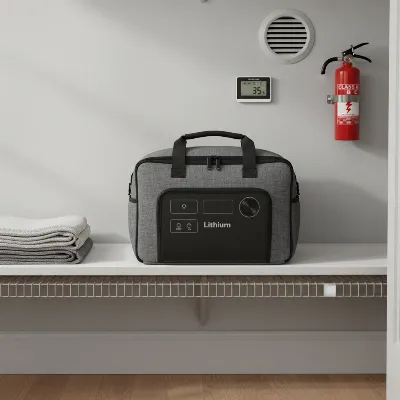 A portable lithium power station stored safely in a cool, dry, well-ventilated indoor closet with protective measures
Conclusion
Safely storing your lithium power station at home is a straightforward process that significantly extends its lifespan, maintains peak performance, and, most importantly, protects your home from potential hazards. By diligently controlling the storage environment, maintaining an optimal state of charge between 40-60%, ensuring physical protection, and performing regular checks, you transform a potential risk into a reliable asset. Remember, your power station is an investment in portable energy independence. Treating it with the proper care it deserves ensures it will be a trustworthy companion for countless years of adventures and essential backup power. What steps will you take today to optimize your power station’s storage and ensure its readiness?
Frequently Asked Questions
Can I store my power station in the garage?
|
Our Picks for the Best Power Station in 2026
As an Amazon Associate I earn from qualifying purchases.
|
||
| Num | Product | Action |
|---|---|---|
| 1 | UGREEN Power Strip Surge Protector with 4 Power Outlets, 15w Wireless Charger, 20W PD3.0 USB C Fast Charging, 2 USB-C Ports, 2 USB A Ports, Desk Charging Station for Office, Conference, Home Use |

|
| 2 | Jackery Explorer 2000 v2 Portable Power Station with 2x200W Solar Panels, 2042Wh LiFePo4 Battery, 2200W Solar Generator, 20ms UPS, USB-C PD 100W Fast Charging for Power Outages, Emergencies, Camping |
|
| 3 | BLUETTI Portable Power Station AC180, 1152Wh LiFePO4 Battery Backup w/ 2 1800W (2700W peak) AC Outlets, 0-80% in 45Min, Solar Generator for Camping, Off-grid, Power Outage |
|
| 4 | 550W Power Station Compatible with Dewalt: LIVOWALNY Portable Generator DC 20V to AC 110-120V, Pure Sine Wave Power Inverter Battery Adapter Phone Charger 2 USB-A & 1 Type-C & 2 AC Outlet (Tool Only) |
|
| 5 | 550W Portable Power Inverter Compatible with Dewalt 20V Battery, Power Station DC 20V to AC 110V Pure Sine Wave, Battery Power Adapter 2USB&Type-C, Generator Phone Charger LED Light Camping Emergency |
|
| 6 | Anker SOLIX F3800 Portable Power Station, 3840Wh, LiFePO4 Batteries, Ultra-High 6000W AC Output with 120V/240V, Solar Generator for Home Backup, RVs, Emergencies, Power Outages, and Outdoor Camping |
|
| 7 | Westinghouse 155Wh 150 Peak Watt Portable Power Station & Solar Generator, Modified Sine Wave AC Outlet, Backup Lithium Battery for Camping, Home, Travel, Indoor/Outdoor Use (Solar Panel Not Included) |
|
| 8 | Anker SOLIX C300 Portable Power Station with Car Charging Cable, Outdoor 288Wh LiFePO4 Battery, 300W (600W Surge) Solar Generator, 140W Two-Way Fast Charging, for Camping, Traveling, and Emergencies. |
|
| 9 | Anker SOLIX C1000 Gen 2 Portable Power Station, 2,000W (Peak 3,000W) Solar Generator, Full Charge in 49 Min, 1,024Wh LiFePO4 Battery for Home Backup, Power Outages, and Camping (Optional Solar Panel) |
|
| 10 | Anker SOLIX C1000 Portable Power Station, 1800W (Peak 2400W) Solar Generator, Full Charge in 58 Min, 1056wh LiFePO4 Battery for Home Backup, Power Outages, and Outdoor Camping (Optional Solar Panel) |
|
Storing your lithium power station in a garage is generally not recommended due to extreme temperature fluctuations. Garages can become very hot in summer and freezing cold in winter, both of which are detrimental to lithium battery health and can accelerate degradation. An indoor, climate-controlled space is always preferable for optimal safety and longevity.
How often should I charge my power station when storing?
For long-term storage, it’s recommended to check your power station’s charge level every three to six months. If the charge has dropped significantly, recharge it to the ideal 40-60% State of Charge (SoC) to prevent deep discharge and maintain battery health.
What happens if I store it fully charged?
Storing a lithium power station fully charged for extended periods puts unnecessary stress on the battery’s chemistry. This can lead to accelerated degradation, reduced overall capacity, and a shorter lifespan over time. While not immediately dangerous, it compromises the battery’s long-term health and performance.
Is it safe to stack multiple power stations?
No, it is generally not recommended to stack multiple power stations. Stacking can cause physical damage to the units, potentially obstruct ventilation, and in the rare event of an issue with one unit, it could affect others. It’s safer to store them individually with adequate space for airflow and physical protection.
Should I cover my power station during storage?
Yes, using a cover, the original case, or a protective bag is a good practice for storage. This helps protect the Power Station from dust, dirt, and minor physical impacts, contributing to its overall longevity and cleanliness.