In an increasingly connected world, portable power stations have become indispensable companions, powering everything from remote work setups to essential home appliances during outages. These versatile devices offer the freedom and security of reliable energy, whether you are exploring the wilderness, tailgating, or simply need a backup at home. However, like any sophisticated piece of technology, a portable power station requires proper care and attention to ensure it performs optimally and serves you faithfully for years to come. Understanding the best practices for maintenance isn’t just about extending its lifespan; it’s about safeguarding your investment and ensuring power is always available when you need it most.
Understanding Your Portable Power Station
A portable power station is essentially a large, rechargeable battery packed into a portable form factor, equipped with various output ports to power a wide range of devices. Unlike traditional noisy, fuel-guzzling generators, power stations operate silently, produce no emissions, and are safe for indoor use.
What is a Portable Power Station?
|
Our Picks for the Best Power Station in 2026
As an Amazon Associate I earn from qualifying purchases.
|
||
| Num | Product | Action |
|---|---|---|
| 1 | BLUETTI Portable Power Station AC180, 1152Wh LiFePO4 Battery Backup w/ 2 1800W (2700W peak) AC Outlets, 0-80% in 45Min, Solar Generator for Camping, Off-grid, Power Outage |

|
| 2 | Westinghouse 155Wh 150 Peak Watt Portable Power Station & Solar Generator, Modified Sine Wave AC Outlet, Backup Lithium Battery for Camping, Home, Travel, Indoor/Outdoor Use (Solar Panel Not Included) |
|
| 3 | 550W Portable Power Inverter Compatible with Dewalt 20V Battery, Power Station DC 20V to AC 110V Pure Sine Wave, Battery Power Adapter 2USB&Type-C, Generator Phone Charger LED Light Camping Emergency |
|
| 4 | Jackery Explorer 2000 v2 Portable Power Station with 2x200W Solar Panels, 2042Wh LiFePo4 Battery, 2200W Solar Generator, 20ms UPS, USB-C PD 100W Fast Charging for Power Outages, Emergencies, Camping |
|
| 5 | Anker SOLIX C1000 Gen 2 Portable Power Station, 2,000W (Peak 3,000W) Solar Generator, Full Charge in 49 Min, 1,024Wh LiFePO4 Battery for Home Backup, Power Outages, and Camping (Optional Solar Panel) |
|
| 6 | 550W Power Station Compatible with Dewalt: LIVOWALNY Portable Generator DC 20V to AC 110-120V, Pure Sine Wave Power Inverter Battery Adapter Phone Charger 2 USB-A & 1 Type-C & 2 AC Outlet (Tool Only) |
|
| 7 | UGREEN Power Strip Surge Protector with 4 Power Outlets, 15w Wireless Charger, 20W PD3.0 USB C Fast Charging, 2 USB-C Ports, 2 USB A Ports, Desk Charging Station for Office, Conference, Home Use |
|
| 8 | Anker SOLIX C300 Portable Power Station with Car Charging Cable, Outdoor 288Wh LiFePO4 Battery, 300W (600W Surge) Solar Generator, 140W Two-Way Fast Charging, for Camping, Traveling, and Emergencies. |
|
| 9 | Anker SOLIX F3800 Portable Power Station, 3840Wh, LiFePO4 Batteries, Ultra-High 6000W AC Output with 120V/240V, Solar Generator for Home Backup, RVs, Emergencies, Power Outages, and Outdoor Camping |
|
| 10 | Anker SOLIX C1000 Portable Power Station, 1800W (Peak 2400W) Solar Generator, Full Charge in 58 Min, 1056wh LiFePO4 Battery for Home Backup, Power Outages, and Outdoor Camping (Optional Solar Panel) |
|
At its core, a portable power station integrates a powerful battery, an inverter to convert DC power to AC, and multiple output ports (AC outlets, USB-A, USB-C, DC carports). They are designed for convenience, offering a clean, quiet, and eco-friendly alternative for powering electronics and small appliances away from the grid. Their compact design makes them highly versatile for emergencies, outdoor adventures, or professional field work.
The Unseen Advantages of Portable Power Stations
Beyond simply providing electricity, portable power stations offer significant benefits. They serve as reliable backup power during blackouts, ensure continuous operation for critical medical devices, and provide energy independence for off-grid living or outdoor excursions. Their reliance on rechargeable batteries, often paired with solar charging capabilities, makes them a sustainable choice, reducing your carbon footprint while providing robust power solutions.
Key Considerations When Choosing a Power Station
While the focus here is maintenance, a brief understanding of selection criteria helps appreciate the engineering within these devices. Choosing the right power station involves balancing your specific power needs with the features and technology available.
Power Output and Capacity: Matching Your Needs
The power output (measured in Watts) dictates which appliances a power station can run, while battery capacity (measured in Watt-hours or Wh) determines how long it can power them. A higher capacity is ideal for extended use or powering larger devices, whereas lower capacity models suit smaller gadgets or shorter trips. Accurately assessing your total power requirements is the first step in making an informed purchase.
Battery Chemistry: LiFePO4 vs. Lithium-ion
Most modern portable power stations use either Lithium-ion (Li-ion) or Lithium Iron Phosphate (LiFePO4) batteries. LiFePO4 batteries are renowned for their longer cycle life, enhanced safety, and greater tolerance to temperature fluctuations, often outperforming traditional Li-ion in terms of longevity and durability. Understanding the battery chemistry of your unit is vital, as it can influence optimal charging and storage recommendations.
Connectivity and Charging Options
A good power station offers a diverse array of ports to accommodate various devices, including standard AC outlets, USB-A and USB-C for mobile devices, and DC ports for car accessories. Furthermore, consider the recharging flexibility: capability to charge from a wall outlet, car charger, and particularly solar panels, enhances its utility and eco-friendliness.
Essential Maintenance Tips for Your New Power Station
Proper care is not just about fixing issues when they arise; it’s about proactive measures that ensure your power station remains a dependable asset for years to come. These essential tips will guide you in maintaining your investment.
Optimal Charging and Discharging Practices
The way you charge and discharge your power station’s battery significantly impacts its lifespan. For lithium-ion and LiFePO4 batteries, which are common in portable power stations, a few key habits can make a huge difference.
Avoid routinely draining your battery completely to zero percent. This practice, known as deep discharging, puts unnecessary strain on the battery cells and can accelerate degradation. Most manufacturers, especially for lithium-based batteries, recommend recharging your unit when it reaches around 20-30% capacity. Similarly, avoid leaving your power station continuously plugged in at 100% charge for extended periods, as this can also stress the battery. For day-to-day use, many experts suggest adhering to the “20-80% rule,” meaning you keep the charge level between 20% and 80% for optimal battery health. An occasional full discharge and recharge cycle might be recommended by your manufacturer for battery calibration, but this should not be a regular occurrence. Always use the charger and cables provided or explicitly recommended by the manufacturer to prevent damage and ensure efficient charging.
The Goldilocks Zone: Temperature and Humidity Control
Extreme environmental conditions are among the battery’s biggest enemies. Both excessively high and low temperatures can significantly degrade battery performance and shorten its overall lifespan.
Store and operate your portable power station in a cool, dry place, away from direct sunlight, sources of heat (like heaters or hot car interiors), and excessive humidity. The ideal storage temperature typically ranges between 10°C and 25°C (50°F to 77°F). High heat can permanently reduce battery capacity, while freezing temperatures can slow down chemical reactions, reduce output, and potentially cause internal condensation or damage. If you live in a humid environment, consider using silica gel packets or storing the unit in a sealed container to protect internal components from moisture-induced corrosion.
Long-Term Storage Best Practices
If you plan to store your power station for several months without use, specific steps are crucial to prevent battery degradation and ensure it’s ready when you need it next.
For long-term storage, charge your power station to approximately 50-60% capacity. Storing it fully charged or completely depleted for extended periods can accelerate battery aging. Manufacturers universally agree that this partial charge level minimizes stress on the battery cells. Periodically check the battery level every 3-6 months and, if necessary, top it up back to the 50-60% range. This periodic check and recharge help maintain cell health and keep the battery management system (BMS) calibrated. It’s also beneficial to perform a shallow charge/discharge cycle every 4-6 months to keep the unit active and ensure the BMS readings remain accurate.
Keeping It Clean: Physical Maintenance
Just like any electronic device, keeping your power station physically clean is important for optimal operation and longevity.
Regularly wipe down the exterior of your power station with a soft, dry cloth to remove dust, dirt, and debris. Avoid using harsh chemicals, abrasive cleaners, or solvents, as these can damage the casing and internal components. Pay particular attention to the ventilation grilles and ports. Use compressed air or a soft brush to gently clear any dust or debris from charging ports, input/output connections, and cooling vents. Blocked vents can lead to overheating, which, as mentioned, is detrimental to battery health. Ensuring all connections are clean helps maintain efficient power transfer.
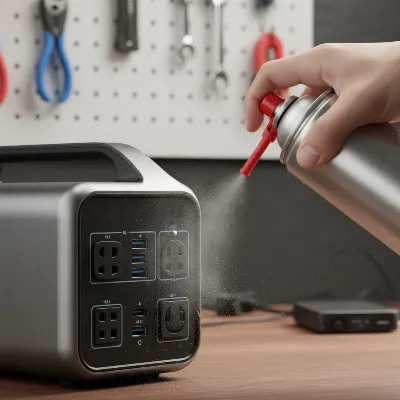 A person cleaning the ports of a portable power station with compressed air to remove dust and debris
Regular Checks and Firmware Updates
A little vigilance goes a long way in preventing minor issues from becoming major problems. Regular inspections and software updates are key to maintaining peak performance.
Periodically inspect all cables, connectors, and the power station’s casing for any signs of wear, damage, or loose connections. Damaged cables can be a fire hazard and reduce charging efficiency. Promptly address any issues or replace faulty accessories. Additionally, many modern portable power stations come with companion apps that allow for firmware updates. These updates often include performance enhancements, bug fixes, and battery management optimizations. Regularly checking for and installing these updates can improve your unit’s efficiency, safety, and longevity. Ensure adequate ventilation when the power station is in use, especially during heavy loads, to prevent overheating.
 A portable power station displaying a firmware update message on its screen, with a smartphone showing the companion app nearby
Maximizing Your Investment: A Buying Guide
While you’ve already made your purchase, understanding buying considerations can reinforce the value of proper maintenance and inform future upgrades.
Assess Your Specific Power Demands
Before making any power station decision, critically evaluate what devices you intend to power and for how long. This will determine the necessary power output (Watts) and battery capacity (Wh), ensuring you select a unit that aligns perfectly with your lifestyle or emergency preparedness plan.
Research and Compare Models
The market is flooded with various brands and models, each with unique features. Invest time in researching different options, comparing specifications like battery chemistry, output ports, recharge times, and integrated safety features. User reviews and expert assessments can provide valuable insights into real-world performance and reliability.
Prioritize Warranty and Customer Support
A robust warranty and responsive customer support are indicators of a manufacturer’s confidence in their product. A good warranty offers peace of mind, protecting your investment against potential defects or premature failures, while reliable support ensures you have assistance when needed.
Top Power Stations: A Glimpse at Current Favorites
The portable power station market is dynamic, with innovations continually enhancing performance and versatility. While specific models fluctuate in popularity, leading brands consistently offer robust solutions. Look for units that feature advanced LiFePO4 battery technology for extended lifespans, offer multiple fast-charging input options, and boast a comprehensive suite of output ports. High-capacity units with pure sine wave inverters are favored for powering sensitive electronics safely, while smart features like app control and detailed display screens enhance user experience and monitoring capabilities.
Conclusion
Your new portable power station is a significant investment in convenience, preparedness, and energy independence. By diligently following these essential maintenance tips—from optimizing charging habits and ensuring proper storage conditions to keeping it clean and updated—you can significantly extend its operational life and ensure it performs reliably for every adventure and emergency. Treating your power station with care isn’t just about preserving a device; it’s about preserving your peace of mind. What steps will you take today to ensure your power station is ready for tomorrow?
Frequently Asked Questions
How does extreme cold affect a portable power station’s battery?
Extreme cold can significantly reduce a portable power station’s efficiency and capacity. Low temperatures slow down the chemical reactions within the battery, leading to decreased performance and faster self-discharge. Many units also have a Battery Management System (BMS) that may prevent charging in freezing conditions to protect the cells from damage, highlighting the importance of storing them in moderate environments.
Is it okay to leave my portable power station plugged in all the time?
It is generally not recommended to leave your portable power station continuously plugged in at 100% charge for extended periods. While most modern units have overcharge protection, constant full charge can put stress on the battery cells and potentially shorten their overall lifespan. For optimal longevity, it’s better to follow the “20-80% rule” for daily use and disconnect it once fully charged.
How often should I fully discharge and recharge my power station?
For modern lithium-ion and LiFePO4 batteries, frequent full discharge cycles are generally discouraged as they can accelerate battery degradation. However, some manufacturers recommend an occasional full discharge to 0% followed by a 100% recharge (e.g., every 3-6 months) for battery calibration purposes, to help the internal battery management system accurately read the state of charge. Consult your specific model’s manual for precise recommendations.
Can I use my portable power station while it’s charging?
Many portable power stations are designed with pass-through charging capabilities, meaning you can use them to power devices while the power station itself is being recharged. This feature is convenient, but it can generate additional heat and potentially slow down the charging process for the power station. Always check your unit’s manual to confirm if pass-through charging is supported and if there are any specific limitations.
How do I clean the internal components or battery of my power station?
It is strongly advised against opening your portable Power Station to clean internal components or the battery unless you are a certified technician. Attempting to do so can void your warranty, damage sensitive electronics, and pose safety risks due to high voltage. For external cleaning, use a soft, dry cloth; for ports and vents, a gentle application of compressed air is usually sufficient. If you suspect an internal issue, contact customer support.