In today’s interconnected world, portable power stations have become indispensable tools, offering reliable energy for everything from outdoor adventures to crucial home backup. A common, yet critical, question many users ponder is whether these devices can be safely left plugged in constantly. While the convenience of always having a fully charged power station ready is appealing, the answer isn’t a simple yes or no. It involves understanding modern battery technology, the specific chemistry of your power station, and how continuous charging impacts its long-term health and performance.
This comprehensive guide will delve into the intricacies of leaving a portable power station plugged in 24/7, exploring the protective mechanisms in place, the potential impacts on battery longevity, and best practices to ensure your investment serves you reliably for years to come. We’ll uncover the science behind battery degradation and help you make informed decisions for optimal usage.
Understanding Portable Power Stations
At its core, a portable power station is a self-contained energy hub, designed to store electrical power in a battery and then convert it to usable forms (AC, DC, USB) for various devices. More sophisticated than a simple power bank, these stations typically include a robust battery, an inverter to convert DC to AC power, and multiple output ports. For portable power buying guides on this site.
Central to a power station’s safe and efficient operation is its Battery Management System (BMS). This intelligent electronic system constantly monitors the battery’s voltage, current, and temperature, acting as a crucial safeguard. The BMS prevents common battery issues like overcharging, over-discharging, over-current, and overheating, ensuring the power station operates within safe parameters. Without a BMS, continuous charging could indeed lead to dangerous overcharging, damaging the battery and potentially posing safety risks.
Can You Leave a Portable Power Station Plugged In 24/7? The Nuance
Many modern portable power stations are technically designed to be left plugged in constantly without immediate danger, thanks to their sophisticated Battery Management Systems (BMS). The BMS ensures that once the battery reaches 100% capacity, it automatically stops the charging process, preventing traditional “overcharging” that could harm the cells. Some systems may switch to a trickle charge to maintain full capacity, while others might briefly disconnect the charge entirely until a slight discharge occurs.
However, the ability to safely leave it plugged in doesn’t necessarily mean it’s the best practice for maximizing the battery’s lifespan. The primary concern shifts from immediate safety hazards to the subtle, long-term degradation that can occur when a battery is kept at a high state of charge for extended periods. This nuance is crucial for users seeking to prolong the life and efficiency of their portable power station.
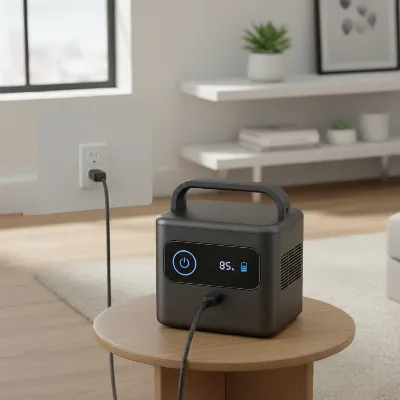 Portable power station charging from a wall outlet, illustrating a safe, controlled charging environment with no visible hazards.
Impact on Battery Health and Longevity
While a modern power station’s BMS prevents catastrophic overcharging, keeping a battery constantly at 100% charge can still affect its long-term health. Batteries, especially lithium-ion types, experience greater internal stress and chemical degradation when maintained at peak voltage. This “always full” state can gradually reduce the battery’s overall capacity and shorten its usable lifespan over months and years.
Battery Chemistry Matters
The impact of continuous plugging in largely depends on the battery chemistry within your power station:
- Lithium-ion (NMC/NCA) Batteries: These are common in many portable devices due to their high energy density and lighter weight. However, they are more sensitive to being kept at 100% charge for prolonged periods. This can accelerate capacity loss and reduce the number of charge cycles the battery can endure. Lithium-ion batteries also tend to degrade faster when exposed to higher temperatures. A typical lifespan for these batteries might be 500-1000 cycles or 3-5 years before significant degradation.
- Lithium Iron Phosphate (LiFePO4 or LFP) Batteries: Increasingly popular in portable power stations, LiFePO4 batteries offer superior durability, enhanced safety, and a much longer cycle life. They are more tolerant of being stored at full charge and exhibit less degradation when kept at 100%. This makes them a more suitable choice for scenarios where continuous plugging in might be desired, such as emergency backup. LiFePO4 batteries can often boast 3,000 to 6,500+ cycles or 8-15 years of lifespan.
The “Always Full” Dilemma
Even with smart charging, maintaining a battery at 100% continuously increases the internal pressure on the cells. This heightened state of stress contributes to chemical reactions that slowly diminish the battery’s ability to hold a charge. Think of it like a muscle constantly flexed; while it won’t immediately snap, over time it will fatigue and lose some of its original strength. For optimal longevity, batteries are often healthiest when operated and stored within a partial charge range, typically between 20% and 80%.
Heat Generation
Continuous charging and especially pass-through charging (using the power station while it charges) can generate more heat. Heat is a known accelerator of battery degradation. While power stations are designed with thermal management, prolonged exposure to elevated temperatures can still reduce the lifespan of internal components and the battery itself. Ensuring adequate ventilation for the power station is always a good practice, especially if it’s plugged in for extended periods.
Pass-Through Charging: Convenience vs. Longevity
Pass-through charging is a feature that allows your portable power station to simultaneously charge its internal battery and power external devices. This capability makes power stations incredibly versatile, effectively transforming them into a temporary UPS (Uninterruptible Power Supply) or a multi-device charging hub.
Benefits of Pass-Through Charging
- Uninterrupted Power: In a home backup scenario, a power station with pass-through charging can stay connected to a wall outlet, keeping its battery topped up. If the grid power fails, it can seamlessly switch to battery power, providing an uninterrupted supply to connected devices like computers or medical equipment. Some units offer true UPS functionality with sub-10ms switchover times for sensitive electronics.
- Simultaneous Operations: It’s highly convenient for camping or off-grid use, where you can charge the power station from a solar panel or car adapter while simultaneously powering a fridge, lights, or charging your phone. This eliminates the need to choose between charging the station or using its power.
Potential Drawbacks
While convenient, continuous pass-through charging can contribute to increased heat generation within the unit. When power flows through the system to both charge the battery and operate devices, the internal components work harder, leading to higher temperatures. For Li-ion batteries, in particular, this sustained heat can accelerate degradation. For LiFePO4 batteries, the impact is generally negligible in high-quality units with active cooling, making them more suitable for regular pass-through use. However, even with the best battery chemistry, it’s worth being mindful that constant heat and usage cycles, especially at 100% charge, can subtly influence battery health over a very long duration.
 Portable power station simultaneously charging from solar and powering multiple devices, highlighting efficient pass-through charging.
Scenarios for Continuous Plugging
Deciding whether to leave your portable power station plugged in 24/7 often comes down to your specific use case. Different scenarios warrant different approaches to maximize safety and battery longevity.
Emergency Backup / UPS
For emergency preparedness, leaving a power station plugged in is often a necessary and justified strategy. The primary goal here is immediate readiness during unexpected power outages. Many modern power stations with advanced BMS and true UPS capabilities are designed for this purpose. They can act as a standby power source, seamlessly taking over when grid power fails, protecting sensitive electronics and ensuring essential appliances remain operational. In such cases, the slight long-term battery degradation might be an acceptable trade-off for assured, instantaneous power availability. It’s particularly beneficial for LiFePO4-based units, which handle continuous full charge much better.
Regular, Daily Use
If you frequently use your power station to power devices around your home or office, and it has pass-through charging, leaving it plugged in while in use is generally acceptable. This allows you to draw power directly from the wall, with the battery serving as a buffer or backup. However, if your usage pattern involves the battery consistently staying at 100% for days without being drawn down, consider unplugging it periodically, especially if it’s a Lithium-ion (NMC) unit. Regular partial discharge and recharge cycles (e.g., between 20-80%) are healthier for these battery types.
Long-Term Storage
When storing your portable power station for an extended period (weeks or months) without active use, it is generally recommended not to leave it plugged in. The best practice for long-term storage is to charge the battery to around 50% to 80% (check your manufacturer’s specific recommendation, often 50-60%), then disconnect it from the power source. Storing a battery at 100% charge or completely depleted can accelerate degradation and reduce its overall lifespan. Periodically check the charge level (every 3-6 months) and top it off to the recommended storage level if needed.
Best Practices for Maximizing Your Power Station’s Lifespan
To ensure your portable power station provides reliable power for as long as possible, adopting thoughtful charging and usage habits is key.
- Consult Your Manufacturer’s Manual: This is the most crucial step. Each power station model has unique specifications and recommendations based on its battery chemistry, BMS, and design. Always refer to the manual for specific guidance on charging, storage, and continuous use.
- Monitor Temperature: Heat is a battery’s enemy. Ensure your power station is placed in a well-ventilated area, away from direct sunlight or heat sources, especially when charging or operating under heavy load. If the unit feels excessively hot, it’s a sign to let it cool down.
- Avoid Constant 100% Charge (Especially for Li-ion): While BMS prevents overcharging, sustained periods at 100% can stress lithium-ion cells. If your unit has a Li-ion battery and isn’t being used as a critical, 24/7 backup, consider unplugging it once fully charged.
- Embrace Partial Cycles: For daily use, allowing your power station to discharge to 20-30% and then recharging to 80-90% is often healthier for the battery than constant full cycles (0-100%). This keeps the battery “exercised” without the stress of extreme charge states.
- Store at Optimal Charge for Inactivity: If you plan not to use your power station for an extended period (e.g., more than a month), charge it to 50-80% (typically around 60% for Li-ion) before unplugging and storing it in a cool, dry place. This significantly reduces battery degradation during dormancy.
- Regularly Use and Exercise: Even if primarily used for emergency backup, periodically drawing down and recharging the battery (e.g., once every 1-3 months) helps keep the cells active and can contribute to overall health.
“A well-maintained power station isn’t just about avoiding damage; it’s about optimizing its electrochemical lifespan through mindful charging. Understanding your battery type is the first step towards years of reliable power.” – Dr. Elena Petrova, Lead Battery Chemist
Conclusion
The question of leaving a portable power station plugged in 24/7 reveals a fascinating intersection of convenience, advanced technology, and battery chemistry. While most modern power stations are equipped with sophisticated Battery Management Systems (BMS) that prevent dangerous overcharging, the long-term impact on battery health is a crucial consideration. LiFePO4 batteries generally tolerate continuous full charge better, making them ideal for always-on emergency backup scenarios. In contrast, traditional lithium-ion batteries may experience accelerated degradation if constantly kept at 100%.
Ultimately, the best approach involves a thoughtful balance tailored to your specific needs. For critical emergency readiness, continuous plugging can be justified, especially with LiFePO4 units and robust BMS features. For general daily use or long-term storage, adopting habits like partial charge cycles, monitoring temperature, and unplugging once fully charged can significantly extend your power station’s lifespan. By understanding your device’s battery type and adhering to manufacturer guidelines, you empower yourself to make the most of your portable power solution.
What are your primary usage scenarios for a portable power station, and how might these considerations influence your charging habits?
Frequently Asked Questions
Is it dangerous to leave a portable power station plugged in indefinitely?
Generally, no, it is not dangerous. Modern portable power stations incorporate advanced Battery Management Systems (BMS) that actively prevent overcharging, overheating, and short circuits. These safety features ensure that once the battery is full, charging stops or reduces to a minimal trickle, mitigating immediate safety risks like fires or explosions.
Will leaving my power station plugged in 24/7 consume a lot of electricity?
No, not a significant amount. Once fully charged, the power station’s BMS will stop drawing substantial power. There might be a very small parasitic draw to maintain the charge or power internal components like display screens, but this is typically negligible and won’t significantly impact your electricity bill.
Does continuous plugging affect the warranty of my portable power station?
Warranty terms vary by manufacturer. While many modern power stations are designed for continuous standby use, some manufacturers might recommend specific charging practices for optimal battery longevity. Always review your product’s warranty information and user manual to understand any limitations or recommendations related to continuous charging.
What is “pass-through charging” and how does it relate to continuous plugging?
Pass-through charging allows the power station to charge its internal battery while simultaneously powering external devices. This is a common feature that enables the unit to function like a UPS or a charging hub. While convenient, continuous pass-through charging can generate more heat, which might subtly contribute to long-term battery degradation, especially in certain battery chemistries.
